


Data Center vs. Cloud Computing: Which Model Should You Choose?
Jun 18, 2025Data Centers and Cloud Computing each offer distinct advantages tailored to different needs and business goals. So which is the optimal solution for maximizing efficiency and cost-effectiveness? This article will provide an in-depth comparison of these two technologies to help you identify the best fit for your business.
Understanding the Basics: What Are Data Centers and Cloud Computing?
Before diving into the comparison, Vcloudia offers a brief overview of the two models:
-
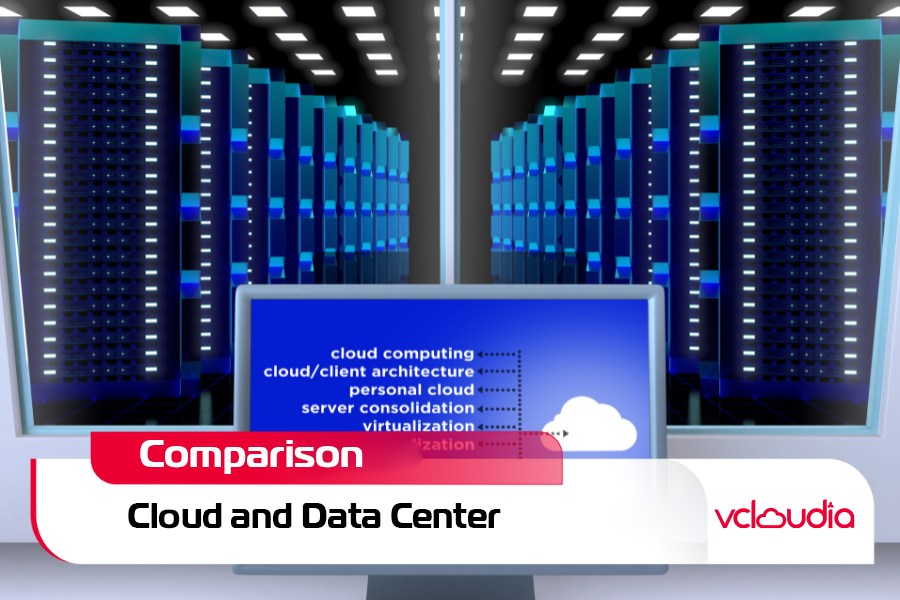
Data Center is a physical infrastructure system that includes servers, computing systems, and networking equipment. Businesses can own and operate their own data centers or rent space from service providers (known as Colocation services).
-
Cloud Computing is a virtualization model that allows businesses to access IT resources via the Internet without owning physical infrastructure. Data and applications are stored on remote servers operated by service providers, and businesses only pay for what they use.
Similarities Between Data Centers and Cloud Computing
Despite their structural and operational differences, Data Centers and Cloud Computing share some key characteristics:
-
Data Storage & Management: Both models are designed for storing, managing, and processing data. Businesses can use either model for database operations, application hosting, and service delivery.
-
Security Capabilities: Both offer high levels of security. Data Centers rely on physical protections such as firewalls and access control, while Cloud Computing uses encryption and access control mechanisms.
Key Differences Between Data Centers and Cloud Computing
The Relationship Between Data Centers and Cloud Computing
While Data Centers and Cloud Computing differ in structure and management, they are symbiotic and often complement each other:
-
Data Centers Form the Backbone of Cloud Computing
Cloud services rely on physical data centers to operate. Behind every cloud service are data centers housing the servers and infrastructure. -
Cloud Computing Enhances Data Center Capabilities
Cloud Computing extends the functionality of traditional data centers by enabling virtualization. This allows businesses to scale resources without additional hardware investments.
Many businesses adopt a hybrid approach, using Data Centers for sensitive or critical data and Cloud Computing for big data analytics or highly dynamic applications.
Which Model Should You Choose: Data Center or Cloud Computing?
The choice depends on your business's specific needs. Here's a summary of each model’s strengths and limitations:
When to Use a Data Center
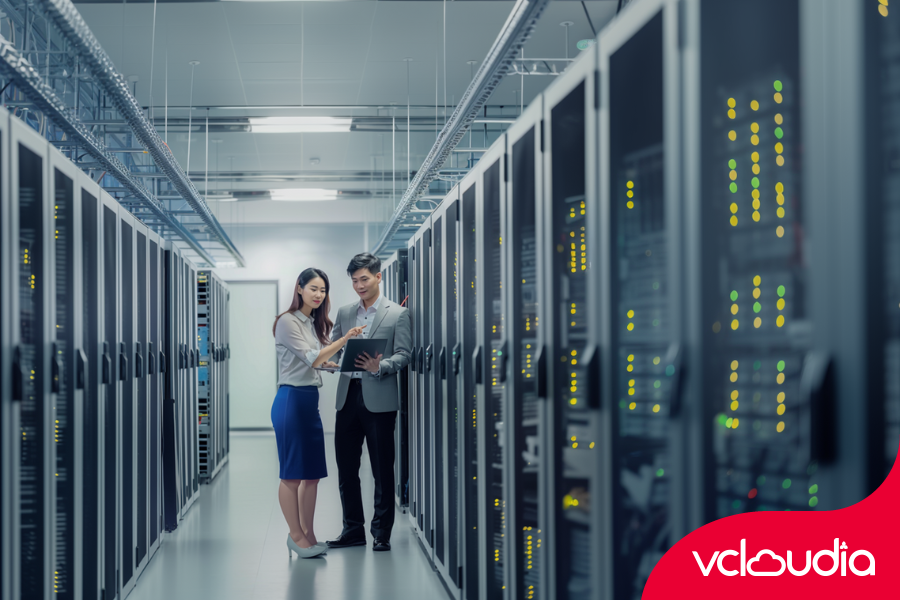
Choose a Data Center if your business requires strict data control and high security. Suitable for:
-
Banks and financial institutions.
-
Government agencies or organizations with sensitive data.
-
Large enterprises with a dedicated IT team and sufficient budget.
When to Use Cloud Computing
Cloud Computing is ideal for businesses needing agility, scalability, and lower infrastructure investment. Best suited for:
-
SMEs with limited resources.
-
Startups seeking rapid growth.
-
Remote teams needing easy access to shared data.
-
E-commerce, media, or software companies handling high data volumes.
With its compelling benefits, Cloud server by Vcloudia is a smart choice for businesses considering Cloud Computing. Vcloudia offers secure, scalable cloud solutions tailored for businesses of all sizes.
Looking for a high-performance, secure solution?
Explore the services offered by Vcloudia – a leading provider of cloud computing and data center solutions. Contact us for expert consultation and find the right model for your needs:
- Hotline: +855 888 55 66 08 (free of charge)
- Fanpage: https://www.facebook.com/vcloudia/
- Website: https://vcloudia.com
Conclusion
Your choice between a Data Center and Cloud Computing should be based on your business's needs and budget.
-
Data Centers offer control and high security, ideal for large enterprises and financial institutions.
-
Cloud Computing delivers flexibility and cost-efficiency, perfect for SMEs and startups.
Understanding these models will help you make informed decisions for your long-term growth strategy.
Related news
What Is FaaS? Everything You Need to Know About Function-as-a-Service
In a world where technology is constantly evolving and shifting at high speed, FaaS has become an important concept, opening up new opportunities for developers and businesses to optimize application performance. In this article, vCloudia helps you understand what FaaS is, how it works, its benefits, and its practical applications.
What Is SaaS? Everything You Need to Know About Software-as-a-Service
SaaS (Software-as-a-Service) has become a crucial component of the global digital transformation trend, offering numerous advantages over traditional software models. In this article, let’s explore with vCloudia the concepts, roles, operating mechanisms, and future trends of the SaaS model.
What Is a Cloud Firewall? Why It Is Essential and Important
In today’s technology-driven world—where data and online services are expanding at an unprecedented pace—Cloud Firewalls have become an indispensable component of enterprise cybersecurity strategies.
Can Cloud Data Be Synchronized To A Server?
In today’s digital age, synchronizing cloud data with servers has become an essential component of data management for businesses and organizations. This combination enhances flexibility, security, and data accessibility anytime, anywhere—thereby boosting operational efficiency and fostering innovation.
What Is PaaS? Key Insights into Platform as a Service
In today’s rapidly evolving digital era, both businesses and developers are seeking optimal solutions to build software quickly, efficiently, and cost-effectively. One of the most prominent solutions is PaaS – Platform as a Service. Let’s explore it in detail with Vcloudia in the following article.
What is IaaS? Everything You Need to Know About Infrastructure as a Service
IaaS, short for Infrastructure as a Service, is one of the most widely used cloud computing models today. It offers businesses numerous benefits in terms of flexibility, scalability, and cost efficiency. This article will help you better understand what IaaS is, its key components, advantages, disadvantages, and real-world applications.
Cloud Server vs Dedicated Server: What Are the Differences?
In this article, we will take a deep dive into a detailed comparison between Cloud Servers and Dedicated Servers to help you make the most accurate and optimal choice for your business or project. Let’s explore this topic with Vcloudia right now.
How To Build Your Own Cloud Server?
In this article, Vcloudia will provide a detailed, step-by-step guide on how you can build your own cloud server—from the initial preparation stages and choosing the right deployment model, to common errors and how to fix them.
What Is Cloud Architecture? Components and How It Works in Detail
Cloud architecture is the foundation of modern technology services, enabling businesses and individuals to optimize data storage, processing, and service delivery over the internet in a flexible and cost-efficient manner. Let’s explore this concept in depth with Vcloudia.
What Is Multi Cloud? How It Works, Along With Its Advantages and Disadvantages
In today’s digital era, businesses are constantly seeking optimal solutions to enhance operational efficiency, minimize risks, and maximize profitability. One increasingly popular strategy is Multi Cloud. In this article, Vcloudia explores Multi Cloud in depth — from theory to real-world applications.