



.png)



















.png)





What Is FaaS? Everything You Need to Know About Function-as-a-Service
Dec 19, 2025In a world where technology is constantly evolving and shifting at high speed, FaaS has become an important concept, opening up new opportunities for developers and businesses to optimize application performance. In this article, vCloudia helps you understand what FaaS is, how it works, its benefits, and its practical applications.
What Is FaaS?
FaaS (short for Function-as-a-Service) is a cloud computing model that allows developers to run independent pieces of code—called functions—without having to manage infrastructure or physical servers. With FaaS, all you need to do is write the code based on your application needs; the system will automatically handle execution, scaling, and function management based on specific triggers or events.
In the cloud ecosystem, FaaS offers maximum flexibility, reduces infrastructure management workloads, and allows businesses to stay focused on product development. It’s well-suited for dynamic applications requiring rapid scalability and high deployment flexibility. Over the past few years, FaaS has become an inevitable trend in the software industry, unlocking tremendous potential for startups and large enterprises alike.
Why Has FaaS Become So Important Today?
In the digital era—where speed to market and adaptability determine success—FaaS has proved its significance. Optimized resource usage, reduced operational costs, and development agility make it an ideal solution for businesses seeking efficiency and responsiveness.
Additionally, FaaS helps developers cut down on infrastructure management tasks and focus on writing code, improving productivity. This is especially valuable as businesses increasingly prioritize time and cost efficiency. FaaS also supports seamless integration with emerging technologies such as AI, machine learning, and big data analytics, enhancing the value of digital services.
How the Function-as-a-Service Model Works
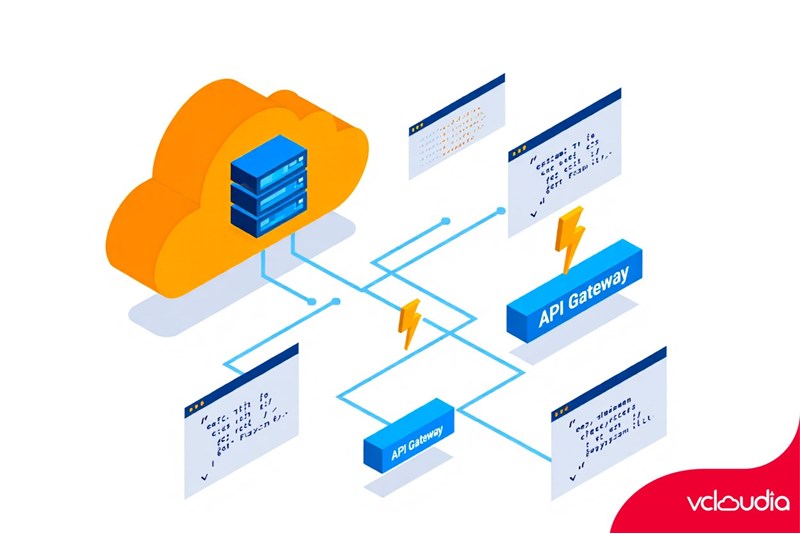
To better understand FaaS, we need to look at its simple yet highly effective operating principles. When a user request or event occurs, the FaaS platform triggers the corresponding function to handle it. These functions can be written in popular languages such as Python, JavaScript, Java, or Go, depending on the service provider.
One standout feature of FaaS is its automatic and elastic scaling. When traffic increases, the system automatically replicates functions to handle requests in parallel without any manual configuration. When demand drops, the system scales down, saving resources and costs. This real-time elasticity ensures your applications always run at optimal performance.
Benefits of the FaaS Model
Function-as-a-Service simplifies software development and delivers several powerful advantages that help businesses optimize operations. Below are its key benefits:
1. Cost Savings
In traditional models, organizations must invest in hardware, software, and ongoing maintenance for physical or virtual servers. With FaaS, you only pay for actual usage—specifically, when your functions are executed. This significantly reduces operational expenses and helps businesses allocate budgets more efficiently.
Instead of paying fixed infrastructure costs, companies can scale resources based on real-time needs, avoiding waste and missing business opportunities. This “pay-as-you-go” model empowers small companies and startups to grow without worrying about heavy upfront investments
2. Automatic Scalability
FaaS platforms automatically monitor and adjust capacity based on traffic or workload. When user activity spikes or tasks become more complex, functions scale instantly to accommodate the load.
This ensures consistently high performance—even under sudden surges in demand—without requiring hardware upgrades or extensive optimization. As a result, the risk of service disruption is significantly reduced.
3. Reduced Infrastructure Management Burden
Infrastructure and system operations often pose major challenges for engineering teams. With FaaS, developers no longer need to configure, maintain, or optimize servers—the platform takes care of everything, from hardware to the underlying software stack.
This reduces infrastructure-related risks, saves time, and frees up resources for creating new features, improving user experience, and enhancing business operations.
4. Fast and Flexible Deployment
In today's competitive environment, the ability to launch products or updates quickly is crucial. FaaS shortens the time from development to production.
Developers simply write functions, upload them to the cloud, and the system handles the rest. This enables rapid experimentation, iteration, and innovation—without worrying about cost or infrastructure risks.
5. Suitable for Many Types of Applications
FaaS can power a wide range of applications including web services, APIs, event processing, big data pipelines, IoT systems, and AI services. Thanks to its flexibility and scalability, it helps developers build and operate even complex systems with ease.
Its seamless integration with other cloud services also makes FaaS a perfect foundation for modern, future-ready software architectures.
Limitations of FaaS
Despite its advantages, FaaS still presents several challenges. These include execution time limits, difficulties with long-running processes, unpredictable costs in certain scenarios, and issues related to application state management.
Additionally, integrating and optimizing functions requires careful tuning and deep technical knowledge.
Practical Use Cases of FaaS
FaaS adoption is growing rapidly, with companies using it to streamline operations and enhance customer experiences. Real-time data processing, chatbots, big data analytics, IoT, and API-based services can all benefit from this model.
For example:
- E-commerce companies use FaaS to process orders in real time.
- Mobile app developers use it for server-side event handling.
- Industrial systems use it for automated monitoring and sensor data analysis.
Future Trends of Function-as-a-Service
With the continuous evolution of cloud technology and increasing demand for flexibility, scalability, and cost optimization, FaaS is expected to grow even more popular.
We can anticipate deeper integration with AI as part of serverless solutions, stronger multi-cloud support for better flexibility, and improved tools for management, deployment, and monitoring. The market and developer community will continue innovating to make FaaS a core component of modern tech ecosystems.
Conclusion
FaaS is no longer a new concept—it’s now a key model in the digital technology landscape. It offers flexibility, cost optimization, and reduced infrastructure burdens for businesses in a rapidly evolving world. While it has certain limitations, its benefits make FaaS a leading trend in cloud computing, opening the door to creative, innovative, and competitive applications.
Understanding FaaS helps developers, engineers, and businesses make informed decisions in their digital transformation journey. In the future, FaaS will continue to expand its capabilities and integrations, contributing to a more efficient, flexible, and innovative software ecosystem.
Looking for a high-performance, secure solution?
Explore the services offered by Vcloudia – a leading provider of cloud computing and data center solutions. Contact us for expert consultation and find the right model for your needs:
- Hotline: +855 888 55 66 08 (free of charge)
- Fanpage: https://www.facebook.com/vcloudia/
- Website: https://vcloudia.com
Featured news
Related news
What is a Snapshot? The Difference Between Snapshot and Backup
Snapshot is a familiar concept in data management and protection. In the context of the information technology boom, where data is a major asset for businesses, understanding Snapshots as well as their application is a key factor for enterprises to maximize technological efficiency.
What is a Firewall? The Role and Importance of Firewalls for Users
In the context of ever-increasing cyberattacks, system security has become a top priority for many enterprises. Alongside deploying antivirus software and controlling connection ports, firewalls are also considered a key solution to effectively enhance cybersecurity.
What is DDoS? Signs, Mitigation Strategies, and Effective Prevention
DDoS is a highly dangerous cyberattack that leaves severe consequences for enterprises. Therefore, gaining a clear understanding of DDoS attacks, as well as how to detect and prevent them, is a topic of significant interest to many.
What is a Trojan? How to Detect, Avoid, and Prevent It
A Trojan is a type of malicious code or software that can cause severe consequences to computer operations. So, what is a Trojan? How can you prevent a Trojan from infiltrating your computer? In the following article, Vcloudia will provide detailed information on these issues.
What is Cloud Backup? Classification, benefits, and limitations
Cloud Backup is a solution that plays an important role in backing up and recovering data when an incident occurs. So what exactly is Cloud Backup? Let's find out the details with Vcloudia in the following article.
What is Cloud Storage? Features and Benefits of Using It
Cloud Storage is the perfect storage solution alternative to bulky, space-consuming physical hard drives. So, what is Cloud Storage? Let's explore the details with Vcloudia through the following article.
What is an API? Characteristics and applications in website design
API, short for Application Programming Interface, is a concept no longer unfamiliar in the information technology field. So what exactly is an API and why is it so important? Let's find out with Vcloudia.
What is Node.js? Instructions on how to install Node.js on cPanel
Currently, it is easy to see that Node.js is being used by quite a lot of people. This is because Node.js can support users in running on multiple platforms and multiple devices.
What is Vultr VPS? Should you use Vultr VPS?
Vultr VPS is one of the best cloud storage solutions in the world. In this article, you will learn the concept: "What is Vultr VPS?", as well as understand its advantages and disadvantages.
Zoom Cloud Meeting: What is it? Basic Things You Should Know About Zoom Cloud Meeting
In 2020, Zoom Cloud Meeting became one of the leading video conferencing software applications. It allows you to virtually interact with colleagues when in-person meetings aren't possible, and it has also been very successful for social events.