



.png)
















.png)





Can Cloud Servers Fully Replace Physical Servers? A Practical Analysis for Businesses
Jan 29, 2026In today’s era of digital transformation, businesses are constantly seeking ways to optimize their technology infrastructure to improve operational efficiency. One of the most frequently asked questions is: “Can Cloud Servers completely replace physical servers?” Together with Vcloudia, let us explore an in-depth analysis and comparison between Cloud Servers and physical servers, helping businesses make the most appropriate decisions for each stage of their development.

What Is a Physical Server?
A physical server is a real, standalone hardware device designed to provide services and store data for an organization’s systems, applications, or services.
These servers are typically hosted in data centers and come with dedicated hardware configurations, including CPUs, RAM, storage drives, redundant power supplies, and specialized cooling systems. The key strengths of physical servers lie in their stability, high level of customization, and suitability for systems that require optimized hardware performance, ultra-low latency, and strong security.
Within an enterprise context, physical servers act as the backbone of IT infrastructure, supporting large or complex systems such as ERP platforms, financial systems, and internal service hosting. However, these advantages come with significant drawbacks: high upfront investment costs, expensive ongoing maintenance, and the need for a highly skilled IT team to manage and operate the infrastructure.
In today’s competitive environment—where flexibility and rapid scalability are critical—many organizations are re-evaluating their reliance on traditional servers. This is why physical servers are increasingly compared with modern alternatives such as Cloud Servers.
What Is a Cloud Server?
A Cloud Server is a service that delivers computing resources over the internet, virtualized and divided into smaller units known as instances or virtual machines (VMs). Instead of investing in physical hardware, businesses rent these resources on demand and can easily scale up or down as needed.
A defining feature of Cloud Servers is their accessibility from anywhere and their highly flexible configurations—from a few gigabytes of RAM to large resource clusters—making them suitable for businesses of all sizes. In addition, cloud providers such as AWS, Microsoft Azure, and Google Cloud offer built-in features like automated management, backups, load balancing, and other supporting services, significantly reducing the operational burden on organizations.
Flexibility, rapid scalability, high availability, and cost optimization are the major advantages of Cloud Servers. They enable businesses to adapt quickly to changes in scale, new service requirements, or short-term projects—an essential capability in today’s highly competitive and fast-evolving technology landscape.
Cloud Server vs. Physical Server: A Clear Comparison
To form an objective and comprehensive view, it is essential to analyze both models across key dimensions, including scalability, upfront investment, flexibility, latency, security, and management.
These factors help businesses clearly understand when each solution is most appropriate. It is also important to emphasize that neither Cloud Servers are always superior nor physical servers are outdated; each model has its own strengths and use cases.
Advantages of Cloud Servers
Cloud Servers offer exceptional scalability and rapid self-provisioning without the need to install physical hardware. Managed services provided by cloud vendors significantly reduce operational costs related to staffing, hardware maintenance, and infrastructure upgrades.
Moreover, cloud environments often provide stronger data redundancy, automated backups, and advanced security mechanisms. With multi-region data policies and built-in resilience, they help minimize system downtime and ensure continuous service availability.
Limitations of Cloud Servers
Despite their benefits, Cloud Servers also have limitations. Long-term costs can become higher than owning physical servers if resources are not used efficiently or properly optimized. Network latency and concerns related to data control and internal security are also important considerations, particularly for systems that require ultra-low latency or handle highly sensitive data.
Advantages of Physical Servers
Physical servers are ideal for systems that demand ultra-low latency and high levels of hardware customization. They are well-suited for organizations with stable, long-term infrastructure investments and strict requirements for data security and full operational control.
Limitations of Physical Servers
The biggest drawbacks are high initial investment costs and limited scalability when demand increases suddenly. Maintaining a dedicated technical team for operations and maintenance further increases operating expenses and reduces short-term flexibility.
When Can Cloud Servers Replace Physical Servers?
Depending on each organization’s characteristics and requirements, Cloud Servers are more suitable in the following scenarios:
1. Small and Medium Business Systems and Websites
SMEs often lack the resources to build dedicated infrastructure while still requiring flexibility in scale. In this context, Cloud Servers become the optimal solution due to their scalability, reasonable costs, and ease of management.
For example, a new e-commerce website can start with Cloud Servers and gradually scale as traffic grows, without significant time or resource investment. This allows businesses to focus on content and strategy rather than infrastructure concerns.
2. Web Applications, Mobile Apps, and SaaS Platforms
Web apps and SaaS solutions require high availability, fast scalability, and flexible data management. Cloud Servers make it easier to develop, test, deploy, and scale services.
Cloud platforms also provide integrated services such as CI/CD pipelines, data analytics, and AI tools, which help improve product quality, shorten time-to-market, and enhance customer experience.
3. Fast-Growing Startups
Startups are characterized by rapid adaptation and unpredictable growth. Cloud Servers allow these companies to scale quickly without worrying about hardware limitations.
For instance, startups working in Big Data or AI often require large-scale storage and computing power. Cloud platforms provide on-demand resources, enabling continuous development without infrastructure bottlenecks.
4. Systems That Require Flexible Scalability
Industries with highly variable workloads—such as e-commerce during peak sales seasons—or environments used for testing and disaster recovery require elastic scaling. Cloud Servers are ideal for dynamically allocating resources based on real demand.
The ability to adjust configurations within minutes minimizes downtime, improves user experience, and prevents unnecessary resource waste.
5. Businesses That Do Not Want to Maintain Large IT Infrastructure Teams
Many organizations aim to streamline operations and reduce the risks associated with hardware maintenance and upgrades. Cloud Servers support this shift by transforming infrastructure into a service model.
With a small system administration team and a centralized dashboard, businesses can monitor their entire environment, while hardware and platform issues are handled by the provider.
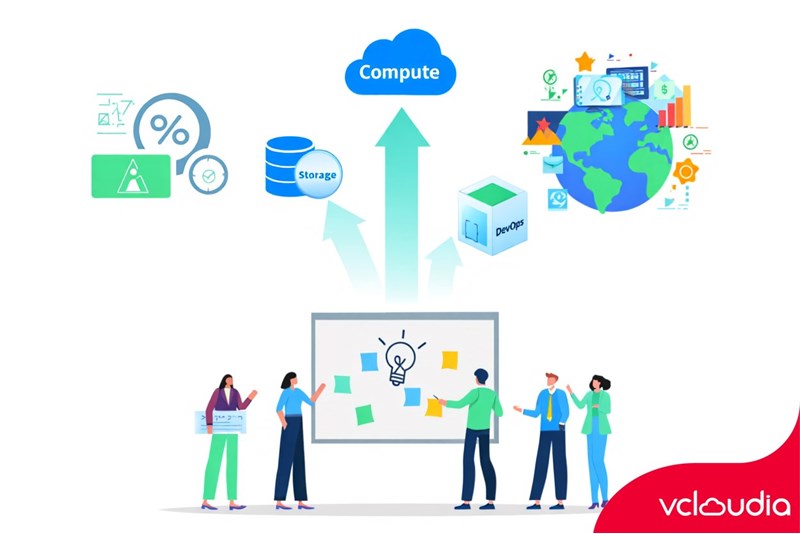
When Cloud Servers Cannot Replace Physical Servers
Despite their advantages, Cloud Servers are not suitable for certain specific use cases:
1. Systems Requiring Ultra-Low Latency
In sectors such as finance, stock trading, and real-time transaction systems, even minimal latency can have significant consequences. Internet-based cloud environments may introduce unacceptable delays, making on-premises physical servers the better choice.
2. Highly Sensitive Data That Must Remain On-Premises
Organizations in healthcare, defense, or other highly regulated industries often require strict control over data. Keeping systems on-premises allows for full control and minimizes exposure to external networks.
3. Businesses with Significant Existing Infrastructure Investments
Not all organizations are willing or able to migrate entirely to the cloud. Companies that have already invested heavily in hardware and skilled IT teams may prefer to extend the lifespan of their existing infrastructure rather than undertake a full migration.
4. Legacy Systems That Are Difficult to Migrate
Older systems and heavily customized applications often do not support easy migration. Re-architecting or rewriting such systems can be costly, time-consuming, and risky.
The Practical Reality: Hybrid Models Instead of 100% Replacement
In practice, many organizations adopt a hybrid model to leverage the strengths of both Cloud Servers and physical servers. This approach combines on-premises infrastructure with cloud environments to optimize costs, ensure low latency, maintain strict data control, and support flexible scaling.
Hybrid models also allow gradual migration, reducing risk while preserving legacy systems that remain valuable for long-term goals.
Cost Perspective: Are Cloud Servers Really Cheaper Than Physical Servers?
Cost is a critical factor in infrastructure decisions. The key question is whether Cloud Servers are truly more cost-effective than physical servers.
For small businesses and startups, the initial investment for Cloud Servers is often significantly lower than the cost of purchasing hardware and building internal data centers. Operational costs are also reduced. However, over the long term, monthly or annual cloud fees can accumulate and become substantial if not carefully managed.
Factors That Influence Cost
Cloud Server costs depend on usage frequency, scalability requirements, additional services, and how well resources are optimized. Physical servers, meanwhile, require high upfront investment plus ongoing maintenance and upgrade costs.
Therefore, each business must carefully analyze its financial model to determine the most appropriate option.
A Roadmap for Migrating from Physical Servers to Cloud Servers
Migrating from physical servers to Cloud Servers is not a one-time task; it requires a clear, phased strategy to minimize risks and maximize benefits.
The first step is to assess the existing system, identify which applications and data should be migrated, and define technical requirements. Next, businesses should build a migration plan, choose the right provider, and begin with small-scale testing before expanding.
Throughout the process, organizations must focus on staff training, network readiness, and the establishment of strong backup and security policies. When executed successfully, businesses can achieve clear benefits in cost efficiency, operational flexibility, and scalability.
Conclusion
Whether Cloud Servers can fully replace physical servers depends largely on the specific characteristics of each organization. Decision-makers must clearly define their requirements for latency, security, scalability, and budget.
For small businesses, startups, and systems that require flexibility, Cloud Servers are often the optimal solution. In contrast, systems that require ultra-low latency, handle sensitive data, or already have strong on-premises infrastructure may be better suited to physical servers.
In reality, the hybrid model has become the most practical and balanced approach for the majority of organizations. The key is to develop a clear transition roadmap to ensure uninterrupted operations and maximum efficiency.
Finally, it is undeniable that Cloud Servers are becoming a central pillar of digital transformation, helping businesses enhance their competitiveness in the digital era. The question of whether Cloud Servers can completely replace physical servers is not only a technological issue but also a strategic one—closely tied to each organization’s long-term goals.
Looking for a high-performance, secure solution?Explore the services offered by Vcloudia – a leading provider of cloud computing and data center solutions. Contact us for expert consultation and find the right model for your needs:
- Hotline: +855 888 55 66 08 (free of charge)
- Fanpage: https://www.facebook.com/vcloudia/
- Website: https://vcloudia.com
Featured news
Related news
What is a Snapshot? The Difference Between Snapshot and Backup
Snapshot is a familiar concept in data management and protection. In the context of the information technology boom, where data is a major asset for businesses, understanding Snapshots as well as their application is a key factor for enterprises to maximize technological efficiency.
What is a Firewall? The Role and Importance of Firewalls for Users
In the context of ever-increasing cyberattacks, system security has become a top priority for many enterprises. Alongside deploying antivirus software and controlling connection ports, firewalls are also considered a key solution to effectively enhance cybersecurity.
What is DDoS? Signs, Mitigation Strategies, and Effective Prevention
DDoS is a highly dangerous cyberattack that leaves severe consequences for enterprises. Therefore, gaining a clear understanding of DDoS attacks, as well as how to detect and prevent them, is a topic of significant interest to many.
What is a Trojan? How to Detect, Avoid, and Prevent It
A Trojan is a type of malicious code or software that can cause severe consequences to computer operations. So, what is a Trojan? How can you prevent a Trojan from infiltrating your computer? In the following article, Vcloudia will provide detailed information on these issues.
What is Cloud Backup? Classification, benefits, and limitations
Cloud Backup is a solution that plays an important role in backing up and recovering data when an incident occurs. So what exactly is Cloud Backup? Let's find out the details with Vcloudia in the following article.
What is Cloud Storage? Features and Benefits of Using It
Cloud Storage is the perfect storage solution alternative to bulky, space-consuming physical hard drives. So, what is Cloud Storage? Let's explore the details with Vcloudia through the following article.
What is an API? Characteristics and applications in website design
API, short for Application Programming Interface, is a concept no longer unfamiliar in the information technology field. So what exactly is an API and why is it so important? Let's find out with Vcloudia.
What is Node.js? Instructions on how to install Node.js on cPanel
Currently, it is easy to see that Node.js is being used by quite a lot of people. This is because Node.js can support users in running on multiple platforms and multiple devices.
What is Vultr VPS? Should you use Vultr VPS?
Vultr VPS is one of the best cloud storage solutions in the world. In this article, you will learn the concept: "What is Vultr VPS?", as well as understand its advantages and disadvantages.
Zoom Cloud Meeting: What is it? Basic Things You Should Know About Zoom Cloud Meeting
In 2020, Zoom Cloud Meeting became one of the leading video conferencing software applications. It allows you to virtually interact with colleagues when in-person meetings aren't possible, and it has also been very successful for social events.