



.png)


















.png)





Virtual Private Cloud vs. Dedicated Private Cloud: Key Differences
Dec 08, 2025In today’s digital era, choosing the right cloud computing platform plays a crucial role in determining a business’s operational efficiency. VPC vs. DPC are two commonly discussed concepts as organizations seek to optimize performance, security, and cost. Let’s explore these two service models in detail with Vcloudia.
What is a Virtual Private Cloud?
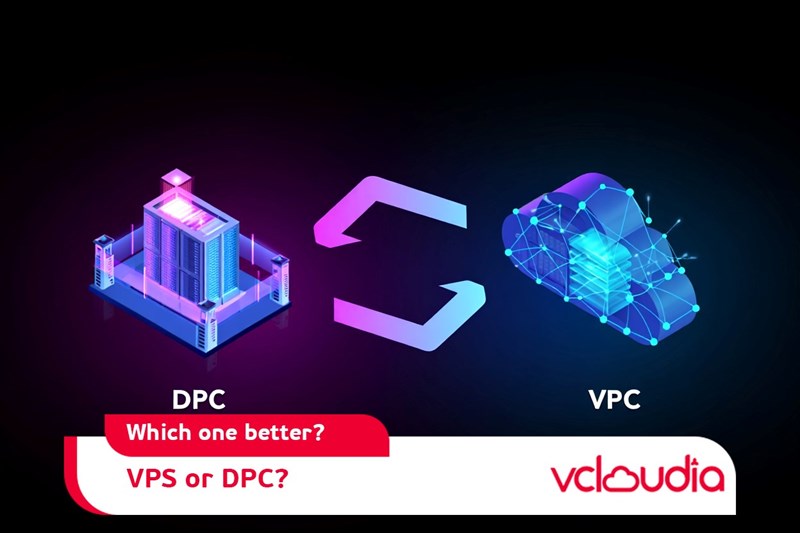
A Virtual Private Cloud (VPC) is a cloud computing service that provides businesses with a private virtual network within a shared cloud infrastructure. With VPC, customers can freely customize network configurations, create isolated subnets, and ensure security through strict access control mechanisms.
VPC offers flexible scalability and easy management without the need to invest in high-end physical hardware. This makes it an ideal choice for organizations that need to balance cost and performance—particularly startups, small and medium-sized businesses, or test and development environments.
How Does a VPC Work?
The VPC model functions by dividing a cloud provider’s resources into isolated virtual networks. Customers can control and configure IP addressing, firewall rules, VPN setup, and other network services.
Within a VPC, resources such as virtual machines and storage are organized into separate segments to minimize risks of conflict or data leakage from other users sharing the same cloud platform. This allows businesses to operate complex, security-focused applications while maintaining the ability to scale as needed.
What is a Dedicated Private Cloud?
A Dedicated Private Cloud (DPC), also known as a fully private cloud environment, provides an entirely isolated hardware infrastructure dedicated to a single customer. With no shared resources, this model offers an independent operating environment that can be customized from the hardware level to network services and security policies.
A DPC can be deployed on the enterprise’s own physical infrastructure or managed by a service provider, ensuring optimal security—ideal for organizations handling sensitive data or requiring strict compliance and governance.
How Does a DPC Work?
A DPC delivers a fully private cloud environment with no shared servers or networks. The physical servers are dedicated exclusively to one organization, and all virtualization layers operate within that customer’s environment.
In this model, the business has complete control over hardware, software, and network configurations. It supports deep customization and integration of legacy systems or specialized applications—making it suitable for large enterprises or industries such as finance, healthcare, and defense.
Advantages and Limitations of VPC
1. Advantages
VPC offers outstanding flexibility and cost efficiency. Operating within the shared infrastructure of a cloud provider allows organizations to scale resources up or down based on demand and pay only for what they use—optimizing cash flow and operational costs. Businesses can access advanced cloud services without needing to invest in physical equipment.
In addition, VPC environments typically include automated management tools that reduce operational and maintenance efforts. This enables organizations to focus more on core business activities instead of worrying about hardware management or internal network bottlenecks.
2. Limitations
The main drawback of VPC is its limited customization and control compared to internal systems or DPC. Since it operates in a shared environment, it may not fully meet strict regulations regarding sensitive data or compliance-heavy industries such as banking or healthcare.
Although cloud providers implement strong security measures, shared infrastructure still presents potential risks of cyber threats or cross-tenant attacks. Businesses may need to implement additional security layers to mitigate these concerns.
Advantages and Limitations of DPC
1. Advantages
DPC’s greatest strength lies in complete control over the environment. Because the system is entirely isolated, businesses can establish flexible, customized security policies tailored to their specific requirements. This makes DPC ideal for industries with stringent data protection needs such as banking, aviation, or national defense.
DPC offers high performance, unlimited hardware scalability, and optimization for data-intensive workloads or complex enterprise systems. Its high customizability also supports the integration of legacy software and specialized corporate applications without being restricted by shared platforms.
2. Limitations
However, DPC requires significant investment in physical infrastructure and technical personnel. Building and maintaining such a system comes with high operational costs and demands a highly skilled IT team to sustain performance, security, and continuous updates.
Additionally, while DPC is highly customizable, scaling it can be slower compared to public cloud platforms. This may hinder businesses when facing rapid growth or sudden increases in demand for computing resources.
When Should You Choose VPC?
Thanks to its flexibility, cost-effectiveness, and automated management, VPC is well suited for small and medium-sized businesses, test environments, and software development projects. Organizations that need rapid expansion or contraction based on market trends will benefit greatly from this model.
VPC is also a good fit for companies with limited budgets that still want strong programmability and network control. In fast-changing industries such as tech startups, VPC helps reduce risks and optimize operating costs.
When Should You Choose DPC?
Businesses with strict security requirements, regulatory obligations, or complex operational needs should consider DPC. Sectors like banking, securities, or defense manufacturing rely on dedicated environments with full control over infrastructure.
If the organization has the budget to invest in hardware and technical teams, DPC becomes the optimal choice to ensure safety, high performance, and long-term scalability.
Conclusion
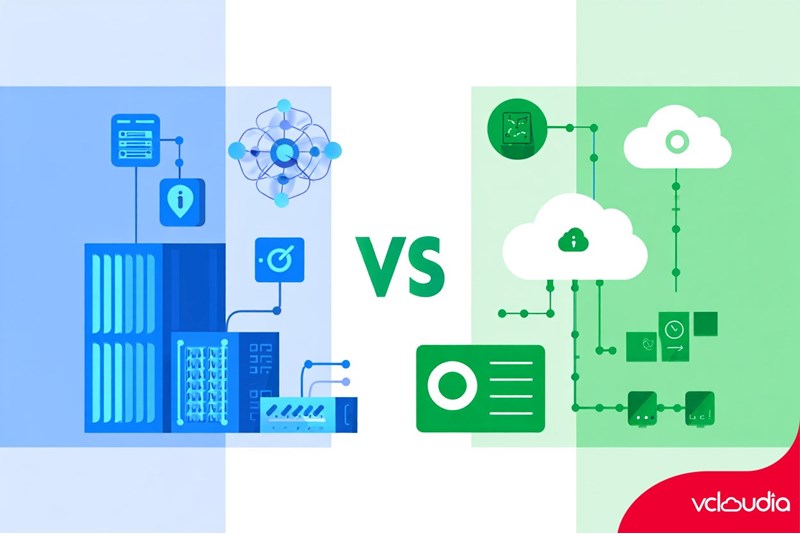
When comparing VPC vs. DPC, it’s clear that each solution has distinct strengths and limitations tailored to different types of organizations. If you need a flexible, affordable, easy-to-manage cloud environment suitable for small or medium-scale operations, VPC is the optimal choice. However, if your business demands maximum security, full control, and long-term infrastructure investment, DPC is the more suitable option.
Understanding these differences helps leaders make informed decisions aligned with long-term business strategies. Choosing the right cloud platform not only optimizes costs but also enhances security, operational efficiency, and competitiveness in the global market.
Looking for a high-performance, secure solution?
Explore the services offered by Vcloudia – a leading provider of cloud computing and data center solutions. Contact us for expert consultation and find the right model for your needs:
- Hotline: +855 888 55 66 08 (free of charge)
- Fanpage: https://www.facebook.com/vcloudia/
- Website: https://vcloudia.com
Featured news
Related news
What is a Snapshot? The Difference Between Snapshot and Backup
Snapshot is a familiar concept in data management and protection. In the context of the information technology boom, where data is a major asset for businesses, understanding Snapshots as well as their application is a key factor for enterprises to maximize technological efficiency.
What is a Firewall? The Role and Importance of Firewalls for Users
In the context of ever-increasing cyberattacks, system security has become a top priority for many enterprises. Alongside deploying antivirus software and controlling connection ports, firewalls are also considered a key solution to effectively enhance cybersecurity.
What is DDoS? Signs, Mitigation Strategies, and Effective Prevention
DDoS is a highly dangerous cyberattack that leaves severe consequences for enterprises. Therefore, gaining a clear understanding of DDoS attacks, as well as how to detect and prevent them, is a topic of significant interest to many.
What is a Trojan? How to Detect, Avoid, and Prevent It
A Trojan is a type of malicious code or software that can cause severe consequences to computer operations. So, what is a Trojan? How can you prevent a Trojan from infiltrating your computer? In the following article, Vcloudia will provide detailed information on these issues.
What is Cloud Backup? Classification, benefits, and limitations
Cloud Backup is a solution that plays an important role in backing up and recovering data when an incident occurs. So what exactly is Cloud Backup? Let's find out the details with Vcloudia in the following article.
What is Cloud Storage? Features and Benefits of Using It
Cloud Storage is the perfect storage solution alternative to bulky, space-consuming physical hard drives. So, what is Cloud Storage? Let's explore the details with Vcloudia through the following article.
What is an API? Characteristics and applications in website design
API, short for Application Programming Interface, is a concept no longer unfamiliar in the information technology field. So what exactly is an API and why is it so important? Let's find out with Vcloudia.
What is Node.js? Instructions on how to install Node.js on cPanel
Currently, it is easy to see that Node.js is being used by quite a lot of people. This is because Node.js can support users in running on multiple platforms and multiple devices.
What is Vultr VPS? Should you use Vultr VPS?
Vultr VPS is one of the best cloud storage solutions in the world. In this article, you will learn the concept: "What is Vultr VPS?", as well as understand its advantages and disadvantages.
Zoom Cloud Meeting: What is it? Basic Things You Should Know About Zoom Cloud Meeting
In 2020, Zoom Cloud Meeting became one of the leading video conferencing software applications. It allows you to virtually interact with colleagues when in-person meetings aren't possible, and it has also been very successful for social events.