



.png)


















.png)





What is IaaS? Everything You Need to Know About Infrastructure as a Service
Nov 20, 2025IaaS, short for Infrastructure as a Service, is one of the most widely used cloud computing models today. It offers businesses numerous benefits in terms of flexibility, scalability, and cost efficiency. This article will help you better understand what IaaS is, its key components, advantages, disadvantages, and real-world applications.
What is IaaS?
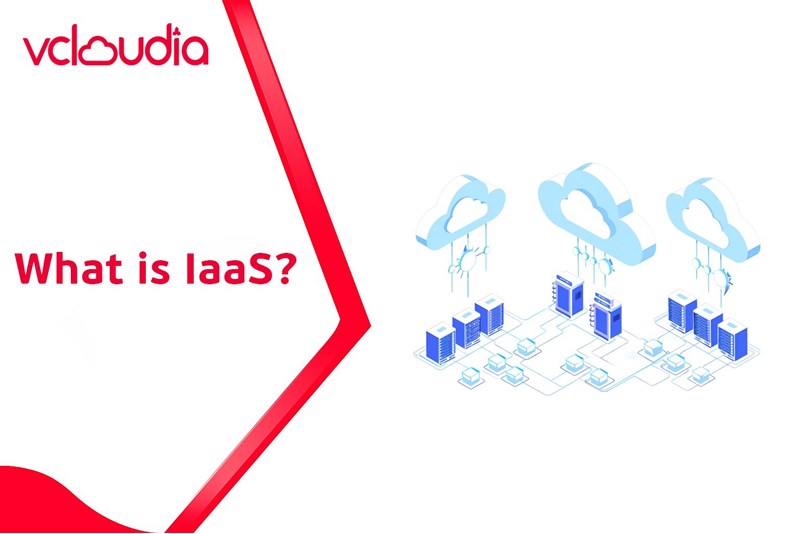
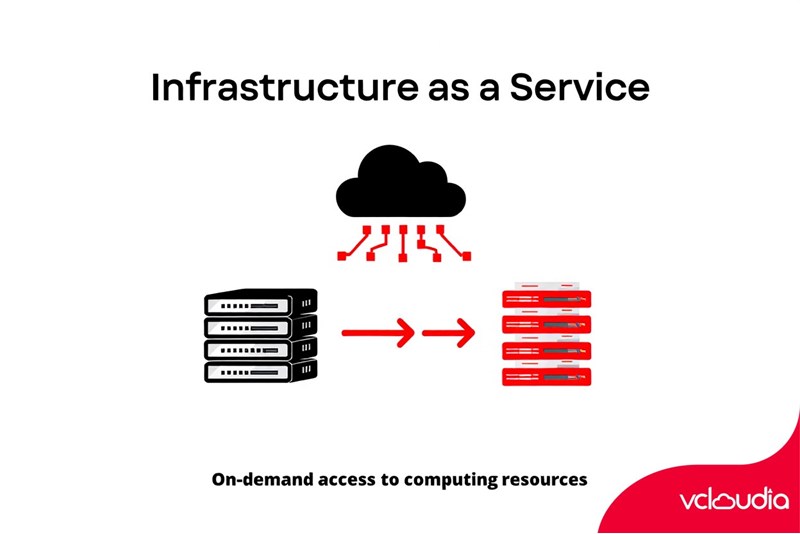
IaaS (Infrastructure as a Service) is a cloud computing model that allows users to rent essential IT resources—such as virtual servers, storage, and networking—over the internet instead of purchasing and maintaining physical hardware. Users can create server environments based on their needs, easily manage, expand, or scale down resources without dealing with the complexity of physical infrastructure.
This model provides maximum flexibility and is ideal for organizations that are rapidly growing or have fluctuating technology demands. A key feature of IaaS is its high degree of customization—organizations pay only for the resources they actually use, rather than making large upfront infrastructure investments.
Additionally, IaaS enables developers and IT teams to focus on software development and service delivery, without being constrained by the complexities of hardware maintenance. Even small businesses can compete effectively in the market thanks to the agility and cost benefits of IaaS.
Key Features of IaaS
One of the most notable advantages of IaaS is its scalability. As businesses grow or need to expand operations, they can easily adjust resources without touching any physical hardware—saving both time and cost.
Moreover, IaaS offers high configurability, allowing organizations to tailor system architectures to meet specific industry or operational requirements. Many providers also offer automation tools for managing, monitoring, and optimizing performance—reducing manual effort and minimizing human errors.
Another major strength of IaaS is cost optimization. Instead of making large capital investments in hardware, businesses pay only for what they use, allowing for better financial control. Cloud service providers also frequently update and upgrade their infrastructure, ensuring high performance and security.
Core Components of IaaS
1. Compute
The compute component allows users to rent and manage virtual machines (VMs) or containers to run applications and services. This is essentially the “brain” of the system, responsible for processing workloads and handling computations.
In practice, IaaS compute services enable businesses to create customized environments for development, testing, or production. Major providers such as AWS, Azure, and Google Cloud offer powerful compute services, allowing users to deploy, configure, and manage instances efficiently.
2. Storage
The storage component provides flexible options such as virtual disks, object storage, and distributed file systems. It’s a fundamental part of IaaS, enabling enterprises to store files, databases, and backups securely.
With IaaS storage, organizations can easily scale capacity up or down, minimize data loss, and improve accessibility and data sharing across systems. Services like Amazon S3 and Google Cloud Storage offer virtually unlimited scalability with high reliability and continuous availability.
3. Networking
Networking ensures secure, consistent, and flexible connections between all system components. It includes services such as virtual IP configuration, firewalls, load balancing, VPNs, and network security tools.
The flexibility of cloud networking allows organizations to create subnets, optimize traffic flows, and enhance overall system security. Providers supply intuitive tools for managing network configurations, reducing risks and improving performance.
4. Virtualization Layer
The virtualization layer is the backbone of IaaS—it enables physical resources to be divided into multiple isolated virtual machines or containers. This optimizes hardware utilization while keeping environments separated for greater security and stability.
In addition, virtualization supports features like automated load balancing, backup, and recovery—minimizing downtime during failures. As virtualization technologies evolve, they continue to enhance efficiency and scalability in modern IaaS environments.
5. Monitoring and Management Tools
These tools allow administrators to monitor system performance, detect issues early, automatically optimize resource usage, and maintain operational continuity. They typically feature visual dashboards, automated alerts, and customizable reports, simplifying infrastructure management.
In complex 24/7 cloud environments, effective monitoring tools are essential for minimizing risks, maintaining service stability, and optimizing operational costs.
Advantages of IaaS
Thanks to its flexibility and customization, IaaS offers numerous advantages for businesses, including:
- Cost savings: Instead of investing heavily in hardware and maintenance, businesses pay only for what they use—ideal for startups or small enterprises. Operating costs are also reduced since cloud providers handle updates and maintenance automatically.
- Scalability: Resources can be quickly scaled up or down to meet fluctuating demands, making it perfect for seasonal or fast-changing workloads.
- Operational flexibility: With APIs, automation tools, and deep integrations, managing the system becomes easier, reducing human error and improving efficiency.
Limitations of IaaS
Despite its benefits, IaaS also comes with certain limitations:
- Security and privacy concerns: Since data and systems are hosted in the provider’s cloud, organizations must rely on the provider’s security measures—raising concerns about potential breaches or data loss.
- Limited control: Although many management tools exist, administrators depend on the provider’s responsiveness and technical capabilities, which can be challenging for organizations requiring strict control and compliance.
- Long-term cost considerations: Over time, IaaS can become more expensive than on-premises infrastructure if resources aren’t properly optimized or managed efficiently.
Real-World Applications of IaaS
IaaS has become a foundational technology across multiple industries. Tech companies, startups, and large enterprises leverage it to accelerate development and minimize upfront investments.
For example, e-commerce platforms use IaaS to scale during peak seasons; gaming companies use it to operate online services; and research or educational institutions employ it to distribute large datasets efficiently.
Government agencies, banks, and organizations with high-security demands also use IaaS—combined with additional protection layers—to safeguard data and ensure business continuity.
Conclusion
In summary, IaaS represents a major step forward in enabling businesses to fully leverage the benefits of cloud computing, creating a competitive edge in today’s fast-paced digital landscape. Its flexible infrastructure, scalability, and management tools make it an essential part of modern digital transformation.
However, to maximize its value, organizations must address potential security and governance challenges while adopting proper data and cost management strategies. As technology continues to advance, the future of Infrastructure as a Service holds tremendous potential for enhancing service quality and supporting enterprises toward a more successful digital era.
Looking for a high-performance, secure solution?
Explore the services offered by Vcloudia – a leading provider of cloud computing and data center solutions. Contact us for expert consultation and find the right model for your needs:
- Hotline: +855 888 55 66 08 (free of charge)
- Fanpage: https://www.facebook.com/vcloudia/
- Website: https://vcloudia.com
Featured news
Related news
What is a Snapshot? The Difference Between Snapshot and Backup
Snapshot is a familiar concept in data management and protection. In the context of the information technology boom, where data is a major asset for businesses, understanding Snapshots as well as their application is a key factor for enterprises to maximize technological efficiency.
What is a Firewall? The Role and Importance of Firewalls for Users
In the context of ever-increasing cyberattacks, system security has become a top priority for many enterprises. Alongside deploying antivirus software and controlling connection ports, firewalls are also considered a key solution to effectively enhance cybersecurity.
What is DDoS? Signs, Mitigation Strategies, and Effective Prevention
DDoS is a highly dangerous cyberattack that leaves severe consequences for enterprises. Therefore, gaining a clear understanding of DDoS attacks, as well as how to detect and prevent them, is a topic of significant interest to many.
What is a Trojan? How to Detect, Avoid, and Prevent It
A Trojan is a type of malicious code or software that can cause severe consequences to computer operations. So, what is a Trojan? How can you prevent a Trojan from infiltrating your computer? In the following article, Vcloudia will provide detailed information on these issues.
What is Cloud Backup? Classification, benefits, and limitations
Cloud Backup is a solution that plays an important role in backing up and recovering data when an incident occurs. So what exactly is Cloud Backup? Let's find out the details with Vcloudia in the following article.
What is Cloud Storage? Features and Benefits of Using It
Cloud Storage is the perfect storage solution alternative to bulky, space-consuming physical hard drives. So, what is Cloud Storage? Let's explore the details with Vcloudia through the following article.
What is an API? Characteristics and applications in website design
API, short for Application Programming Interface, is a concept no longer unfamiliar in the information technology field. So what exactly is an API and why is it so important? Let's find out with Vcloudia.
What is Node.js? Instructions on how to install Node.js on cPanel
Currently, it is easy to see that Node.js is being used by quite a lot of people. This is because Node.js can support users in running on multiple platforms and multiple devices.
What is Vultr VPS? Should you use Vultr VPS?
Vultr VPS is one of the best cloud storage solutions in the world. In this article, you will learn the concept: "What is Vultr VPS?", as well as understand its advantages and disadvantages.
Zoom Cloud Meeting: What is it? Basic Things You Should Know About Zoom Cloud Meeting
In 2020, Zoom Cloud Meeting became one of the leading video conferencing software applications. It allows you to virtually interact with colleagues when in-person meetings aren't possible, and it has also been very successful for social events.