



.png)















.png)





What Is SaaS? Everything You Need to Know About Software-as-a-Service
19/12/2025SaaS (Software-as-a-Service) has become a crucial component of the global digital transformation trend, offering numerous advantages over traditional software models. In this article, let’s explore with vCloudia the concepts, roles, operating mechanisms, and future trends of the SaaS model.
What Is SaaS?
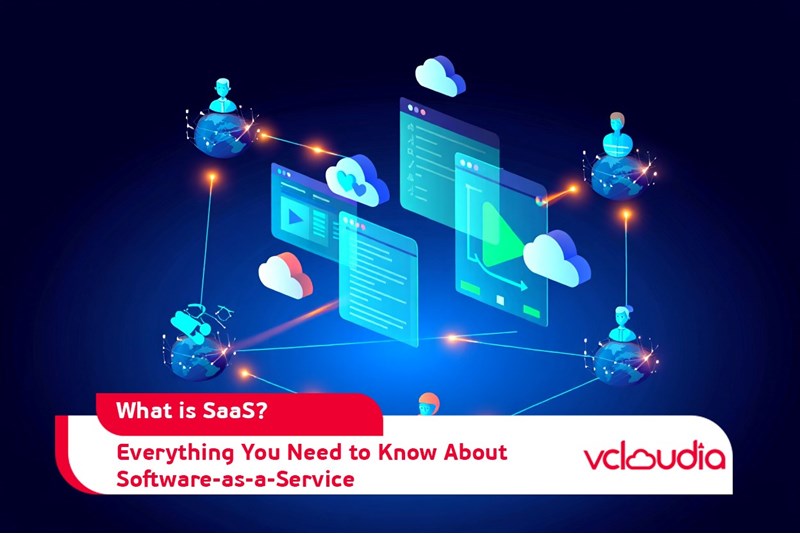
SaaS (short for Software-as-a-Service) is a software delivery model over the Internet in which service providers build, operate, and maintain software systems on the cloud. Users only need to access and use the applications through a web browser without installing or managing complex hardware and software.
SaaS helps businesses and individuals save significant costs and effort in operating software systems while ensuring convenience and rapid updates. This concept has completely transformed how organizations deploy and manage technology applications, bringing them closer to end users.
Why Is SaaS Important?
In the context of rapidly advancing digital technologies, SaaS plays a pivotal role in modern digital transformation strategies. Beyond optimizing business operations, SaaS is a key factor that enhances global competitiveness.
SaaS systems also enable organizations to adapt quickly to market fluctuations by providing on-demand scalability and reducing risks associated with investing in new IT infrastructure. Additionally, SaaS fosters flexible work environments, encourages creative collaboration, and reduces the burden on internal IT resources.
How Does the Software-as-a-Service Model Work?
In the SaaS model, all applications and data are stored on cloud platforms, with service providers managing all hardware and software. Users only need an Internet-connected device and can access the service through a browser or integrated APIs.
SaaS providers operate by continuously maintaining and updating software, ensuring customers always have access to the latest, most secure, and most efficient versions. Resource management, backups, security, and upgrades are handled by the provider, minimizing operational and maintenance risks for client organizations.
Key Features of SaaS
SaaS features clearly reflect its value and central role in modern digital technology strategies. These standout attributes not only distinguish SaaS from other software models but also emphasize its importance in the digital age.
One major feature is anywhere, anytime access, as long as an Internet connection is available. This enables flexible work environments without relying on fixed devices or locations. Secondly, SaaS offers subscription- or usage-based pricing, reducing upfront investment and maintenance costs.
Service quality and security are consistently improved by SaaS providers, as data protection and customer privacy are critical. Finally, the ability to scale resources flexibly according to actual needs allows businesses to adjust their usage without interrupting operations—contributing to sustainable growth.
Benefits of Using SaaS
Adopting the SaaS model brings numerous practical benefits to businesses and individuals. Below are the key advantages and insights on how they positively impact operations and organizational development strategies.
1. Cost Savings
This is the most obvious and significant benefit of SaaS. Businesses do not need to invest in expensive hardware or software, nor do they need large IT teams for system operations and maintenance. Instead, they only pay monthly or usage-based fees, making budgeting and forecasting much easier.
Furthermore, SaaS services often include continuous updates, reducing maintenance, upgrade, and troubleshooting costs. This allows organizations to focus resources on strategic initiatives rather than repetitive technical tasks.
2. Fast Deployment
Unlike traditional software systems that require lengthy processes from design to installation, SaaS enables businesses to start using software in a short time. Since applications are pre-installed and configured on the cloud, users can simply sign up and begin using them immediately.
This allows businesses to test new applications, adjust workflows to actual needs, and innovate quickly without technical barriers—an essential capability in today’s highly competitive market.
3. Reduced Operational Burden
With SaaS, businesses do not need to invest heavily in IT infrastructure, relieving pressure on IT departments and technical staff. Maintenance and upgrades become the responsibility of the provider, allowing companies to focus on core operations.
Moreover, data management, backup, and recovery are handled by the provider, reducing data loss risks and eliminating the need for complex internal security systems. This builds a solid foundation for long-term, secure business growth.
4. High Flexibility and Scalability
One of SaaS’s most important advantages is the ability to scale usage quickly to match business needs. Whether increasing users, enhancing features, or expanding operations, SaaS solutions can adapt seamlessly.
This minimizes upgrade time and costs while avoiding business disruptions. Such flexibility allows organizations to adapt rapidly to market demands or new projects without traditional infrastructure constraints.
5. Flexible Remote Work
The global pandemic has made remote work a necessity. SaaS provides an effective platform for remote work by enabling easy, secure access anytime, anywhere. Employees can collaborate, share data, and perform tasks without being limited by geography or device.
This creates a more productive and flexible work environment and helps businesses maintain continuity under all circumstances. Beyond crisis situations, cloud-based remote work is expected to become a long-term trend.
Some Limitations of SaaS
Despite its many advantages, SaaS still has limitations that organizations should carefully evaluate:
- First, data security and control remain top concerns. Since data is stored on the provider’s servers, organizations may find it challenging to maintain full control—especially those handling sensitive or strategic information.
- Second, heavy dependence on the provider poses risks if the provider experiences outages or discontinues operations. Businesses must establish contingency plans and clear contractual agreements to ensure service continuity.
- Third, SaaS performance depends on Internet connectivity. In areas with slow or unstable networks, access may be disrupted, affecting operations. Organizations should therefore invest in suitable network infrastructure.
- Fourth, total costs may increase over time as businesses scale or require premium features. Proper cost management strategies are necessary to ensure an efficient and sustainable investment.
Popular Applications of SaaS
SaaS is widely used across many sectors—from business management, marketing, sales, finance, and HR to education and healthcare. Popular SaaS platforms help organizations optimize workflows, boost productivity, and drive innovation.
Examples include Google Workspace (Gmail, Google Drive, Google Meet) for collaboration; Salesforce as a leading CRM platform; and Microsoft 365 as a powerful cloud office suite. Other common tools include SAP SaaS, Oracle Cloud, and HR platforms such as BambooHR.
The diversity of SaaS applications demonstrates that the model fits not only large enterprises but also SMEs and startups, helping them compete globally without significant infrastructure investment.
When Should You Use the SaaS Model?
Choosing SaaS depends not only on the service characteristics but also on your organization’s needs, size, budget, and long-term strategy.
SaaS is ideal when businesses want to reduce internal IT workloads, deploy new applications quickly, or plan to scale in the future. It is also suitable for organizations aiming to optimize operating costs, reduce technology risks, or adopt remote work as a standard.
However, if your organization handles highly sensitive data or requires strict control, you must evaluate SaaS security options or consider backup solutions. Additionally, assessing internal network infrastructure is crucial to ensuring stable and continuous access.
Future Trends of SaaS
As technology continues to evolve, SaaS is also innovating to keep up with global trends. Forecasts show strong growth in SaaS markets, especially in AI, big data, automation, and IoT.
Service providers will integrate advanced technologies to enhance automation, data analytics, and personalized user experiences. SaaS models will move toward greater openness through APIs, multi-platform support, and deeper ecosystem integration.
Security, privacy, and regulatory compliance will become increasingly important, pushing providers to adopt higher standards. SaaS adoption in healthcare, education, government, and manufacturing will further expand opportunities for digital transformation.
Conclusion
In summary, SaaS is not just a software delivery model over the Internet—it is an indispensable component of modern digital transformation strategies. With cost savings, rapid deployment, flexible scalability, and strong remote-work support, SaaS is opening new pathways for sustainable business growth.
By understanding its limitations, applications, and future trends, organizations can better prepare to maximize the advantages that SaaS offers.
In a rapidly evolving digital world, mastering and adopting the SaaS model is key for businesses to thrive, adapt to global changes, and secure long-term competitive advantages.
Looking for a high-performance, secure solution?
Explore the services offered by Vcloudia – a leading provider of cloud computing and data center solutions. Contact us for expert consultation and find the right model for your needs:
- Hotline: +855 888 55 66 08 (free of charge)
- Fanpage: https://www.facebook.com/vcloudia/
- Website: https://vcloudia.com
ព័ត៌មានពិសេស
ព័ត៌មានដែលទាក់ទង
What is a Snapshot? The Difference Between Snapshot and Backup
Snapshot is a familiar concept in data management and protection. In the context of the information technology boom, where data is a major asset for businesses, understanding Snapshots as well as their application is a key factor for enterprises to maximize technological efficiency.
What is a Firewall? The Role and Importance of Firewalls for Users
In the context of ever-increasing cyberattacks, system security has become a top priority for many enterprises. Alongside deploying antivirus software and controlling connection ports, firewalls are also considered a key solution to effectively enhance cybersecurity.
What is DDoS? Signs, Mitigation Strategies, and Effective Prevention
DDoS is a highly dangerous cyberattack that leaves severe consequences for enterprises. Therefore, gaining a clear understanding of DDoS attacks, as well as how to detect and prevent them, is a topic of significant interest to many.
What is a Trojan? How to Detect, Avoid, and Prevent It
A Trojan is a type of malicious code or software that can cause severe consequences to computer operations. So, what is a Trojan? How can you prevent a Trojan from infiltrating your computer? In the following article, Vcloudia will provide detailed information on these issues.
What is Cloud Backup? Classification, benefits, and limitations
Cloud Backup is a solution that plays an important role in backing up and recovering data when an incident occurs. So what exactly is Cloud Backup? Let's find out the details with Vcloudia in the following article.
What is Cloud Storage? Features and Benefits of Using It
Cloud Storage is the perfect storage solution alternative to bulky, space-consuming physical hard drives. So, what is Cloud Storage? Let's explore the details with Vcloudia through the following article.
What is an API? Characteristics and applications in website design
API, short for Application Programming Interface, is a concept no longer unfamiliar in the information technology field. So what exactly is an API and why is it so important? Let's find out with Vcloudia.
What is Node.js? Instructions on how to install Node.js on cPanel
Currently, it is easy to see that Node.js is being used by quite a lot of people. This is because Node.js can support users in running on multiple platforms and multiple devices.
What is Vultr VPS? Should you use Vultr VPS?
Vultr VPS is one of the best cloud storage solutions in the world. In this article, you will learn the concept: "What is Vultr VPS?", as well as understand its advantages and disadvantages.
Zoom Cloud Meeting: What is it? Basic Things You Should Know About Zoom Cloud Meeting
In 2020, Zoom Cloud Meeting became one of the leading video conferencing software applications. It allows you to virtually interact with colleagues when in-person meetings aren't possible, and it has also been very successful for social events.