



.png)


















.png)





What Is a Cloud Firewall? Why It Is Essential and Important
Nov 27, 2025In today’s technology-driven world—where data and online services are expanding at an unprecedented pace—Cloud Firewalls have become an indispensable component of enterprise cybersecurity strategies. In this article, Vcloudia takes you through the concept, operation, key features, and benefits of Cloud Firewalls, as well as existing risks and the right time to adopt this solution.
What Is a Cloud Firewall?
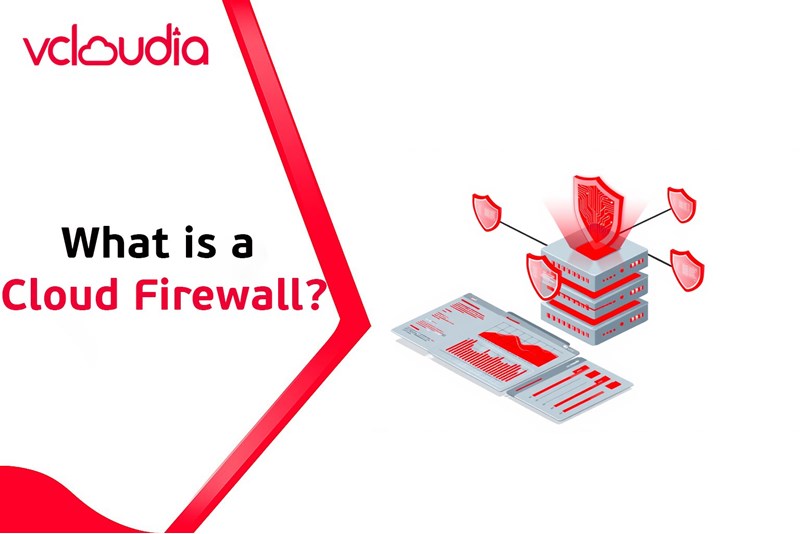
A Cloud Firewall is a cloud-based security system designed to control the flow of data entering and leaving an organization’s network through cloud services. Instead of relying on traditional hardware appliances, a Cloud Firewall operates as a web service, allowing businesses to deploy, manage, and scale it with ease according to real-world demands.
The biggest difference between a Cloud Firewall and a traditional firewall lies in its cloud-native distribution, providing seamless integration and exceptional flexibility. This enables companies to protect not only their internal infrastructure but also the cloud applications and services they offer—effectively reducing security vulnerabilities and mitigating cyber threats.
How Does a Cloud Firewall Work?
A Cloud Firewall operates on a cloud service platform where security rules and policies are configured and managed remotely through a web interface or API. As data passes through the system, algorithms inspect and analyze traffic to determine whether it is legitimate and compliant with established policies.
One notable advantage is its ability to process data in real time, allowing rapid response to cyberattacks or suspicious activities. Cloud Firewalls also integrate technologies such as Deep Packet Inspection (DPI), Intrusion Prevention Systems (IPS), and advanced URL filtering to ensure superior protection. These systems continuously analyze and classify emerging threats to deliver optimal security performance.
Why Are Cloud Firewalls Critically Important and Necessary?
Organizations today face increasingly sophisticated and complex cyber threats. Attacks are no longer limited to internal LAN intrusions—global-scale threats like ransomware, DDoS attacks, and online fraud are becoming more frequent and harder to detect.
Traditional security systems can no longer adapt effectively to these evolving threats. Consequently, Cloud Firewalls play a decisive role in helping businesses maintain continuous operations, protect customer data, optimize costs, and scale security measures flexibly. This significantly reduces the financial, reputational, and operational risks businesses face.
Additionally, as digital transformation accelerates and cloud adoption becomes mainstream, organizations must upgrade their security frameworks to stay aligned. Cloud Firewalls serve as the foundation for building a secure, sustainable enterprise in the digital era.
Key Features of Cloud Firewalls
1. Application Control
Cloud Firewalls provide robust control over applications running within a network. Instead of simply filtering by ports or IPs, administrators can precisely define which applications are allowed or restricted.
This reduces the spread of malware from unsafe applications and enhances internal network governance. It also strengthens compliance with security standards—even in complex environments with numerous applications. Application control further prevents unauthorized internal access, reduces data leakage risks, and optimizes bandwidth usage.
2. Deep Packet Inspection (DPI)
DPI is a powerful technique that analyzes the content of each data packet passing through the system. Rather than relying only on headers or identifiers, DPI inspects full packet content to detect threats such as malware or harmful payloads.
This feature helps Cloud Firewalls block malicious content, phishing attempts, and data packets containing harmful code. It also enhances traffic classification for monitoring and performance optimization while improving rapid threat response.
3. Intrusion Prevention System (IPS)
IPS continuously monitors network traffic to detect unauthorized intrusion attempts. Upon identifying a threat, IPS automatically blocks the activity before damage occurs.
With continuously updated threat signatures, IPS ensures the system remains protected against emerging cyber risks. It also provides comprehensive risk reports, allowing administrators to build effective real-time defense strategies.
4. Advanced URL Filtering
Advanced URL filtering regulates access to websites based on content categories or security criteria. Beyond blocking harmful or malicious sites, it evaluates URLs according to organizational security policies.
Businesses can limit access to social media or entertainment sites during working hours, boosting productivity and preventing exposure to unsafe content. URL filtering also reduces risks associated with malware, viruses, and ransomware.
5. Multi-Layer Protection
Cloud Firewalls offer multi-layered protection by integrating multiple defense mechanisms across different network layers. Each layer addresses unique threats—providing coordinated, high-level security.
From the network layer to the application and data layers, each component works together to form a resilient defense system. This capability minimizes vulnerabilities, reduces workload on IT teams, and optimizes performance in cloud environments.
Benefits of Using a Cloud Firewall
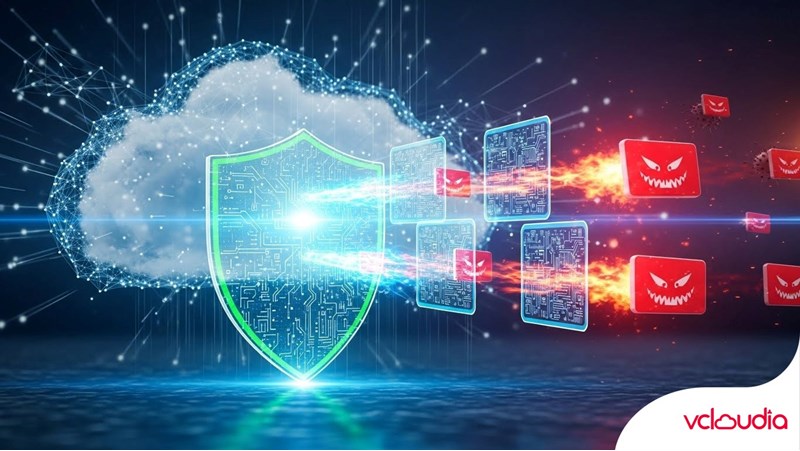
Using a Cloud Firewall brings many operational and security advantages:
- Highly flexible management, enabling policy adjustments and scalability across all business sizes
- Lower operational costs compared to traditional systems due to reduced hardware and maintenance needs
- Continuous updates to rules and patches to combat the latest threats
- Comprehensive monitoring and analytics that help identify weaknesses and strengthen defenses
By enhancing continuous protection and minimizing risks, Cloud Firewalls help organizations secure their digital ecosystems—improving customer trust and business credibility.
Existing Risks and Limitations
Despite numerous advantages, Cloud Firewalls still have certain limitations:
- Advanced threats may bypass predefined rules, requiring constant updates and rapid adaptation
- Heavy reliance on cloud services may raise concerns about data control and privacy
- Integration and operation may require highly skilled personnel and additional time investment
- Organizations must carefully evaluate these factors and establish contingency plans to mitigate potential risks.
When Should You Use a Cloud Firewall?
Cloud Firewalls are ideal for organizations operating in highly digital environments, scaling rapidly, or migrating to cloud-based business models. Organizations handling sensitive data or distributed systems with multiple access points should also consider adopting Cloud Firewalls to optimize security management costs.
They are especially suitable for businesses seeking faster incident response times or aiming for internationally recognized security standards.
Traditional firewalls are becoming less suitable for remote work models, multi-platform operations, and heightened security demands. As such, Cloud Firewalls should be considered a priority in any digital transformation strategy.
Conclusion
In an increasingly complex technological landscape, protecting enterprise systems is no longer optional—it is mandatory. Cloud Firewalls play a central role in modern defense strategies by controlling access, detecting threats, and preventing sophisticated attacks, ensuring maximum safety for data and business operations.
We hope this article has provided clear insights into the role, features, benefits, and limitations of Cloud Firewalls. Undoubtedly, this is a powerful tool for businesses seeking sustainable growth and secure digital ecosystems in the modern era.
Explore the services offered by Vcloudia – a leading provider of cloud computing and data center solutions. Contact us for expert consultation and find the right model for your needs:
- Hotline: +855 888 55 66 08 (free of charge)
- Fanpage: https://www.facebook.com/vcloudia/
- Website: https://vcloudia.com
Featured news
Related news
What is a Snapshot? The Difference Between Snapshot and Backup
Snapshot is a familiar concept in data management and protection. In the context of the information technology boom, where data is a major asset for businesses, understanding Snapshots as well as their application is a key factor for enterprises to maximize technological efficiency.
What is a Firewall? The Role and Importance of Firewalls for Users
In the context of ever-increasing cyberattacks, system security has become a top priority for many enterprises. Alongside deploying antivirus software and controlling connection ports, firewalls are also considered a key solution to effectively enhance cybersecurity.
What is DDoS? Signs, Mitigation Strategies, and Effective Prevention
DDoS is a highly dangerous cyberattack that leaves severe consequences for enterprises. Therefore, gaining a clear understanding of DDoS attacks, as well as how to detect and prevent them, is a topic of significant interest to many.
What is a Trojan? How to Detect, Avoid, and Prevent It
A Trojan is a type of malicious code or software that can cause severe consequences to computer operations. So, what is a Trojan? How can you prevent a Trojan from infiltrating your computer? In the following article, Vcloudia will provide detailed information on these issues.
What is Cloud Backup? Classification, benefits, and limitations
Cloud Backup is a solution that plays an important role in backing up and recovering data when an incident occurs. So what exactly is Cloud Backup? Let's find out the details with Vcloudia in the following article.
What is Cloud Storage? Features and Benefits of Using It
Cloud Storage is the perfect storage solution alternative to bulky, space-consuming physical hard drives. So, what is Cloud Storage? Let's explore the details with Vcloudia through the following article.
What is an API? Characteristics and applications in website design
API, short for Application Programming Interface, is a concept no longer unfamiliar in the information technology field. So what exactly is an API and why is it so important? Let's find out with Vcloudia.
What is Node.js? Instructions on how to install Node.js on cPanel
Currently, it is easy to see that Node.js is being used by quite a lot of people. This is because Node.js can support users in running on multiple platforms and multiple devices.
What is Vultr VPS? Should you use Vultr VPS?
Vultr VPS is one of the best cloud storage solutions in the world. In this article, you will learn the concept: "What is Vultr VPS?", as well as understand its advantages and disadvantages.
Zoom Cloud Meeting: What is it? Basic Things You Should Know About Zoom Cloud Meeting
In 2020, Zoom Cloud Meeting became one of the leading video conferencing software applications. It allows you to virtually interact with colleagues when in-person meetings aren't possible, and it has also been very successful for social events.