



Applications of Cloud Computing in the Healthcare Industry
Jan 29, 2026The application of cloud computing in healthcare is ushering in a new era of improved service quality, optimized hospital operations, and comprehensive digital transformation across the medical sector. This is no longer a distant trend; it has become an essential component of the technological revolution in healthcare.
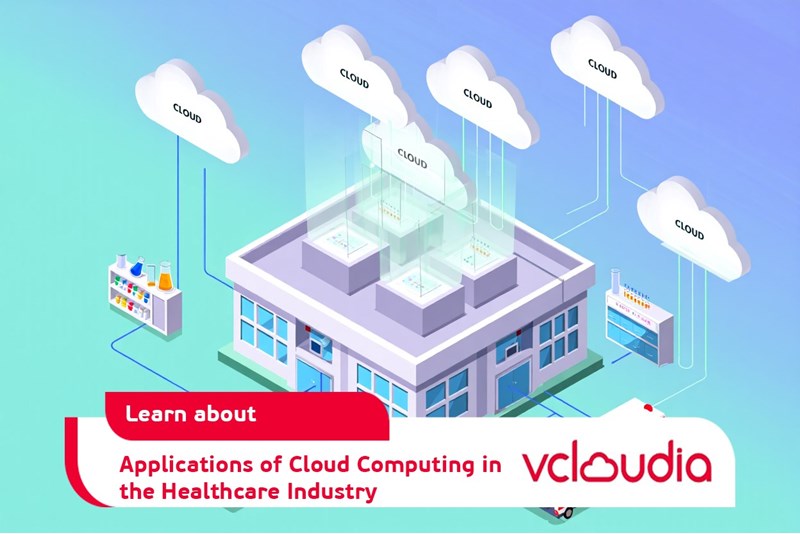
The Concept of Cloud Computing
Cloud Computing is a model for delivering information technology services over the internet, where data, applications, and infrastructure are stored and operated in large data centers managed by service providers. Users can access, manage, and use these services anytime and anywhere with an internet connection, reducing limitations related to physical location and hardware.
In healthcare, cloud computing enables flexible, secure storage, processing, and distribution of data while minimizing initial investment costs. It allows medical institutions to scale easily and synchronize data across clinics, hospitals, and research centers. These advantages make cloud computing an ideal solution for driving digital transformation in healthcare, improving operational efficiency, and enhancing the quality of patient care.
Why Is Cloud Particularly Suitable for Healthcare?
Healthcare is a highly specialized sector with extremely high requirements for data security, data management, and rapid access to information from anywhere. Traditional systems often face limitations in scalability, difficulty in integrating diverse data sources, and challenges in sharing information between healthcare institutions.
Cloud computing provides an optimal solution to these challenges, enabling healthcare organizations to operate more flexibly, synchronize data more effectively, and improve patient services. It also fosters interdisciplinary collaboration and supports big data analytics, thereby promoting research, improving treatment methods, and expanding healthcare services.
The Role of Cloud in the Modern Healthcare Ecosystem
In the context of sector-wide digital transformation, cloud computing plays a central role in building a modern healthcare ecosystem. It forms the foundation for remote services, data management, connectivity among healthcare organizations, and scientific research. From large hospitals to small clinics and community health centers, all can operate more efficiently, flexibly, and securely with the support of cloud technology.
1. A Platform for Smart Hospitals
Smart hospital systems require data integration, process automation, and enhanced patient experiences. Cloud provides the infrastructure that allows hospital management software, patient monitoring systems, and clinical decision support tools to operate continuously, synchronously, and in real time. Hospitals are no longer constrained by outdated technology but can evolve into modern, integrated healthcare centers.
Beyond optimizing workflows, cloud technology enables more flexible management of medical records, improving diagnostic accuracy and treatment effectiveness. Cloud-based smart hospitals can leverage artificial intelligence (AI) and big data analytics to predict disease trends and recommend appropriate treatment plans, thereby improving overall patient care quality.
2. Infrastructure for Telemedicine
Telemedicine has become an essential component of modern healthcare systems, especially in times of global health crises or in regions with limited access to basic medical services. Cloud provides a powerful and resilient data infrastructure that enables doctors and patients to communicate, consult, and diagnose remotely.
Cloud-based telemedicine systems expand access to healthcare in rural and underserved areas, reduce travel costs and time, and improve the efficiency of community healthcare services. In addition, cloud platforms support IoT devices for patient monitoring, enabling remote health tracking and real-time data transmission for more accurate diagnosis and treatment.
3. The Core of Patient Healthcare Data Analytics
In the era of big data, the ability to centralize and analyze medical records, test results, medical imaging, and patient data enables more accurate and timely decision-making. Cloud functions as a massive data hub, storing millions of records daily and providing real-time data processing and analytics capabilities.
Healthcare data analytics supports early detection of medical conditions, prediction of disease risks, and the development of personalized treatment plans. Thanks to cloud technology, researchers and physicians can access, share, and collaborate on large datasets, opening new opportunities for medical research and the development of innovative therapies.
4. Connecting the Healthcare Ecosystem
A modern healthcare ecosystem relies on close collaboration between hospitals, clinics, research centers, medical equipment suppliers, and insurance organizations. Cloud technology enables seamless, secure, and flexible connectivity among these stakeholders. As a result, data can be easily shared and updated in real time, improving coordination, reducing administrative burdens, and fostering innovation in healthcare.
Integrating data from multiple sources provides a comprehensive view of patient health, facilitating more accurate diagnosis, more effective treatment, and better healthcare management. These systems also support professional training and knowledge development for medical staff, contributing to improved service quality.
Key Applications of Cloud Computing in Healthcare
In healthcare, cloud computing is not just a technical foundation; it enables a wide range of practical applications that enhance efficiency and service quality—from record management to diagnosis, treatment, and scientific research.
1. Medical Record Storage and Management
Storing medical records in the cloud reduces the burden of physical storage while enhancing data security and authorized accessibility. Patients can also access their records anytime and anywhere, empowering them to take a more active role in managing their health.
Compared to traditional paper-based systems, cloud-based electronic medical records streamline clinical workflows, improve accuracy, and enhance efficiency. Records are securely stored, access-controlled, easily backed up, and recoverable in case of incidents, significantly reducing the risk of data loss.
2. Remote Medical Consultation and Treatment
Remote healthcare has become an integral part of modern healthcare ecosystems. Cloud supports secure online platforms that allow doctors to conduct consultations, diagnoses, patient monitoring via video calls, and deliver test results, prescriptions, and treatment guidance online.
This greatly benefits patients in remote or underserved areas, as well as those with mobility limitations, by reducing travel time and costs. These platforms also enable continuous consultation and monitoring, improving treatment outcomes and reducing pressure on central hospitals.
3. Online Appointment Scheduling and Patient Management Systems
Cloud-based scheduling systems allow patients to book appointments for consultations, tests, and vaccinations online without visiting hospitals in person or making phone calls. This improves professionalism, reduces errors, and optimizes healthcare staff workloads.
These systems often integrate physician schedules, medication management, appointment reminders, and treatment tracking. Healthcare staff can better manage patient flow and resource allocation, significantly improving the overall patient experience.
4. AI and Big Data Applications in Diagnosis
AI and big data are becoming powerful tools in medicine, especially when deployed on cloud platforms. AI algorithms analyze large volumes of medical data—from imaging to electronic health records—to support more accurate diagnoses, early disease detection, and optimized treatment recommendations.
Cloud-based systems continuously learn from new data, improving accuracy and predictive capabilities. This helps physicians make better-informed decisions, reduce misdiagnosis risks, and increase patient survival rates. AI also supports early identification of risk factors, enabling proactive preventive measures.
5. Management of Test Data and Diagnostic Results
Laboratory results, medical imaging, and diagnostic data are stored, shared, and processed on cloud platforms. This enables healthcare professionals to quickly access accurate, synchronized information, supporting timely and effective clinical decision-making.
Centralized management reduces the risk of data loss or inconsistencies, especially in emergencies or complex cases. Automated alerts for abnormal results further enhance patient safety by enabling timely interventions.
6. Medical Research and Clinical Trials
Medical research and clinical trials require large datasets, complex analytics, and international collaboration. Cloud provides scalable storage and processing environments that allow researchers to securely share, analyze, and aggregate data.
Cloud platforms also support virtual testing environments and treatment simulations, shortening research timelines, reducing costs, and accelerating the practical application of new discoveries. This contributes significantly to the advancement of precision and personalized medicine.

Key Benefits of Cloud Computing in Healthcare
The transformative benefits of cloud computing in healthcare focus on improving service quality, optimizing operations, and reducing costs. From ensuring data security to enabling continuous, flexible service delivery, cloud is a critical enabler of healthcare digital transformation.
1. Improved Quality of Patient Care
Patient care quality improves significantly thanks to fast, accurate, and synchronized data access. Cloud-based services enable physicians to monitor patient conditions more effectively and use AI-driven analytics to deliver accurate diagnoses and personalized treatment plans.
Comprehensive access to information reduces errors, enhances patient safety, and strengthens public trust in modern healthcare systems. Remote services also help bridge geographical gaps, protecting the rights of patients in remote or underserved areas.
2. Increased Access to Healthcare Services
Cloud expands access to healthcare, especially in regions with limited infrastructure. Telemedicine platforms, online consultations, and digital appointment systems reduce waiting times and improve access to high-quality healthcare services.
This benefits both patients and healthcare systems by reducing overcrowding and enabling better resource allocation. It also helps address healthcare inequality and supports public health and disease prevention initiatives.
3. Reduced IT Infrastructure Investment Costs
Instead of investing heavily in servers, data centers, software, and technical staff, healthcare organizations can leverage cloud services to significantly reduce operational costs. Expenses related to hardware, paperwork, and system management are lowered while scalability and flexibility increase.
Cloud services also provide automation, maintenance, data backup, and software updates, reducing the risk of service disruption and easing the burden of IT management. This allows healthcare budgets to focus more on patient care, treatment, and research.
4. Centralized Data for Better Decision-Making
Centralized cloud-based healthcare data allows managers and policymakers to analyze information more effectively and make data-driven decisions. Reports, disease trend forecasts, and treatment effectiveness analyses become more accurate thanks to continuous, large-scale data processing.
This supports strategic planning, efficient resource allocation, waste reduction, and the development of shared databases across the healthcare sector—facilitating service innovation and stronger disease prevention strategies.
5. Supporting Comprehensive Digital Transformation
Healthcare digital transformation cannot succeed without strong data foundations and modern technologies. Cloud underpins key digital initiatives such as electronic health records, laboratory systems, pharmaceutical management, patient monitoring systems, and remote care services.
As a result, healthcare institutions can synchronize data, enhance patient experience, innovate care delivery, and management practices—moving toward smarter, more efficient healthcare systems aligned with global trends.
Challenges in Implementing Cloud Computing in Healthcare
Despite its significant benefits, cloud adoption in healthcare also presents challenges that must be addressed to ensure safety, legal compliance, and operational effectiveness.
1. Data Security and Privacy
Healthcare data contains highly sensitive personal information and is vulnerable to cyberattacks if not properly protected. Although cloud providers continually enhance security measures, risks of breaches and unauthorized access remain.
Healthcare organizations must implement strong data protection strategies, including encryption, access controls, and staff training. Compliance with data protection regulations is also essential to avoid legal violations and penalties.
2. Regulatory Compliance
Each country has its own legal requirements for healthcare data protection, security standards, and patient privacy. Ensuring compliance during cloud implementation is a significant challenge.
Healthcare organizations must stay updated on regulations, collaborate closely with cloud providers, and establish standard operating procedures to ensure ongoing compliance.
3. Dependence on Cloud Service Providers
Migrating systems and data to the cloud increases dependence on providers. If a provider experiences outages, data loss, or security issues, healthcare operations may be severely affected.
Therefore, organizations must choose reputable providers, ensure clear backup and disaster recovery policies, and establish contracts that clearly define responsibilities and service levels.
4. Limited Network Infrastructure in Certain Regions
High-speed, stable internet access is still limited in many rural or underdeveloped areas. This poses a major challenge for cloud-based healthcare services, especially those requiring continuous data transmission.
Infrastructure upgrades require collaboration between governments, telecom providers, and healthcare organizations to enable effective cloud adoption.
5. Technology Readiness of Healthcare Staff
Not all healthcare professionals are familiar with cloud technologies, which can affect system adoption and effectiveness. Continuous training is essential to ensure staff understand benefits, limitations, and safe data handling practices.
Healthcare organizations must invest in ongoing education to ensure systems operate effectively and deliver maximum value to patients.
Real-World Examples of Cloud Computing in Healthcare
Globally, many countries and healthcare organizations have successfully adopted cloud computing, achieving significant improvements in care quality, operational efficiency, and research capabilities.
For example, the UK’s National Health Service (NHS) has implemented cloud systems to manage patient records, enhance data security, and improve clinical efficiency. In the United States, many healthcare startups have built cloud-based telemedicine platforms that provide nationwide access to care.
In advanced healthcare systems, leading hospitals use cloud-powered big data analytics and AI to support decision-making and enable precision, personalized treatments. These examples clearly demonstrate the transformative potential of cloud computing—not only for operational optimization but also as a catalyst for modern medical advancement.
Conclusion
The application of cloud computing in healthcare has proven to be a significant breakthrough in improving service quality, optimizing operations, and driving innovation. However, to fully realize these benefits, healthcare organizations must invest not only in technology but also in security, legal compliance, workforce capability, and infrastructure readiness.
In the context of global health challenges and the rapid development of Industry 4.0 technologies, cloud-based digital transformation in healthcare is no longer optional—it is a critical success factor for building modern, safe, and comprehensive healthcare systems. Rapid adaptation to this trend will contribute to the development of advanced healthcare systems that better meet the growing needs of society in protecting and improving public health.
Looking for a high-performance, secure solution?Explore the services offered by Vcloudia – a leading provider of cloud computing and data center solutions. Contact us for expert consultation and find the right model for your needs:
- Hotline: +855 888 55 66 08 (free of charge)
- Fanpage: https://www.facebook.com/vcloudia/
- Website: https://vcloudia.com
Related news
Can Cloud Servers Fully Replace Physical Servers? A Practical Analysis for Businesses
In today’s era of digital transformation, businesses are constantly seeking ways to optimize their technology infrastructure to improve operational efficiency. One of the most frequently asked questions is: “Can Cloud Servers completely replace physical servers?”
Cloud Server vs VPC: Which Solution Should Startups Choose to Optimize Cost and Performance?
Should a startup choose Cloud Server or VPC? This is a common question many founders and technology managers face when building infrastructure for their new businesses. The right choice not only helps optimize costs but also ensures stable performance and flexible scalability when needed.
What is Hybrid Cloud? How It Works, Pros and Cons, and When to Use It
In today’s digital era, optimizing scalability, data control, and operational performance is essential for businesses to maintain their competitive edge. One of the most effective technological solutions is the Hybrid Cloud model. So, what is Hybrid Cloud?
What is DaaS (Desktop as a Service)?
With its ability to deliver flexible work experiences, high-level security, and centralized management, DaaS is increasingly becoming an inevitable trend in the technology strategies of modern enterprises.
What is BaaS (Backend as a Service)?
BaaS is increasingly popular among startups, small and medium-sized businesses, and product teams that need to launch MVPs quickly. So what is BaaS, how does it work, what are its advantages and limitations, and when should you use it? Let's explore this further with Vcloudia in the following article.
Virtual Private Cloud vs. Dedicated Private Cloud: Key Differences
In today’s digital era, choosing the right cloud computing platform plays a crucial role in determining a business’s operational efficiency. VPC vs. DPC are two commonly discussed concepts as organizations seek to optimize performance, security, and cost. Let’s explore these two service models in detail with Vcloudia.
Comparison Between Virtual Private Cloud and Virtual Private Server
In today’s technology-driven world, choosing the right hosting service for your business or personal needs is essential to ensure efficient operations and cost optimization. Among the most popular options are Virtual Private Cloud (VPC) and Virtual Private Server (VPS). Let’s explore the key differences between these two services with Vcloudia.
Should a Business Choose Shared Hosting or a Cloud Server?
When building and growing a business, choosing the right hosting service is crucial to ensure a website runs reliably, quickly, and securely. The two most common options today are Shared Hosting and Cloud Servers. Which one is the better fit for your business?
What Is Cloud Cost Management and Why Is It Important for Businesses?
As cloud computing services become increasingly popular and play a crucial role in business operations, controlling and optimizing cloud usage costs has become a decisive factor in maintaining profitability and operational efficiency. Vcloudia will help you better understand what cloud cost management is, why it matters, and how to implement it effectively within your organization.