



.png)



















.png)





What is a security vulnerability? The Reality and prevention methods
Apr 23, 2026In today's digital era, every enterprise faces numerous potential risks from the online environment, notably security vulnerabilities. Have you ever wondered what makes these vulnerabilities so dangerous? And how can businesses protect themselves against this threat? Let's join Vcloudia to learn about security vulnerabilities, their causes, and how to prevent them to protect your IT system through the following article.
What is a security vulnerability?
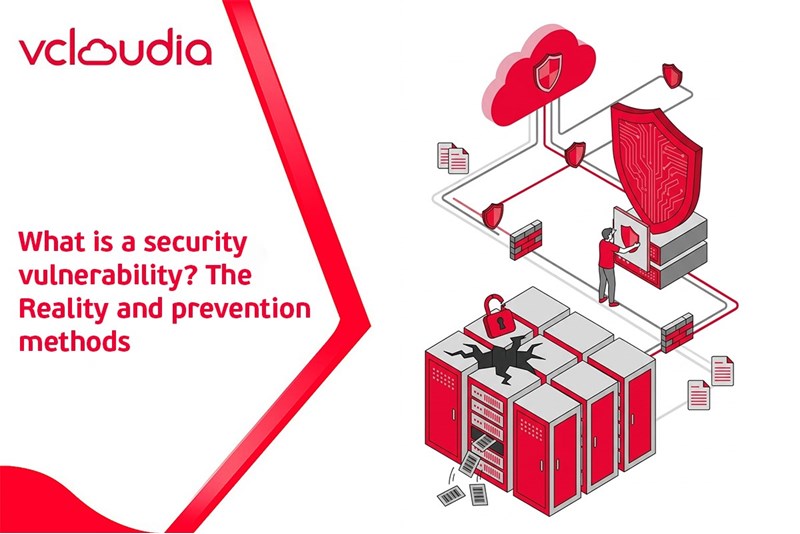
A security vulnerability is a crucial concept in cybersecurity and has many different definitions. According to RFC 4949 issued by the IETF (Internet Engineering Task Force), a security vulnerability is defined as a flaw or weakness in system design, implementation, or management. This weakness can be exploited to violate the system's security policy.
The NIST (National Institute of Standards and Technology) definition describes a security vulnerability as a weakness in an information system, system security procedures, internal controls, or implementation that could be exploited or triggered by a threat source. This definition is quite similar to the one from ISO 27000, in which a security vulnerability is considered a weakness of an asset or control that can be exploited by one or more threats.
In general, security vulnerabilities are weaknesses or flaws in information technology systems, software, or security procedures. If not detected and remediated promptly, these vulnerabilities can be exploited by hackers to leak internal information, launch large-scale cyberattacks, and more.
Causes of security vulnerabilities
Security vulnerabilities can arise from hardware, software, or humans. Below are the 6 most common causes:
- Programming errors: During software development, if programmers do not test thoroughly, some flaws in the source code might be overlooked and inadvertently create a "backdoor" for hackers to attack.
- Using outdated software or versions: When businesses fail to update their systems or software to the latest version, vulnerabilities that have been discovered but unpatched will create conditions for hackers to intrude.
- Connectivity level: The likelihood of vulnerabilities appearing is directly proportional to the number of connected devices. With the development of IoT technology and the continuous connection between devices, potential vulnerabilities in the network are increasingly rising, thereby expanding the attack surface for malicious actors.
- Internet usage: When connected to the internet, spyware and adware can be automatically installed on computers without the user's knowledge. These types of software can easily track the user's online activities, collect personal information, and more.
- Software and operating system flaws: Security vulnerabilities in software, especially popular operating systems, are the top targets for hackers. When this software malfunctions, hackers can take advantage to penetrate the system.
- Human factors: Enterprise employees are often the weakest link in the security system. Carelessness, lack of knowledge, or unintentional mistakes can create major security vulnerabilities, leading to social engineering attacks.
Reality of security vulnerabilities
The number of internet users in Vietnam reached 77.93 million people, accounting for 79.1% of the total population in 2023 (according to statistics from Social & Meltwater). This creates a favorable environment for online attacks, especially when the personal data of more than two-thirds of Vietnam's population is being stored and collected in cyberspace.
Recent cybersecurity reports indicate that the number of security vulnerabilities is increasing rapidly, particularly in industries with massive amounts of data such as healthcare, finance, and e-commerce. Besides, not only businesses but also individuals have become targets of hacker attacks.
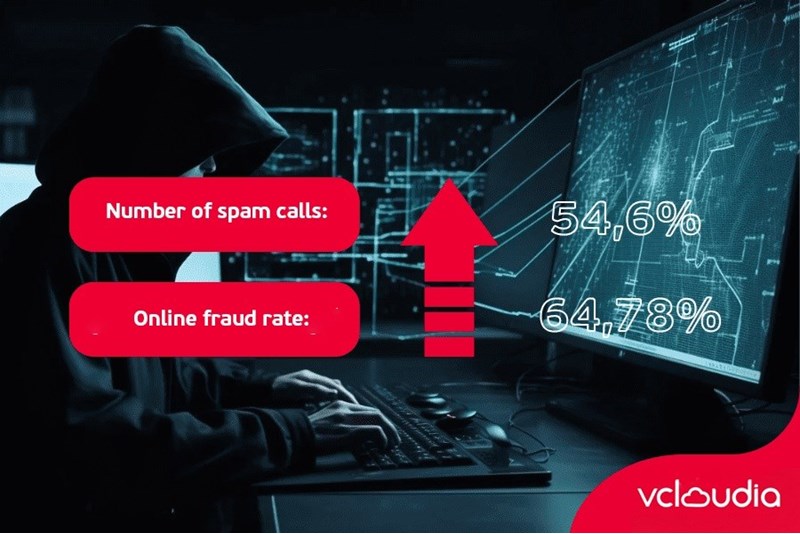
According to a report by the Authority of Information Security (Ministry of Information and Communications), more than 77 million spam calls were recorded in 2023, an increase of 54.6% compared to the previous year. Not stopping at calls, the volume of spam messages has also grown rapidly, along with an increase in the online fraud rate to 64.78% compared to 2022. In light of this situation, businesses must quickly implement security measures to minimize risks and protect corporate data.
Some common security vulnerabilities
In cybersecurity systems, there are several common security vulnerabilities that businesses are prone to encounter, such as:
- Broken authentication: This is a vulnerability related to improper user authentication (session management), resulting in hackers being able to steal information and log into the system using compromised account credentials.
- Broken Access Control: This occurs when access rights to data or functions are not strictly controlled, allowing attackers to access information they are not permitted to.
- Cross-Site Scripting (XSS): Malicious actors inject malicious code into a website to steal user data or attack other systems.
- Cross-Site Request Forgery (CSRF): Hackers trick users into performing actions with the intent of causing them to inadvertently expose personal data on a website they are logged into.
- SQL Injection: This is a prevalent attack technique in which malicious actors exploit vulnerabilities in SQL commands to access and manipulate data within the system's database.
- Security misconfiguration: This is a vulnerability that arises when security settings are improperly configured or not regularly updated, creating opportunities for hackers to exploit and attack the system.
How to prevent security vulnerabilities in an enterprise?
To mitigate the risks associated with security vulnerabilities, businesses need to implement the following specific measures:
- Update software and operating systems regularly: Ensure all software and operating systems are updated in a timely manner to patch newly discovered security vulnerabilities.
- Use multi-factor authentication (MFA): Deploy MFA to enhance security for user accounts, minimizing the risk of intrusion due to exposed credentials.
- Audit access privileges frequently: Ensure that only authorized personnel have access to critical systems and data. Establish access control levels based on the specific roles and tasks of each employee.
- Establish a strong password management policy: Require employees to use complex passwords and change their passwords periodically.
- Utilize firewalls and security software: Deploy firewalls, antivirus software, and intrusion detection systems (IDS) to protect the system against external attacks.
- Train and raise employee awareness on cybersecurity: Organize regular training sessions for employees regarding security vulnerabilities, how to recognize cyberattacks, and the necessary measures to protect personal data.
- Conduct periodic security audits: Frequently perform inspections and assessments of the system's security posture to detect and remediate potential security vulnerabilities.
- Back up data regularly: Set up automatic data backup policies and store backups in secure locations to be able to restore data in the event of an attack.
- Monitor and detect threats early: Deploy a continuous monitoring system to detect abnormal activities or signs of attack in real-time, helping businesses respond quickly when incidents occur.
Summary
Understanding and managing security vulnerabilities is an important part of an enterprise's information system protection strategy. Because these vulnerabilities not only threaten data safety but can also seriously impact reputation and business operations.
Vcloudia Cloud Server – The Cloud You Can Count On
If you're concerned about the potential limitations of Cloud Servers, Cloud server by Vcloudia is a reliable solution for businesses of all sizes. With a modern infrastructure and comprehensive customer support, Vcloudia delivers a cloud experience with:
- Powerful connectivity to ensure stable 24/7 access
- Advanced security standards, compliant with international certifications such as ISO 27001:2013, ISO 20000:2018, ISO 9001:2015
- Flexible pricing packages tailored to your specific business needs
- Expert technical support, making migration and system deployment fast, safe, and compatible
Contact information:
- Hotline: +855 888 55 66 08 (free of charge)
- Fanpage: https://www.facebook.com/vcloudia/
- Website: https://vcloudia.com
Featured news
Related news
What is a Snapshot? The Difference Between Snapshot and Backup
Snapshot is a familiar concept in data management and protection. In the context of the information technology boom, where data is a major asset for businesses, understanding Snapshots as well as their application is a key factor for enterprises to maximize technological efficiency.
What is a Firewall? The Role and Importance of Firewalls for Users
In the context of ever-increasing cyberattacks, system security has become a top priority for many enterprises. Alongside deploying antivirus software and controlling connection ports, firewalls are also considered a key solution to effectively enhance cybersecurity.
What is DDoS? Signs, Mitigation Strategies, and Effective Prevention
DDoS is a highly dangerous cyberattack that leaves severe consequences for enterprises. Therefore, gaining a clear understanding of DDoS attacks, as well as how to detect and prevent them, is a topic of significant interest to many.
What is a Trojan? How to Detect, Avoid, and Prevent It
A Trojan is a type of malicious code or software that can cause severe consequences to computer operations. So, what is a Trojan? How can you prevent a Trojan from infiltrating your computer? In the following article, Vcloudia will provide detailed information on these issues.
What is Cloud Backup? Classification, benefits, and limitations
Cloud Backup is a solution that plays an important role in backing up and recovering data when an incident occurs. So what exactly is Cloud Backup? Let's find out the details with Vcloudia in the following article.
What is Cloud Storage? Features and Benefits of Using It
Cloud Storage is the perfect storage solution alternative to bulky, space-consuming physical hard drives. So, what is Cloud Storage? Let's explore the details with Vcloudia through the following article.
What is an API? Characteristics and applications in website design
API, short for Application Programming Interface, is a concept no longer unfamiliar in the information technology field. So what exactly is an API and why is it so important? Let's find out with Vcloudia.
What is Node.js? Instructions on how to install Node.js on cPanel
Currently, it is easy to see that Node.js is being used by quite a lot of people. This is because Node.js can support users in running on multiple platforms and multiple devices.
What is Vultr VPS? Should you use Vultr VPS?
Vultr VPS is one of the best cloud storage solutions in the world. In this article, you will learn the concept: "What is Vultr VPS?", as well as understand its advantages and disadvantages.
Zoom Cloud Meeting: What is it? Basic Things You Should Know About Zoom Cloud Meeting
In 2020, Zoom Cloud Meeting became one of the leading video conferencing software applications. It allows you to virtually interact with colleagues when in-person meetings aren't possible, and it has also been very successful for social events.