



.png)
















.png)





What is Vendor Lock-In? Challenges & How to Avoid Vendor Lock-In
23/04/2026Vendor Lock-In is a situation where a business or user becomes dependent on a provider and faces difficulties when switching to another provider. This often happens with proprietary products/services, making changes challenging. Learn more in this article!
What is Vendor Lock-In?
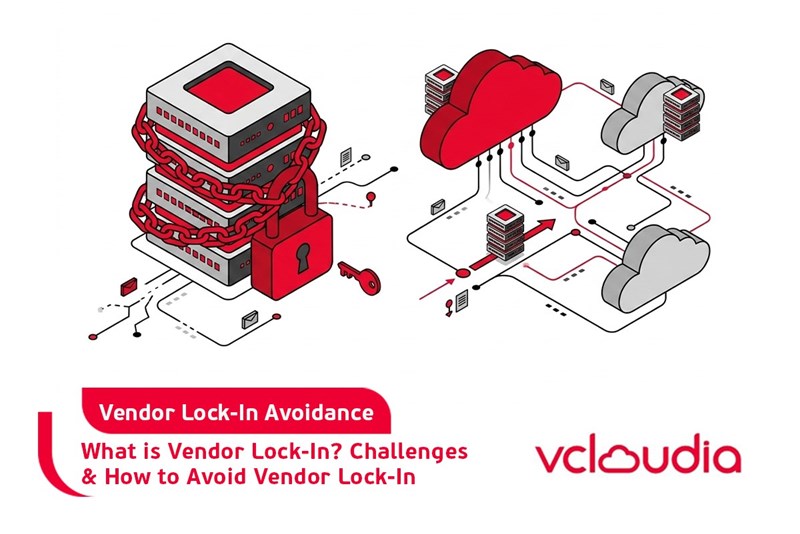
Vendor Lock-In, or supplier lock-in, is a measure that service providers implement to ensure their customers will face difficulties in migrating away from the provider's ecosystem. Vendor Lock-In occurs when various restrictions prevent customers from choosing new service/product providers; they cannot switch to new products/services without incurring significant costs.
The following are common reasons why Vendor Lock-In occurs:
- Providers use proprietary technologies that are incompatible with other systems, making migration difficult.
- Providers collect and store information in unique formats, causing complexity when transferring data to other systems.
- Systems are deeply compatible with the current provider and face difficulties when interacting with new providers.
- Due to lack of organizational flexibility, making the adoption of new providers more difficult.
- Limited capacity of specialized staff with new technologies.
- Security and compliance concerns regarding new providers make organizations hesitant to switch.
- Due to contractual obligations regarding terms and penalty levels for early termination.
- High costs of switching to a new provider.
What is Cloud Vendor Lock-in?
In cloud computing, Vendor Lock-In occurs when the cloud platform or service a business is using is only compatible with products/services from one provider, making it difficult or impossible to switch to another provider's storage service without data loss or significant fees.
Cloud Vendor Lock-In becomes a difficult issue for businesses wishing to migrate cloud databases to new environments. Additionally, when third-party software is integrated into business processes, it makes the business dependent on that software.
Challenges of Vendor Lock-in
As a customer, vendor lock-in is very disadvantageous for you, negatively impacting business operations. Here are some challenges businesses face when experiencing Vendor lock-in:
- Decreased service quality forces you to pay for services that do not meet your needs.
- Providers increase service prices.
- They change their products/services in ways that are no longer suitable for your business needs.
- They may stop providing support for the products/services your business is using, leaving you to fend for yourself if issues or malfunctions occur.
- Difficulty in scaling, failing to meet business demands.
- Businesses cannot take advantage of new features, leading to stagnant development and failure to achieve business goals.
- The use of proprietary services makes it difficult for businesses to migrate to another provider.
- Vendor lock-in poses significant challenges in defining failover and disaster recovery strategies.
Suggested Effective Ways to Avoid Vendor Lock-in
Research and evaluate cloud service providers
You should research a cloud service provider thoroughly before committing. You should request a proof of implementation to verify the extent to which that provider's services meet your needs. When signing a contract, you need to carefully check their terms of service, how they handle data, and application migration. On the other hand, recheck contracts for auto-renewal; keep a close eye on contracts, monitor contractual commitments, and know when terms end.
Ensure your data/applications are easily portable
In a cloud environment, portability is always a key point that makes their services attractive to customers. Cloud service providers often support open standards, allowing for easy provider switching provided you use open, non-proprietary technologies.
Use cloud-agnostic technology
Businesses will reduce dependence on a single provider by using open-source software that is free for the community and can be modified according to needs. This helps eliminate being tied to a specific provider's ecosystem.
Additionally, you can use applications designed to be portable—software that can easily move from one provider to another without significant changes. Applications are often available through cloud providers and can be a good choice for businesses looking to switch providers.
Multi-cloud or hybrid cloud strategy
A multi-cloud strategy combining multiple cloud providers will reduce dependence on any single cloud provider. In a hybrid cloud, some data will be within the business's control, possibly in a private cloud or stored on-premises. Furthermore, businesses will minimize the risk of being affected by data breaches.
Data backup
Internal data backup helps businesses always be ready to store data elsewhere, ensuring readiness in extracting data from cloud services.
Conclusion
Vendor Lock-In or supplier lock-in is a condition that occurs when a business becomes dependent on a provider, facing difficulties and high costs to migrate to a new provider. Businesses need to research carefully and consider appropriate solutions to avoid Vendor Lock-In, which affects business operations.
Vcloudia Cloud Server – The Cloud You Can Count On
If you're concerned about the potential limitations of Cloud Servers, Cloud server by Vcloudia is a reliable solution for businesses of all sizes. With a modern infrastructure and comprehensive customer support, Vcloudia delivers a cloud experience with:
- Powerful connectivity to ensure stable 24/7 access
- Advanced security standards, compliant with international certifications such as ISO 27001:2013, ISO 20000:2018, ISO 9001:2015
- Flexible pricing packages tailored to your specific business needs
- Expert technical support, making migration and system deployment fast, safe, and compatible
Contact information:
- Hotline: +855 888 55 66 08 (free of charge)
- Fanpage: https://www.facebook.com/vcloudia/
- Website: https://vcloudia.com
ព័ត៌មានពិសេស
ព័ត៌មានដែលទាក់ទង
What is a Snapshot? The Difference Between Snapshot and Backup
Snapshot is a familiar concept in data management and protection. In the context of the information technology boom, where data is a major asset for businesses, understanding Snapshots as well as their application is a key factor for enterprises to maximize technological efficiency.
What is a Firewall? The Role and Importance of Firewalls for Users
In the context of ever-increasing cyberattacks, system security has become a top priority for many enterprises. Alongside deploying antivirus software and controlling connection ports, firewalls are also considered a key solution to effectively enhance cybersecurity.
What is DDoS? Signs, Mitigation Strategies, and Effective Prevention
DDoS is a highly dangerous cyberattack that leaves severe consequences for enterprises. Therefore, gaining a clear understanding of DDoS attacks, as well as how to detect and prevent them, is a topic of significant interest to many.
What is a Trojan? How to Detect, Avoid, and Prevent It
A Trojan is a type of malicious code or software that can cause severe consequences to computer operations. So, what is a Trojan? How can you prevent a Trojan from infiltrating your computer? In the following article, Vcloudia will provide detailed information on these issues.
What is Cloud Backup? Classification, benefits, and limitations
Cloud Backup is a solution that plays an important role in backing up and recovering data when an incident occurs. So what exactly is Cloud Backup? Let's find out the details with Vcloudia in the following article.
What is Cloud Storage? Features and Benefits of Using It
Cloud Storage is the perfect storage solution alternative to bulky, space-consuming physical hard drives. So, what is Cloud Storage? Let's explore the details with Vcloudia through the following article.
What is an API? Characteristics and applications in website design
API, short for Application Programming Interface, is a concept no longer unfamiliar in the information technology field. So what exactly is an API and why is it so important? Let's find out with Vcloudia.
What is Node.js? Instructions on how to install Node.js on cPanel
Currently, it is easy to see that Node.js is being used by quite a lot of people. This is because Node.js can support users in running on multiple platforms and multiple devices.
What is Vultr VPS? Should you use Vultr VPS?
Vultr VPS is one of the best cloud storage solutions in the world. In this article, you will learn the concept: "What is Vultr VPS?", as well as understand its advantages and disadvantages.
Zoom Cloud Meeting: What is it? Basic Things You Should Know About Zoom Cloud Meeting
In 2020, Zoom Cloud Meeting became one of the leading video conferencing software applications. It allows you to virtually interact with colleagues when in-person meetings aren't possible, and it has also been very successful for social events.