



.png)


















.png)





What is Network security? Classification and comparison with Cybersecurity
Sep 16, 2026Today's network architectures are complex and face an ever-changing threat environment and attackers constantly seeking and exploiting vulnerabilities. These vulnerabilities can exist across multiple areas, including hardware devices, data, applications, users, and locations. For this reason, numerous network security management tools and applications are used today to address individual threats and exploits as well as regulatory non-compliance.
When a commercial website or application experiences even a few minutes of downtime, it can cause widespread disruption and severe damage to an organization's bottom line and reputation; therefore, implementing network security protections is essential.
What is Network Security?
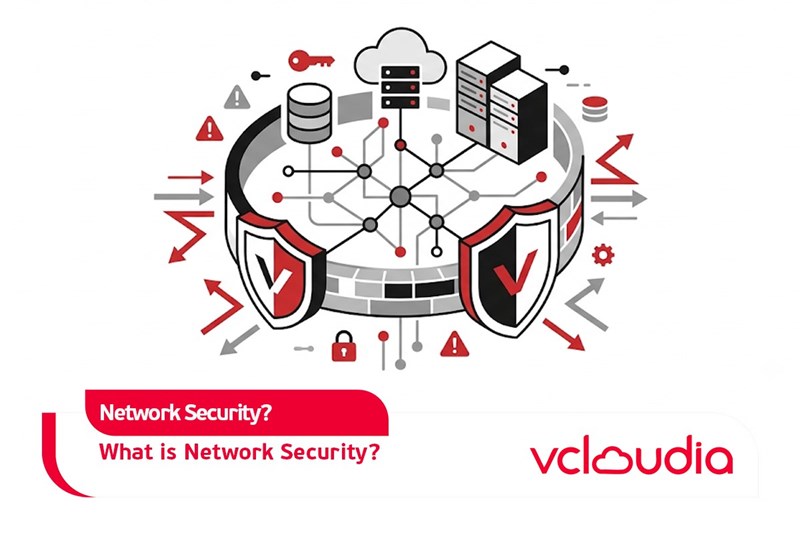
Network Security is a broad term encompassing a myriad of technologies, devices, and processes. In simplest terms, it is a set of rules and configurations designed to protect the integrity, confidentiality, and accessibility of computer networks and data using both software and hardware technologies. Every organization, regardless of size, industry, or infrastructure, requires some level of network security solutions to protect itself against the increasingly rising threat landscape of cyber threats in nature today.
Cybersecurity vs. Network Security
The distinction between Cybersecurity and Network security is quite straightforward. You can easily think of Network security as a subset of Cybersecurity, but that is not particularly helpful if you are trying to logically explain the difference between the two terms. Simply put, Cybersecurity's primary concern is threats external to the organization, whereas Network security is concerned with the internal functioning of the organization's network infrastructure security requirements.
Therefore, in this article, we will temporarily refer to Network security as 'Network Security'.
How Does Network Security Work?
There are multiple layers to consider when addressing network security within an organization. Attacks can occur at any layer of the network security model; therefore, a business's hardware, software, and network security policies must be designed to address each specific area and layer.
Network security typically comprises three different control types: physical, technical, and administrative. Below is a brief description of the different types of network security and how each control type operates.
Physical Network Security
Physical security controls are designed to prevent unauthorized personnel from gaining physical access to network components such as routers, cabling cabinets, etc. Controlled access, such as locks, biometric authentication, and other devices, is essential in any organization.
Technical Network Security
Technical security controls protect data stored on the network or data transmitted across, into, or out of the network. Protection needs to span layer 2; it needs to protect data and systems from unauthorized users, and it also needs to protect against malicious, unauthorized activities from employees.
Administrative Network Security
Administrative security controls encompass security policies and procedures that govern user behavior, including how users are authenticated, their level of access, and how IT staff implement changes to the infrastructure.
Types of Network Security
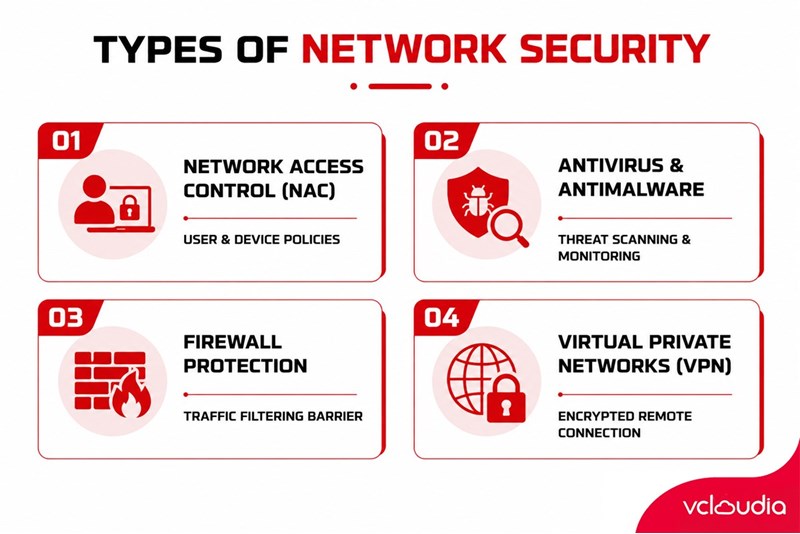
We have discussed the various types of network security controls. Now let's examine several different ways you can secure your enterprise network.
Network Access Control
To ensure that potential attackers cannot breach your network, comprehensive access control policies are required for both users and devices. Network Access Control (NAC) can be established at the most granular level. For example, you can grant administrators full access to the network while denying access to specific confidential folders or preventing their personal devices from joining the network.
Antivirus and Antimalware Software
Antivirus and antimalware software protect organizations from a wide range of malware, including viruses, ransomware, worms, and trojans. The best software not only scans files as they enter the network but also continuously scans and monitors files.
Firewall Protection
Firewalls, as their name suggests, act as a barrier between an untrusted external network and your trusted internal network. Administrators typically configure a set of defined rules to block or allow traffic into the network. For example, Next-Generation Firewalls (NGFW) provide continuous, centrally managed control over network traffic, whether physical, virtual, or in the cloud.
Virtual Private Networks
Virtual Private Networks (VPNs) establish a connection to a network from another endpoint or site. For instance, remote users working from home typically connect to the organization's network via a VPN. Data between the two points is encrypted, and users must authenticate to allow communication between their device and the network. SD-WAN Enterprise Security enables organizations to quickly create VPNs via drag-and-drop and protect all locations with an NGFW solution.
Network Security for Businesses and Customers
Network security should be a high priority for any organization working with networked systems and data. In addition to protecting assets and data integrity from external exploits, network security can also manage network traffic more efficiently, enhance network performance, and ensure secure data sharing between employees and data sources. There are numerous tools, applications, and utilities available to help protect your network from attacks and unnecessary downtime.
Looking for a high-performance, secure solution?
Explore the services offered by Vcloudia – a leading provider of Cloud Computing and Data Center solutions. Contact us for expert consultation and find the right model for your needs:
- Hotline: +855 888 55 66 08 (free of charge)
- Fanpage: https://www.facebook.com/vcloudia/
- Website: https://vcloudia.com/
Featured news
Related news
What is Linux Cloud? The Differences Between Linux Cloud and Windows Cloud?
Linux Cloud is the perfect combination of the open-source Linux operating system and the cloud computing platform (Cloud). What values will this combination bring to users? Let's explore this in more detail with Vcloudia in this article.
What is a Mail Server? Understanding How a Mail Server Works
With just a simple mouse click, you can quickly send an Email to anyone, anywhere in the world. At this point, the Mail Server plays a crucial role, enabling the Email to be sent and function exactly as you intend. But have you ever thought more deeply about what a Mail Server is, as well as how a Mail Server operates?
What is AWS? Everything You Need to Know About Amazon Web Services
What is AWS? Simply put, AWS (Amazon Web Services) is a comprehensive cloud computing platform provided by retail giant Amazon, serving a wide range of user needs. In this article, let's explore the details with Vcloudia to clearly understand what AWS is!
What is Cloud Computing? An Overview of Cloud Computing Models
Today, many users are no longer unfamiliar with the term Cloud Computing (Cloud Computing). If you do not yet know what Cloud Computing is, it will be a significant disadvantage when building a website or carrying out other related activities on the Internet.
What is a Virtual Host? How to Set Up Virtual Hosts on XAMPP
Virtual Hosts are arguably one of the most popular technologies in the storage technology field. This is a method through which a server can serve multiple different websites simultaneously. If you do not know much about Virtual Hosts, this article is for you!
What is the OpenStack platform? Everything users need to know about the OpenStack platform
Today, many people are still quite vague and do not fully understand what the OpenStack platform is. Through this article, let's explore the OpenStack platform in more detail with Vcloudia.
What is Ubuntu Server? Should You Use Ubuntu Server?
Most people today have heard the term Ubuntu Server at least once. But, do you know what Ubuntu Server is yet? Who should use this operating system, and what benefits does it bring us? Let's join Vcloudia in exploring this information through the article below!
What Is Creative Cloud Desktop? Everything Users Need to Know About the Creative Cloud Desktop Solution
Currently, with the severe outbreak of the Covid-19 pandemic, the demand for remote work has increased at an astonishing rate. For this reason, the Creative Cloud Desktop solution has been and is highly favored by many users.
What is a Tier 3 Data Center? An Overview of Tier Standards
When researching data centers, you have probably frequently come across the phrase: "International standard Tier 3 Data Center", but you do not understand what they are? And how is an international standard Tier 3 Data Center different from normal Data Centers?