



















Demystifying Cloud Security - The Cloud Security Trend Trusted by Enterprises
Oct 23, 2026Cloud security, also known as cloud computing security, protects cloud-based systems, data, and infrastructure. Cloud security services provide cloud security solutions configured to protect data, support regulatory compliance, safeguard customer privacy, and set authentication rules for individual users and devices. Given the rampant nature of cyberattacks today, many enterprises have migrated all or part of their data operations to the cloud, gradually shaping a new trend.
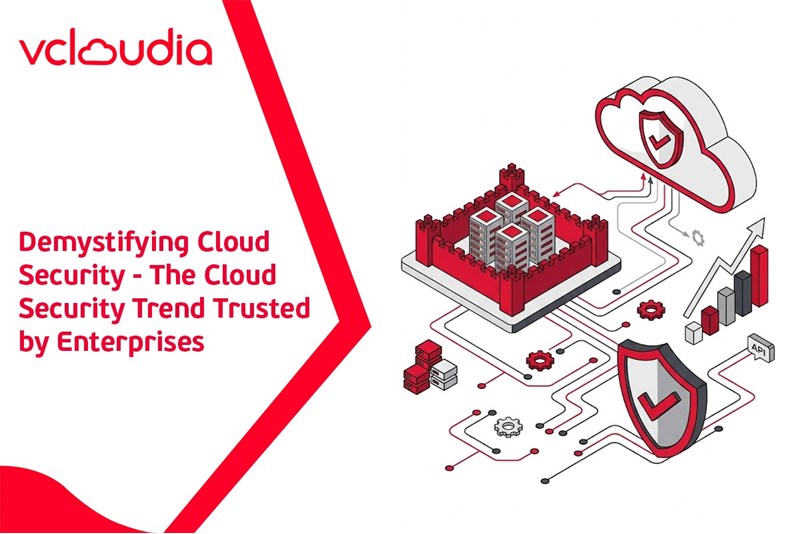
What is Cloud Security?
Cloud security is a solution that encompasses policies, technologies, and controls to protect data and cloud computing architecture.
Why Does Cloud Security Ensure Safety?
Identity Management
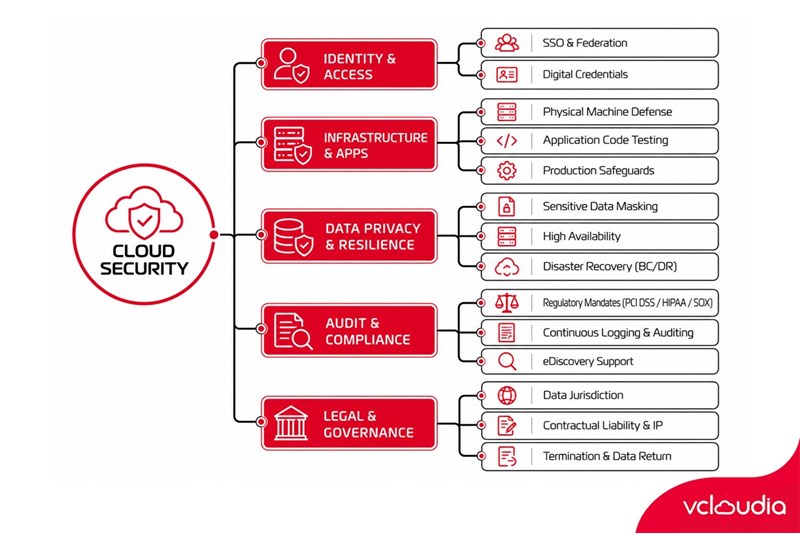
Each enterprise has its own identity management system to control access to information resources and computing assets. Cloud service providers either integrate the customer's identity management system into their own infrastructure using Federation or Single Sign-On (SSO) technologies, or provide their own identity management solution for customer use.
Physical Security
Providers ensure that physical machines used in cloud computing are sufficiently secure and that access to these machines, as well as all associated customer data, is not only strictly restricted but also fully logged.
Reliability and Consistency
Cloud service providers assure customers that they will have regular, predictable access to their data and applications.
Application Security
Cloud computing providers ensure that applications made available as a service via the cloud are secure by implementing testing and acceptance procedures for external or packaged application code. It also requires that application security measures are properly deployed in production environments.
Privacy
Providers ensure that all sensitive data (such as credit card numbers) is masked and that only authorized users can access the complete data. Furthermore, digital identities and credentials must be safeguarded, as must any data collected or generated by providers regarding customer activity in the cloud.
Legal Considerations
Additionally, providers and customers must address legal considerations, such as contracts, E-Discovery (Electronic Discovery), and relevant statutory requirements, which may vary by country.
Cloud Security Solutions Meet Multiple Information Security Policies
Numerous regulations govern the storage and use of data, including the Payment Card Industry Data Security Standard (PCI DSS), the Health Insurance Portability and Accountability Act (HIPAA), and the Sarbanes-Oxley Act. Many of these regulations require regular reporting and auditing. Cloud providers must enable their customers to maintain compliance with these regulations.
Business Continuity and Data Recovery
Cloud service providers must have business continuity and disaster recovery plans in place to ensure services can be maintained in the event of a disaster or emergency, and that any lost data will be restored. These plans are shared and reviewed with their customers.
Logging and Auditing
In addition to logging and auditing, cloud computing providers collaborate with their customers to ensure audit logs and documentation are properly protected, retained until requested by the customer, and accessible for legal investigation purposes (e.g., eDiscovery).
Specific Policy Requirements
Beyond customer-specified requirements, data centers maintained by cloud computing providers may also be subject to unique compliance mandates. Utilizing a cloud service provider (CSP) can introduce additional security considerations regarding data jurisdiction, as customer or tenant data may not reside on the same system, within the same data centers, or even within the cloud of the same provider.
Legal and Contractual Issues
In addition to the security and compliance matters listed above, cloud computing providers and their customers negotiate terms regarding legal liability (e.g., how incidents involving data loss or compromise will be resolved), intellectual property, and service termination (when data and applications are ultimately returned to the customer).
Benefits of Using Cloud Security
Centralized Cloud Security
Cloud security services centralize applications and data for streamlined management and protection. This centralized management focuses on analyzing and filtering traffic, optimizing network event monitoring. Disaster recovery plans are also more easily implemented and executed when managed from a single pane of glass.
Cost Reduction
One of the key benefits of utilizing cloud security services is eliminating the need to invest in dedicated hardware as well as its ongoing maintenance and replacement. When procuring Cloud Security from a provider, their dedicated IT technical teams are readily available to address unexpected security incidents, delivering 24/7 protection for the infrastructure.
Guaranteed Reliability
Cloud security services deliver maximum reliability. With proper cloud security controls, users can safely access data and applications in the cloud regardless of their physical location or device. Cloud computing accommodates operations of any scale, lowers technology costs, and provides agile systems that drive competitive advantage.
However, organizations must have complete confidence in their cloud computing security and ensure that all data, systems, and applications are safeguarded against data theft. Cloud security delivers all the capabilities of traditional IT security, enabling enterprises to leverage the vast advantages of cloud computing securely while satisfying strict data privacy and compliance mandates.
Cloud DDoS Protection
A successful DDoS attack can take a website offline for hours or even days, resulting in lost revenue, eroded customer trust, and brand damage. Cloud Security monitors, identifies, and mitigates DDoS attacks. A systematic workflow is triggered to handle incoming DDoS threats: alerting website administrators to DDoS attacks, absorbing malicious traffic, dispersing it across global Points of Presence (PoPs), and providing post-attack analytics and reporting.
High Availability
Websites - whether corporate portals or individual e-commerce storefronts - must maintain 24/7 operations. Cloud security serves as the definitive security solution providing uninterrupted monitoring and continuous support for customers.
Vcloudia Cloud Server – The Cloud You Can Count On
If you're concerned about the potential limitations of Cloud Servers, Cloud Server by Vcloudia is a reliable solution for businesses of all sizes. With a modern infrastructure and comprehensive customer support, Vcloudia delivers a cloud experience with:
- Powerful connectivity to ensure stable 24/7 access
- Advanced security standards, compliant with international certifications such as ISO 27001:2013, ISO 20000:2018, ISO 9001:2015
- Flexible pricing packages tailored to your specific business needs
- Expert technical support, making migration and system deployment fast, safe, and compatible
Contact information:
- Hotline: +855 888 55 66 08 (free of charge)
- Fanpage: https://www.facebook.com/vcloudia/
- Website: https://vcloudia.com
Related news
What is SD-WAN? Technology and Practical Applications
SD-WAN addresses the increasing enterprise demands driven by IoT, SaaS, and Cloud alongside escalating cybersecurity needs, where applications demand prioritization and optimization while enterprises require reductions in deployment costs, operational labor, and time.
Software Solutions for Creating Online Virtual Machines You Should Know
Are you looking for software to create online virtual machines, both free and paid? Don't worry, this article is for you. Vcloudia will introduce you to several useful solutions to help you set up an online virtual machine as desired.
What is a free domain name? Should you use one?
A free domain name is a service provided by domain registrars that allows users to register and use a domain without incurring any costs. For an individual or a business, a website domain name is an extremely crucial factor. So, how can you register a free domain? Should you use a domain name that incurs no cost?
Comparing DigitalOcean, Linode, and Vultr VPS: Which Is the Right Choice for Your Business?
A Virtual Private Server means your website will have all the necessary power to handle your growing traffic. Likewise, if you are a developer, this added flexibility might be all you need to take your application ahead of the competition. However, to be the best, you need to work with the best.
What is ASP.NET? How to Analyze the Core Operational Architecture of the ASP.NET Platform
What is ASP.NET? It is an open-source platform chosen by software developers worldwide. The program offers superior utilities along with a distinctive approach to language utilization.
How to choose a server configuration for a business?
Choosing the right cloud configuration for your enterprise is a pivotal factor that helps optimize budgets, enhance operational performance, and ensure the system remains resilient against any changes. If the configuration is oversized, you waste valuable resources; if it is undersized, the system easily overloads, disrupting services.
6 Benefits of Creating Virtual Machines That Users Cannot Ignore
Are you interested in creating virtual machines and want to learn more about their role? Creating a virtual machine is highly suitable for individuals or businesses involved in programming or information technology in general due to its usefulness. Creating a virtual machine helps enhance security, facilitates testing, and limits the spread of viruses.
What is a Web Portal? A comprehensive guide to essential knowledge about Web Portals
In practice, a Web Portal is a specially designed website that serves as a single point of access for updating information. However, many users are still vague about what a Web Portal is. So, what exactly is a Web Portal?
What is VXLAN? Everything about VXLAN that users should not ignore
Today, the emergence of VXLAN technology has brought many benefits to users compared to traditional VLAN technology. So what exactly is VXLAN? What makes this technology worth users' attention?