






















What is ASP.NET? How to Analyze the Core Operational Architecture of the ASP.NET Platform
Oct 23, 2026What is ASP.NET? It is an open-source platform chosen by software developers worldwide. The program offers superior utilities along with a distinctive approach to language utilization. To answer the question posed at the beginning of this article and update yourself with useful knowledge, join Vcloudia in following the article below.
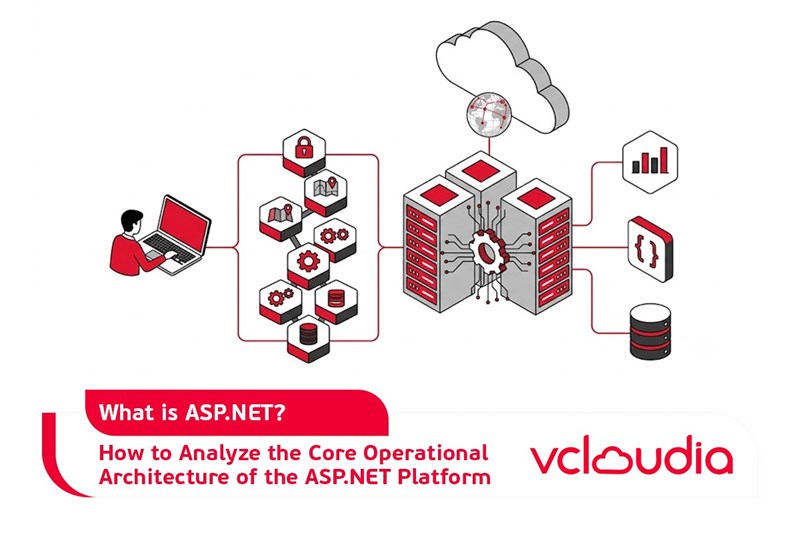
Identifying the Operational Languages of ASP.NET
ASP.NET is a web application framework developed by Microsoft. It is part of the .NET Framework and is utilized to build robust, flexible web applications. ASP.NET enables developers to create interactive web pages, manage data, and perform database operations.
Fundamental Concepts to Know
What is the operating platform of ASP.NET? The environment supports multiple programming languages, such as C#, VB.NET, and F#. ASP.NET can run on almost all operating system platforms, including Windows, Linux, and macOS. The program provides data libraries and tools to develop web applications efficiently.
History of Formation and Development of ASP.NET
The .NET Framework was first launched in 2002 by Microsoft. The system serves as a powerful software development platform for building applications on the Windows platform. The .NET Framework provides a beneficial application runtime environment, accompanied by an extensive collection of class libraries to support many popular development technology platforms, such as Windows Forms, WPF, and ASP.NET.
ASP.NET is a critical component of the .NET Framework dedicated to web application development. The initial version of ASP.NET was called ASP.NET 1.0. The program was introduced alongside .NET Framework 1.0 in 2002. Since then, Microsoft has continuously improved and developed ASP.NET. The publisher consistently releases new versions, adding features and enhancing the performance of each program iteration.
ASP.NET has become a prevalent web development technology platform for building robust web applications while increasing security and operational performance on Windows. ASP.NET has been utilized in numerous critical web development projects, thereby fostering an enormous developer community in the technology sector.
Exploring the Key Components of ASP.NET
What is the ASP.NET Architecture?
- Page (.aspx): This is the fundamental unit of an ASP.NET web page. Each page can contain HTML, CSS, and programming code to represent the page's content and logic.
- Code-behind (.aspx.cs or .aspx.vb): This is the underlying code file for each ASP.NET page. This utility contains the programming logic serving the corresponding page and is used to handle events and manipulate data.
- Web.config: This is the primary configuration file for an ASP.NET application. This technology stores information regarding settings such as database connection strings, security configurations, and other application-level parameters.
What Components Make Up ASP.NET?
- Controls: ASP.NET provides a wide range of web controls, such as textboxes, Buttons, GridViews, and more. These controls help build interactive user interfaces and display data.
- Code-behind: The underlying program code behind each page is utilized to handle events, retrieve data, and execute complex business logic tasks.
- Data Access: ASP.NET supports various data access methodologies, such as ADO.NET, Entity Framework, and LINQ, to query and update databases.
- State Management: ASP.NET provides state management mechanisms such as ViewState, Session, and Cookies to store temporary information or maintain state across requests.
- Authentication and Authorization: ASP.NET provides authentication and authorization mechanisms, allowing applications to verify user identities and control access rights to resources.
- Caching: ASP.NET supports caching to optimize application performance by temporarily storing frequently used data or code to avoid re-executing resource-intensive operations.
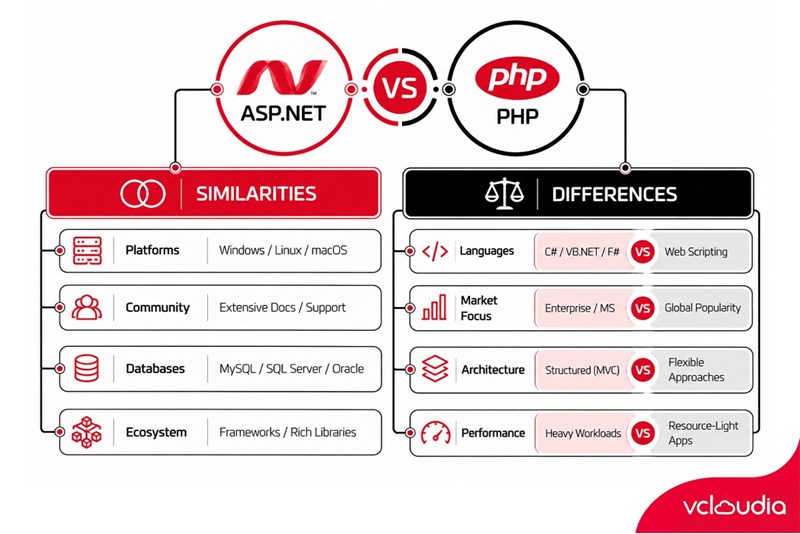
Comparing ASP.NET and PHP Programming Technologies
ASP.NET and PHP are two popular programming technologies used in web application development. Once you understand what ASP.NET is, you can explore several similarities and differences between these programs.
Similarities
- Cross-Platform Operation: Both ASP.NET and PHP have cross-platform capabilities, running on Windows, Linux, and macOS.
- Large Community Support: Both boast large developer communities with extensive documentation, libraries, and comprehensive support resources.
- Database Integration: Both ASP.NET and PHP support numerous databases, such as MySQL, SQL Server, and Oracle, for data storage and retrieval.
- Provision of Robust Frameworks and Libraries: Both utilities provide frameworks and libraries that facilitate rapid and straightforward web application development.
Differences
- Programming Languages: ASP.NET utilizes C#, VB.NET, and F# as its primary languages, whereas PHP was designed specifically for web scripting.
- Popularity: PHP is considered the most widely used web programming language globally, while ASP.NET is commonly employed in enterprise projects and systems developed within the Microsoft ecosystem.
- Architecture and Development Methodology: ASP.NET commonly leverages the MVC (Model-View-Controller) pattern or the Web Forms model. PHP offers flexible integration and the capability to develop web applications through diverse approaches.
- Performance: In certain scenarios, ASP.NET can deliver superior performance when handling enterprise-scale web applications and heavy workloads. PHP is typically utilized for smaller web applications that demand fewer system resources.
Overall, both ASP.NET and PHP are powerful tools for web application development. The choice between these two technologies depends on project requirements and the personal preferences of the developer.
Practical Applications of the ASP.NET Tool
ASP.NET is a program that offers numerous advantages in developing robust and flexible web applications. Below are several examples of its roles:
Building Job Applicant Applications
The ASP.NET program integrates conveniently with search technologies and data analytics tools. The software enables the development of recruitment websites, candidate profile management systems, and job search platforms.
E-commerce Application Development
ASP.NET provides utilities, tools, and libraries to develop e-commerce applications. Users can create online shopping portals, manage shopping carts, process payments, and integrate online payment gateways.
Mobile Application Development
ASP.NET supports mobile application development through frameworks such as Xamarin and ASP.NET Core. As a result, developers can easily build cross-platform mobile applications using a unified codebase.
Additional Roles
- Developing Interactive Websites: ASP.NET empowers developers to build interactive web pages, enabling users to interact directly with online data and functionalities.
- Data Management: ASP.NET provides tools and libraries to manage data within web applications, enabling programmers to seamlessly manipulate databases.
- Project Management Application Development: ASP.NET offers the capability to construct project management applications, facilitating the administration of tasks, schedules, resources, and overall project progress.
Vcloudia Cloud Server – The Cloud You Can Count On
If you're concerned about the potential limitations of Cloud Servers, Cloud Server by Vcloudia is a reliable solution for businesses of all sizes. With a modern infrastructure and comprehensive customer support, Vcloudia delivers a cloud experience with:
- Powerful connectivity to ensure stable 24/7 access
- Advanced security standards, compliant with international certifications such as ISO 27001:2013, ISO 20000:2018, ISO 9001:2015
- Flexible pricing packages tailored to your specific business needs
- Expert technical support, making migration and system deployment fast, safe, and compatible
Contact information:
- Hotline: +855 888 55 66 08 (free of charge)
- Fanpage: https://www.facebook.com/vcloudia/
- Website: https://vcloudia.com
Related news
What is SD-WAN? Technology and Practical Applications
SD-WAN addresses the increasing enterprise demands driven by IoT, SaaS, and Cloud alongside escalating cybersecurity needs, where applications demand prioritization and optimization while enterprises require reductions in deployment costs, operational labor, and time.
Software Solutions for Creating Online Virtual Machines You Should Know
Are you looking for software to create online virtual machines, both free and paid? Don't worry, this article is for you. Vcloudia will introduce you to several useful solutions to help you set up an online virtual machine as desired.
What is a free domain name? Should you use one?
A free domain name is a service provided by domain registrars that allows users to register and use a domain without incurring any costs. For an individual or a business, a website domain name is an extremely crucial factor. So, how can you register a free domain? Should you use a domain name that incurs no cost?
Comparing DigitalOcean, Linode, and Vultr VPS: Which Is the Right Choice for Your Business?
A Virtual Private Server means your website will have all the necessary power to handle your growing traffic. Likewise, if you are a developer, this added flexibility might be all you need to take your application ahead of the competition. However, to be the best, you need to work with the best.
How to choose a server configuration for a business?
Choosing the right cloud configuration for your enterprise is a pivotal factor that helps optimize budgets, enhance operational performance, and ensure the system remains resilient against any changes. If the configuration is oversized, you waste valuable resources; if it is undersized, the system easily overloads, disrupting services.
Demystifying Cloud Security - The Cloud Security Trend Trusted by Enterprises
Cloud security, also known as cloud computing security, protects cloud-based systems, data, and infrastructure. Cloud security services provide cloud security solutions configured to protect data, support regulatory compliance, safeguard customer privacy, and set authentication rules for individual users and devices.
6 Benefits of Creating Virtual Machines That Users Cannot Ignore
Are you interested in creating virtual machines and want to learn more about their role? Creating a virtual machine is highly suitable for individuals or businesses involved in programming or information technology in general due to its usefulness. Creating a virtual machine helps enhance security, facilitates testing, and limits the spread of viruses.
What is a Web Portal? A comprehensive guide to essential knowledge about Web Portals
In practice, a Web Portal is a specially designed website that serves as a single point of access for updating information. However, many users are still vague about what a Web Portal is. So, what exactly is a Web Portal?
What is VXLAN? Everything about VXLAN that users should not ignore
Today, the emergence of VXLAN technology has brought many benefits to users compared to traditional VLAN technology. So what exactly is VXLAN? What makes this technology worth users' attention?