



.png)



















.png)





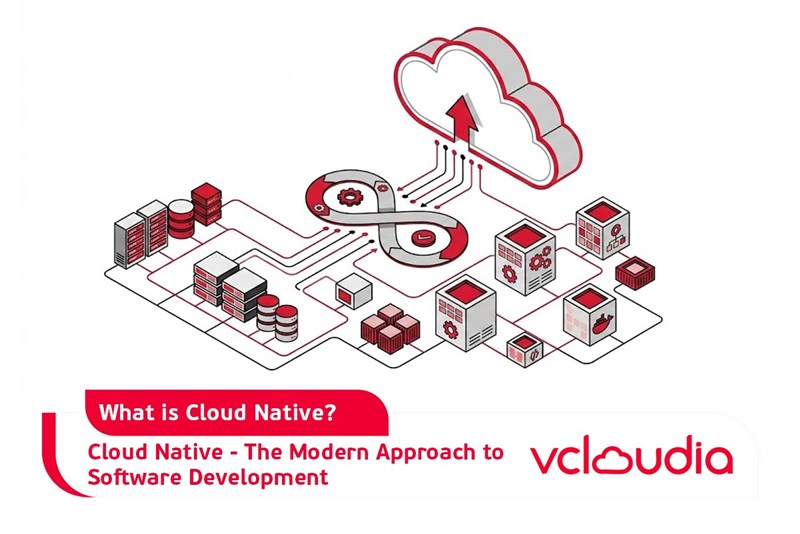
What is Cloud Native? Cloud Native - The Modern Approach to Software Development
Sep 15, 2026Cloud native leverages a variety of modern technologies and methodologies, including PaaS, multi-cloud, microservices, agile practices, containers, CI/CD, and more. The term "cloud native" is widely used, particularly by cloud service providers. Furthermore, it even has its own dedicated foundation - the Cloud Native Computing Foundation (CNCF), launched in 2015 by the Linux Foundation. In this article, join Vcloudia as we explore specifically what cloud native is.
What is the concept of cloud native?
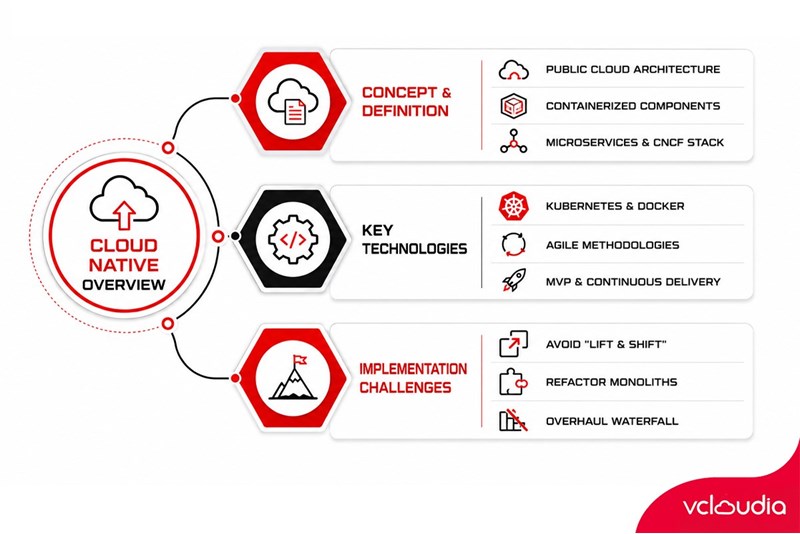
Theoretically, cloud native is an approach to building and running applications that exploit the advantages of the cloud computing delivery model. So, what specifically is cloud native? It implies that applications are architected and built within public cloud infrastructure rather than on traditional on-premises data centers.
How does CNCF define cloud native? It means utilizing open-source software stacks where each component of an application is packaged in its own container. These containers are dynamically orchestrated and actively scheduled to optimize resource utilization within a microservices-oriented architecture. This approach enhances the overall agility and maintainability of applications.
What does cloud native application development entail? Simply put, it typically involves software developers, agile methodologies, microservices, cloud platforms, and container technologies such as Kubernetes and Docker. In short, it encompasses nearly every modern application deployment methodology used today.
What are the challenges of Cloud Native?
What is the biggest challenge of cloud native? One of the major mistakes enterprises make is attempting to "lift and shift" legacy applications onto cloud platforms without architectural redesign. Instead, organizations should deploy cloud-native applications natively on modern cloud infrastructure, or decompose existing monoliths to refactor them using cloud-native principles from the ground up.
You also need to overhaul your legacy development practices. The traditional Waterfall model simply will not suffice. Consequently, you must adopt modern cloud-native approaches such as MVP (Minimum Viable Product) development, multivariate testing, and continuous delivery.
What sets Cloud Native applications apart?
Developing cloud-native applications requires an architecture vastly different from traditional enterprise software.
What languages are used in Cloud Native applications?
On-premises applications written to run on enterprise servers tend to be developed in traditional languages, such as C/C++, C#, or other Visual Studio languages when deployed on Windows Server, alongside enterprise Java. If deployed on a mainframe, they might run on COBOL.
What makes cloud-native applications different? They are far more likely to be written in web-centric and modern programming languages, including HTML, CSS, Java, JavaScript, .NET, Go, Node.js, PHP, Python, and Ruby.
How do Cloud Native applications handle updates?
Cloud-native applications are continuously maintained and up to date. In contrast, on-premises applications require manual updates, which are typically distributed by vendors on a subscription or release cycle and require maintenance downtime during installation.
How adaptable are Cloud Native applications?
Cloud-native applications take full advantage of cloud elasticity by dynamically scaling resources up during traffic spikes. Put simply, this enables automatic resource provisioning and de-provisioning on demand. A cloud-native application seamlessly scales out capacity and compute resources whenever necessary.
Environmental versatility
When examining cloud native, you will find that these applications run smoothly in virtualized environments and seamlessly share resources with other applications. Conversely, many legacy on-premises applications perform poorly in virtualized environments or fail to run altogether, requiring dedicated, non-virtualized bare-metal hardware.
Conclusion
By this point, we hope you have gained a clearer understanding of what cloud native is. In summary, cloud native represents the prevailing direction of global enterprise software development, with a clear industry-wide shift underway. Alongside this trend, cloud-related managed services are becoming increasingly critical, and their positive business impact is undeniable.
Looking for a high-performance, secure solution?
Explore the services offered by Vcloudia – a leading provider of Cloud Computing and Data Center solutions. Contact us for expert consultation and find the right model for your needs:
- Hotline: +855 888 55 66 08 (free of charge)
- Fanpage: https://www.facebook.com/vcloudia/
- Website: https://vcloudia.com
Related news
What is a Hybrid Cloud Server? How Do Enterprises Benefit From Using a Hybrid Cloud Server?
The Hybrid Cloud Server model is an effective way to align IT priorities with business needs. Many enterprises can benefit from using a Hybrid Cloud Server instead of other options.
What is Cloud NAS? The Differences Compared to Traditional NAS and Cloud Storage
Are you looking for an efficient and flexible data storage solution for your enterprise? Cloud NAS might be the answer you are searching for. But what is Cloud NAS, and how does it differ from traditional NAS and Cloud Storage?
What is SQL? How to Download and Install SQL Server from A to Z
SQL Server is one of the many relational database management systems commonly used today. Developed by Microsoft, SQL Server offers a comprehensive range of versions tailored to meet all the development needs of you and your business.
What Is a VPN? How It Works and Why Businesses Should Use a VPN
As businesses today place increasingly greater emphasis on data security and information safety when accessing the Internet, the concept of a VPN is no longer unfamiliar. But what is a VPN, how does it work, and why has it become an indispensable part of a modern enterprise security strategy?
What Is Firebase Hosting? Concepts and How to Apply It to Your Website
If you are building and designing a website, understanding the concept of "What is Firebase Hosting?" is essential. This is one of the indispensable services for a website. In this article, let's explore with Vcloudia the definition of Firebase Hosting as well as how to apply it to your website!
What is Docker? A Comprehensive A-Z Guide to Installation and Usage
Docker is a topic that is generating considerable interest today. Originally an open-source platform, it is increasingly being widely adopted by businesses and organizations of all sizes.
What is WordPress Hosting? Key Factors for Choosing a Good WordPress Hosting
Almost every type of website, ranging from simple levels such as personal blogs, news sites, business introduction pages, e-commerce, to more complex levels such as hotel booking, car rental, and real estate pages, can be deployed on the WordPress platform. For a website to operate well, an indispensable component is hosting.
What is Cloud PC? Why do businesses need to use Cloud PC?
Today, the need for flexible working and data access anytime, anywhere is becoming increasingly popular. Among these, Cloud PC - cloud desktop emerges as an optimal solution helping businesses improve flexibility, work efficiency, reduce IT infrastructure investment costs, and enhance security.
What is a Container? Technical Characteristics of a Container
The issues arising regarding software dependency on the system environment when handing over products and applications are immense. So, what is the way to mitigate this risk? The answer is virtualization technology.