



Viettel Dedicated Private Cloud
Viettel Dedicated Private Cloud (Tier High Performance Computing) provides server clusters capable of high-performance computing, complex architectural models, high-performance storage systems, and high throughput.
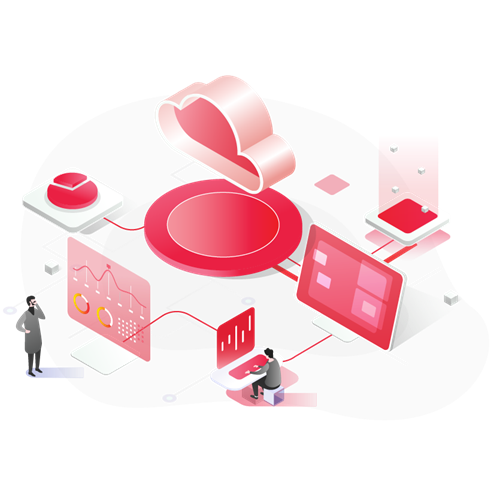

Quick initialization
- - The system is divided into many different infrastructure clusters, each cluster can optimize performance (CPU, Memory, Storage, Networking), GPU.
- - Supports 02-04 physical CPUs, using AMD, Intel Platinum CPU lines…
- - Minimum memory DDR5/DDR6. Up to 3-6TB/server.
- - InfiniBand Network: 200 Gbps, External Network: 25 Gbps. Uses high-speed NVMe I/O storage.

Maximum security

Reasonable cost
Minimize initial investment budget, save deployment time. Customers can choose to use 1 server or a combo package of 3 servers to optimize costs.

Independent infrastructure
- HPC (High Performance Computing) is the ability to analyze data and perform complex calculations at high speed, helping to solve complex scientific and engineering problems.
- An HPC system typically includes powerful servers, high-speed storage systems, and a fast network connection.
- HPC is widely used in fields such as scientific research, engineering simulation, financial analysis, and big data processing.
- HPC helps to increase processing speed, improve the accuracy of simulations and analysis, and reduce the time required to complete complex tasks.
- Deploying an HPC cluster involves configuring hardware, installing cluster management software, and optimizing performance.
- Some challenges include high cost, complex technical and management requirements, and the need for specialized system knowledge.
- Cloud HPC allows the use of powerful computing resources without investing in physical infrastructure, saving costs and increasing flexibility.
- Some common tools and software for HPC include Slurm, OpenMPI, and cloud services like AWS ParallelCluster.
- Performance optimization can include optimizing source code, using efficient algorithms, and configuring appropriate hardware.
- Current trends include the development of quantum computing, artificial intelligence, and the use of cloud HPC.
Establish a separate virtual data center system
- - Networking: Complete basic network virtualization equipment, protected and load-balanced by virtual firewalls and load balancers.
- - Compute: CPU and RAM are provided as virtual machines (VMs).
- - Storage: Uses NVMe storage system technology integrated into virtual machine drives.
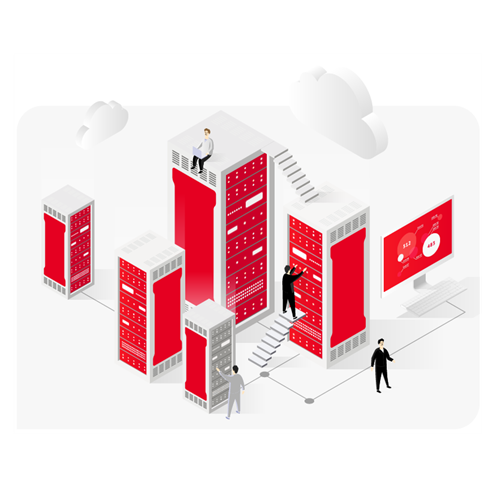

Easy upgrade and expansion
- - Expand resources by host (server node) without service interruption, transparent to the customer.
- - Supports hot-add CPU, RAM and hot-extend disk for virtual machines.
- - Easily upgrade, change vFirewall and vLoad Balance package configurations, and expand the number of vSwitches
Independent resources
- Cloud Networking
- Provides Layer 2, Layer 3 connectivity between network partitions across multiple Availability Zones.
- Supports automatic Failover Networking, minimizing downtime.
- Provides Scale Out capability, distributes East-West Offload Routing load, optimizes connectivity.
- Provides Internet connectivity available in multiple Availability Zones.
- High Performance
- Low latency: < 5ms between Availability Zones.
- High bandwidth: 10 Gbps between Availability Zones.
- Networking & Security
- Switching: Allows deployment of Layer 2 logical networks and the ability to extend connectivity to routing devices (vRouter, vFirewall) for zone connection and data center interconnection.
- Routing (vRouting): Supports static routing and BGP dynamic routing protocols including IPv6.
- Firewall: A stateful firewall distributed throughout the environment with centralized policy and management, allowing traffic control according to the North-South network model.
- Micro Segmentation: Supports Distributed Firewall feature allowing local traffic control within the LAN according to the East-West model.
- Load Balancing: Layer 4-Layer 7 load balancing supports SSL offload, pass-through and health checks mechanisms.
- Virtual Private Network (VPN): Supports IPSec VPN (Site-to-site) and Client VPN.
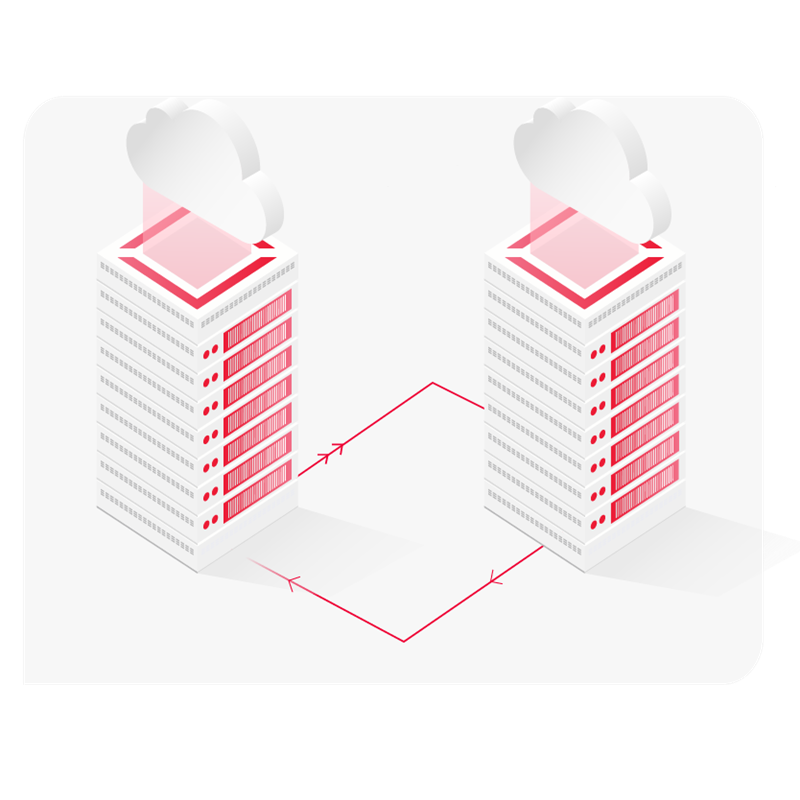

Single management interface
- - Proactive initialization, upgrade, and deletion of virtual machines.
- - Proactive design and configuration of the virtual network diagram of the system.
- - Configure virtual network device functions.
- - VM Template and Media ISO library.
- - Supports diverse authentication mechanisms: Local, external authentication (LDAP and SAML).
- - Management, access control for administrative users.
- - Establish service policies, control logs, and events.
Need support?
Please contact Viettel IDC immediately for support and advice on the server Viettel Dedicated Private Cloud (Tier High Performance Computing) that best suits your needs!