



.png)

















.png)





What is Hyper-V Virtualization? Learn about Microsoft's virtualization technology
May 28, 2026Hyper-V virtualization is a virtualization technology developed by Microsoft, allowing the creation and management of multiple virtual machines on a single Windows server. Hyper-V helps businesses optimize hardware resources, increase flexibility, ensure security, and serves as an important platform for building private cloud and hybrid cloud in modern IT environments. Let's join Vcloudia to explore the contents presented below in more detail.
What is Hyper-V Virtualization?
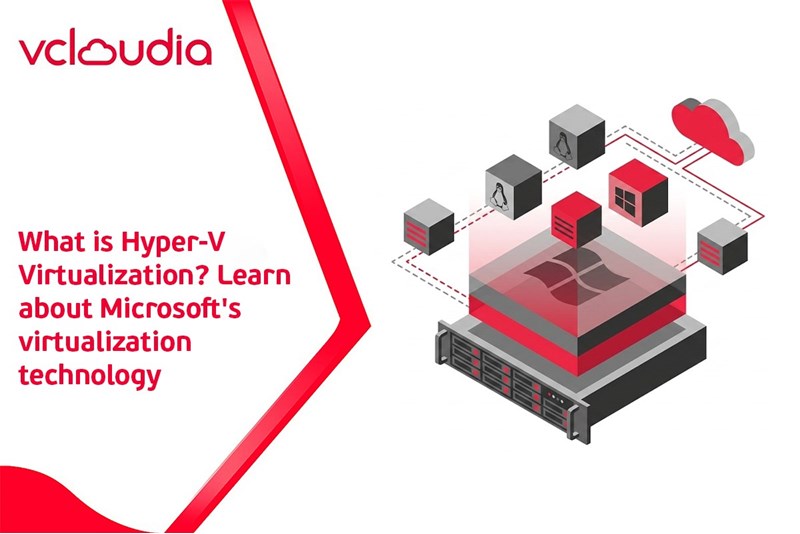
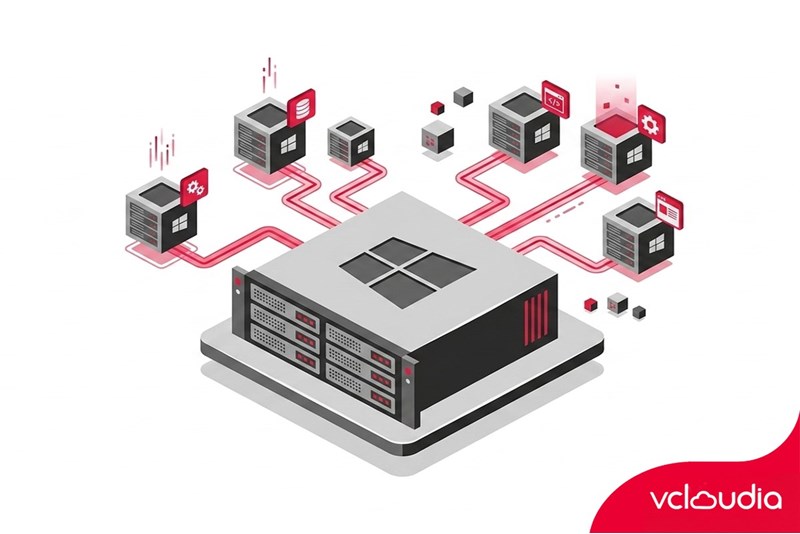
Hyper-V virtualization is a virtualization technology developed by Microsoft that allows you to create and manage virtual machines (VMs) right on a Windows-running computer or server. Hyper-V operates as a hypervisor that can divide hardware resources (CPU, RAM, disk, etc.) so that multiple operating systems run independently on a single physical machine together.
In modern infrastructure models, Hyper-V is often used to build a private cloud within the enterprise. From this platform, the system can expand or connect to a Virtual Private Cloud on cloud platforms such as Azure.
Outstanding features of Hyper-V:
- Pre-installed on Windows 10/11 Pro, Enterprise, and Windows Server versions.
- Allows creating, running, and managing multiple virtual machines on the same device.
- Supports multiple operating systems such as Windows, Linux, FreeBSD...
- Increases flexibility and security when deploying IT infrastructure.
- Compatible with management tools such as Hyper-V Manager, PowerShell, and Azure.
What components does the structure of Hyper-V consist of?
Hyper-V virtualization is built according to a layered architecture, helping the system operate stably, securely, and easily scale. Basically, the structure of Hyper-V consists of three main components along with some auxiliary components that support managing and operating virtual machines.
Core components
- Physical server and management partition (Root Partition): This is the physical server with the Windows operating system installed and Hyper-V enabled. The Root Partition has direct access to hardware such as CPU, RAM, disk, and network. This partition is responsible for managing the system, creating, and coordinating resources for virtual machines.
- Hypervisor: The hypervisor is the core layer of Hyper-V, sitting directly on the physical hardware. This component does not run applications but only performs the task of separating and allocating resources like CPU and memory to partitions, ensuring that virtual machines operate independently and without conflict.
- Virtual machines and child partitions (Child Partitions): Each virtual machine is created in a separate child partition. In these partitions, users can install an operating system such as Windows or Linux. Child partitions do not access hardware directly but use resources through virtual devices provided by Hyper-V.
Auxiliary components
- Hyper-V management tools: Hyper-V provides multiple tools for administering virtual machines such as Hyper-V Manager, PowerShell, and Windows Admin Center. These tools allow creating, configuring, monitoring, and managing virtual machines on the familiar interface of Windows.
- Virtual hard disks (VHD/VHDX): Each virtual machine uses one or more virtual hard disks to store the operating system and data. Hyper-V prioritizes the VHDX format due to its capability to support large capacities, high stability, and better performance compared to traditional VHD.
- Virtual network (Virtual Switch): The Virtual Switch is the component that helps connect virtual machines to each other and to external networks. Hyper-V allows creating various types of virtual switches to control traffic, separate networks, and enhance security for the virtualization system.
Operating mechanism of Hyper-V
Hyper-V operates through the hypervisor to control the use of the physical server's hardware resources. When the system boots up, the Root Partition is created first and plays the role of coordinating the entire virtualization environment.
The virtual machines in the child partitions send resource requests to the hypervisor. The hypervisor will use a scheduling mechanism (scheduler) to allocate CPU, memory, and other resources reasonably, helping multiple virtual machines run simultaneously while still ensuring performance and stability.
Thanks to this model, Hyper-V ensures isolation among virtual machines, limits mutual influence, and maintains performance even when the system operates with multiple workloads at the same time.
Outstanding features of Hyper-V virtualization
- Live Migration: Transferring virtual machines between physical servers without disrupting services, ideal for maintenance or load balancing.
- Dynamic Memory: Automatically adjusting RAM for virtual machines according to demand, optimizing resource usage.
- Hyper-V Replica: Synchronizing virtual machines to another location for quick recovery during incidents (Disaster Recovery).
- Clustering & Load Balancing: Enhancing High Availability for critical applications.
- Nested Virtualization: Running Hyper-V inside a virtual machine, useful for development and testing environments.
- Enhanced graphics support (RemoteFX): Providing a better graphics and audio experience, supporting applications that require graphical resources.
- Strong security: Integrating features like Secure Boot and Shielded VMs to protect virtual machines and data.
- Comprehensive management: Deeply integrated with tools like PowerShell and Windows Admin Center for automation and centralized management.
- Support for multiple operating systems: Allowing Windows, Linux, and other operating systems to run on the same physical hardware.
Pros and cons of Hyper-V virtualization
According to Faddom, Hyper-V currently accounts for about 10–12% of the global virtualization market share and is an increasingly popular choice for businesses using Windows due to its economical nature. Although highly rated thanks to its reasonable cost, good integration capability with the Microsoft ecosystem, and high stability, this platform still has certain limitations when compared to other virtualization solutions
Comparison between Hyper-V and VMware virtualization
In the field of server virtualization, Hyper-V and VMware are the two most popular and widely used platforms today. Each solution has its own strengths, suitable for different infrastructure needs and scales.
Guide on how to enable and disable Hyper-V on Windows 11
How to enable Hyper-V on Windows 10 and Windows 11
To use Hyper-V on Windows 10 and Windows 11, your computer needs to support virtualization technology (Intel VT-x or AMD-V) and have Virtualization Technology enabled in the BIOS/UEFI. After meeting the requirements, you can enable Hyper-V directly in Windows via Windows Features without the need to install additional external software.
- Step 1: Open Control Panel, select Programs, then click on Turn Windows features on or off.
- Step 2: In the Windows features list, find and check Hyper-V, while ensuring that the two components Hyper-V Platform and Hyper-V Management Tools are also fully selected.
- Step 3: Click OK to confirm, wait for Windows to install the necessary components, and then restart the machine to complete the process of enabling Hyper-V.
How to disable Hyper-V on Windows 10 and Windows 11
While using Hyper-V on Windows 10 or Hyper-V on Windows 11, there are situations where you need to disable Hyper-V to avoid conflicts with other virtualization software such as VMware Workstation, VirtualBox, or Android emulators. Disabling Hyper-V virtualization can be done directly in Windows through Windows Features without needing advanced commands.
- Step 1: Open Control Panel, select Programs, then click Turn Windows features on or off.
- Step 2: In the Windows features list, uncheck Hyper-V. To ensure that Hyper-V on Windows 11 or Windows 10 is completely disabled, you should additionally uncheck:
+ Virtual Machine Platform
+ Windows Hypervisor Platform
- Step 3: Click OK, wait for the system to apply the changes, and restart the machine to complete the process of disabling Hyper-V.
Troubleshooting when the Hyper-V virtualization service is not disabled
In some cases, the system still reports an error or other software cannot run because the Hyper-V virtualization service is not completely disabled. When encountering this situation, you can check and troubleshoot as follows:
- Step 1: Press Windows + R, type msinfo32, and press Enter to open System Information.
- Step 2: Perform a system information check. If the line “A hypervisor has been detected” still appears, it means Hyper-V is still operating in the background on Hyper-V Windows 10 or Hyper-V Windows 11.
- Step 3: Go back to Turn Windows features on or off and recheck the options. Ensure that Hyper-V, Virtual Machine Platform, and Windows Hypervisor Platform have all been unchecked, and then restart the machine.
Practical applications of Hyper-V virtualization technology in enterprises
Many enterprises today have deployed Hyper-V due to its capability to optimize hardware performance and save costs. According to Zmanda, up to 48% of large enterprises and 29% of medium enterprises are using Hyper-V as their primary virtualization solution.
Server consolidation and cost savings
Hyper-V virtualization supports robust server consolidation. Running multiple VMs on the same host helps improve the hardware resource utilization factor, increasing the ROI for server investments. Thanks to being built into Windows Server Datacenter, enterprises using Windows Server Datacenter can run from dozens to thousands of VMs without incurring additional hypervisor license costs
Deploying flexible development and testing environments
Hyper-V is particularly useful in quickly creating development and testing (Dev/Test) environments. Enterprises can instantly spin up new VMs to serve projects or test software without waiting to purchase new hardware.
Backup, disaster recovery, and ensuring high availability
Hyper-V provides a full range of backup and disaster recovery solutions for enterprises. Each VM on Hyper-V can be backed up directly while running thanks to the Export and Volume Shadow Copy features, allowing backups without shutting down the virtual machine.
The Hyper-V Replica feature allows cloning virtual machines to another site, synchronizing data between two different systems, ensuring a backup copy is available when needed. In the event of a physical server failure, Failover Clustering and Live Migration allow automatically or quickly transferring VMs to another server with almost no service interruption
Centralized management and professional integration
For enterprises with large-scale virtualization systems, centralized management is very important. Hyper-V integrates with professional management tools to serve this purpose. For example, Windows Admin Center provides a modern web interface to monitor and configure Hyper-V/HCI (Azure Stack HCI) clusters, track performance, and resolve issues remotely.
System Center Virtual Machine Manager (SCVMM) allows coordinating, automating deployment, and moving VMs back and forth across multiple Hyper-V hosts. Thanks to SCVMM and Windows Admin Center, administrators can centrally manage all VMs in the datacenter from just a single console.
Conclusion
Hyper-V virtualization is a stable, reasonably priced virtualization solution suitable for enterprises currently using the Windows ecosystem. This is a suitable platform for building an on-premises private cloud or acting as a stepping stone for a long-term hybrid cloud strategy.
Vcloudia Cloud Server – The Cloud You Can Count On
If you're concerned about the potential limitations of Cloud Servers, Cloud server by Vcloudia is a reliable solution for businesses of all sizes. With a modern infrastructure and comprehensive customer support, Vcloudia delivers a cloud experience with:
- Powerful connectivity to ensure stable 24/7 access
- Advanced security standards, compliant with international certifications such as ISO 27001:2013, ISO 20000:2018, ISO 9001:2015
- Flexible pricing packages tailored to your specific business needs
- Expert technical support, making migration and system deployment fast, safe, and compatible
Contact information:
- Hotline: +855 888 55 66 08 (free of charge)
- Fanpage: https://www.facebook.com/vcloudia/
- Website: https://vcloudia.com
Featured news
Related news
What is a Snapshot? The Difference Between Snapshot and Backup
Snapshot is a familiar concept in data management and protection. In the context of the information technology boom, where data is a major asset for businesses, understanding Snapshots as well as their application is a key factor for enterprises to maximize technological efficiency.
What is a Firewall? The Role and Importance of Firewalls for Users
In the context of ever-increasing cyberattacks, system security has become a top priority for many enterprises. Alongside deploying antivirus software and controlling connection ports, firewalls are also considered a key solution to effectively enhance cybersecurity.
What is DDoS? Signs, Mitigation Strategies, and Effective Prevention
DDoS is a highly dangerous cyberattack that leaves severe consequences for enterprises. Therefore, gaining a clear understanding of DDoS attacks, as well as how to detect and prevent them, is a topic of significant interest to many.
What is a Trojan? How to Detect, Avoid, and Prevent It
A Trojan is a type of malicious code or software that can cause severe consequences to computer operations. So, what is a Trojan? How can you prevent a Trojan from infiltrating your computer? In the following article, Vcloudia will provide detailed information on these issues.
What is Cloud Backup? Classification, benefits, and limitations
Cloud Backup is a solution that plays an important role in backing up and recovering data when an incident occurs. So what exactly is Cloud Backup? Let's find out the details with Vcloudia in the following article.
What is Cloud Storage? Features and Benefits of Using It
Cloud Storage is the perfect storage solution alternative to bulky, space-consuming physical hard drives. So, what is Cloud Storage? Let's explore the details with Vcloudia through the following article.
What is an API? Characteristics and applications in website design
API, short for Application Programming Interface, is a concept no longer unfamiliar in the information technology field. So what exactly is an API and why is it so important? Let's find out with Vcloudia.
What is Node.js? Instructions on how to install Node.js on cPanel
Currently, it is easy to see that Node.js is being used by quite a lot of people. This is because Node.js can support users in running on multiple platforms and multiple devices.
What is Vultr VPS? Should you use Vultr VPS?
Vultr VPS is one of the best cloud storage solutions in the world. In this article, you will learn the concept: "What is Vultr VPS?", as well as understand its advantages and disadvantages.
Zoom Cloud Meeting: What is it? Basic Things You Should Know About Zoom Cloud Meeting
In 2020, Zoom Cloud Meeting became one of the leading video conferencing software applications. It allows you to virtually interact with colleagues when in-person meetings aren't possible, and it has also been very successful for social events.