



















What is Fog Computing? Understanding fog computing
Aug 21, 2026In the current era of rapid digital advancement and the rise of the Internet of Things (IoT), Fog Computing offers businesses a solution to optimize data processing. So, what exactly is Fog Computing, and how does it function? Vcloudia will explore these questions in the following article!
What is Fog Computing?
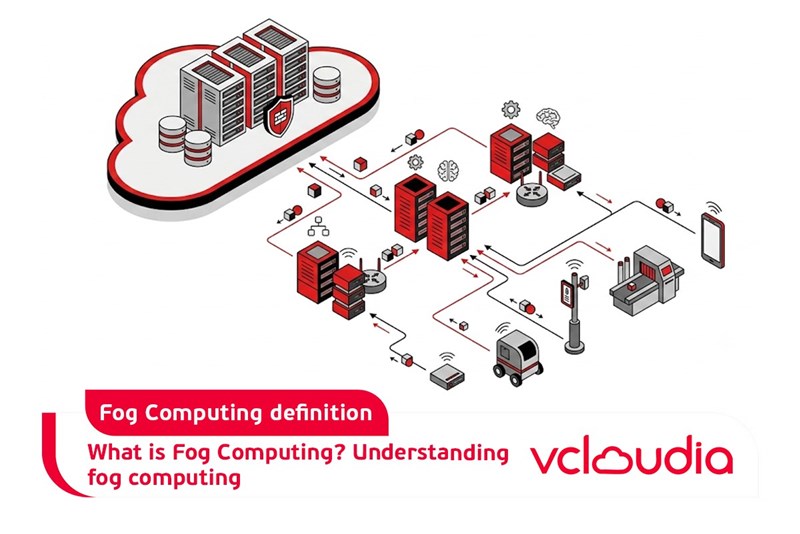
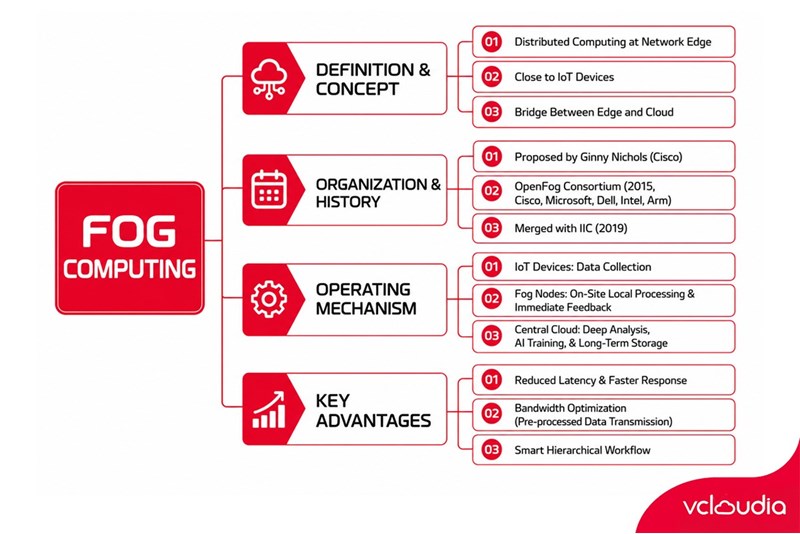
Fog Computing represents a distributed computing paradigm where data processing and storage are conducted in close proximity to end devices at the network's periphery, where numerous IoT devices are located. This approach not only boosts system performance but also lessens latency, enabling applications and services to react more swiftly, which in turn enhances the user experience.
Unlike cloud computing, which requires data to traverse multiple network layers to reach a central processing facility, Fog Computing executes these operations right where the data originates. This method proves particularly beneficial in sectors such as supply chain management, industrial automation, or IoT systems that demand quick and precise responses.
The term "Fog" is derived from the natural phenomenon, conjuring an image of a "cloud" situated near the ground. Similarly, this technology operates close to the data source, creating a smooth link between IoT devices and the central cloud infrastructure. This concept was initially proposed by Cisco expert Ginny Nichols and was quickly realized through collaborations among prominent technology companies.
In 2015, Cisco, along with partners like Microsoft, Dell, Intel, and Arm, joined forces with Princeton University to establish the OpenFog Consortium. This international alliance aimed to foster the standardization and widespread adoption of Fog Computing. Other major entities, including General Electric (GE), Foxconn, and Hitachi, also participated, contributing to the evolution of this technology into a vital platform within the industrial ecosystem. By 2019, OpenFog merged with the Industrial Internet Consortium (IIC), thereby expanding Fog Computing's global reach and applications.
Pros and cons of Fog Computing
To gain a clearer understanding of the advantages and disadvantages of implementing Fog Computing, let's analyze the benefits and challenges of this technology in optimizing network systems and data processing.
Pros of Fog Computing
- High flexibility: Fog Computing enables businesses to easily scale resources up or down based on their requirements. Fog nodes (or local devices) can be deployed, relocated, or removed as needed. In urgent situations, Fog Computing also facilitates the rapid migration of computing resources, ensuring consistent high performance.
- Real-time data processing: A significant advantage of Fog Computing is its capacity for real-time data processing, particularly for organizations leveraging Machine Learning systems. Processing data at fog nodes reduces latency compared to traditional cloud computing, leading to more accurate and faster analytical outcomes.
- Bandwidth savings: By processing data directly at fog nodes, the amount of data needing transmission across the network is minimized, which consequently conserves bandwidth and reduces operational expenses for businesses.
- More efficient resource allocation: Fog Computing supports the distribution of network resources across various locations, processing data directly at fog nodes close to its origin. This not only decreases latency and improves user experience but also allows businesses to compute and analyze data remotely with greater efficiency.
Cons of Fog Computing
- Security issues: Due to their decentralized nature, fog nodes situated near the network edge are more challenging to oversee. If these nodes accumulate excessive information without adequate protection, they can become vulnerable to cyberattacks, complicating data control and security efforts.
- Dependence on fog node locations: To access and process data, users must be in proximity to the fog nodes. This limitation distinguishes Fog Computing from cloud computing. Consequently, many businesses often integrate Fog Computing with Cloud Computing to harness the strengths of both platforms.
- Complexity in deployment and maintenance: When integrating Fog Computing with existing network systems and cloud resources, businesses encounter complexities in deployment and management. Fog nodes require continuous maintenance and protection against external cyberattacks. As the system expands, the intricacy of managing and securing nodes will also grow, necessitating greater investment from businesses to maintain and safeguard the system from external threats.
How Fog Computing works
Fog Computing represents a contemporary computing model that integrates the network edge (Edge) and the cloud (Cloud), thereby optimizing data processing workflows within IoT systems. The operation of Fog Computing relies on local devices, known as fog nodes, primarily tasked with processing edge data before transmitting a subset of this information to the Cloud for more in-depth analysis. This collaborative approach not only lessens the burden on the Cloud but also guarantees rapid responsiveness in critical scenarios.
The data processing sequence begins with IoT devices, such as sensors or cameras, gathering data directly from their environment. However, due to their limited computing capabilities, these devices typically handle only simple tasks and cannot perform complex operations like advanced analytics, Machine Learning model training, or predictive analysis. At this stage, fog nodes, located close to the IoT devices, function as a short-term data processing hub.
Fog nodes conduct quick analysis and process critical data on-site to provide immediate feedback. For instance, in an intelligent traffic system, fog nodes can analyze camera data to detect traffic accidents or congestion. The analytical results are then directly communicated to the control center to implement timely responses, such as adjusting traffic lights or notifying drivers through an application.
When more extensive analysis or long-term storage is required, fog nodes transmit a portion of the processed data to the Cloud via the Internet. Cloud computing then assumes responsibility for more intricate tasks, including AI model training, Big Data analysis, or generating strategic reports. This integration establishes a smart hierarchical system where Fog Computing handles immediate processing, and the Cloud supports long-term analytics.
A significant advantage of the Fog Computing model is its ability to optimize bandwidth. Rather than sending all raw data from IoT devices to the Cloud, only critical or pre-processed data from fog nodes is transmitted. This not only conserves network resources but also reduces latency, ensuring smoother system operation.
A clear example of Fog Computing in action can be observed in smart factories. Sensors continuously collect data on machine performance, temperature, or vibration, sending it to fog nodes for immediate processing. Upon detecting anomalies, such as a potential breakdown risk, the system alerts the technical team for prompt intervention. Concurrently, data is forwarded to the Cloud for long-term analysis, aiding in the optimization of production processes and effective maintenance planning.
Comparison of Fog Computing, Edge Computing, and Cloud Computing
Fog Computing, Edge Computing, and Cloud Computing each possess distinct characteristics and applications, catering to various levels of data processing and storage demands.
Cloud Computing is a paradigm for delivering computing resources over the Internet, allowing users to access services such as storage, databases, software, and servers without the need to invest in physical infrastructure. This model is notable for its flexible scalability, enabling businesses to save costs and easily adjust resources as required. However, since data is stored and processed at remote data centers, Cloud Computing can introduce latency during data transmission.
Edge Computing addresses the latency issue by moving data processing closer to the data source. Data is processed directly at its origin, which reduces transmission time and increases response speed. Nevertheless, Edge Computing demands powerful hardware and computing resources at the edge, leading to higher deployment and management costs.
Fog Computing acts as a middle layer, combining aspects of Edge Computing and Cloud Computing. This model facilitates data processing and analysis not only on edge devices but also on distributed nodes positioned between the network edge and the data center. This approach not only helps reduce latency but also creates a more adaptable system for data management and security. Fog Computing leverages the strengths of both Cloud Computing and Edge Computing, providing an optimal solution for systems that require both rapid response and flexible scalability.
In summary, Cloud Computing, Edge Computing, and Fog Computing serve different purposes. Cloud Computing is best suited for applications needing extensive processing power and long-term storage. Edge Computing is ideal for systems requiring swift response times and localized processing. Conversely, Fog Computing offers a balanced solution, making it perfect for complex systems where speed, security, and scalability must all be optimized.
Real-world applications of Fog Computing
One of Fog Computing's most impactful applications is within the Internet of Things (IoT). By processing data directly where it originates, Fog Computing helps to alleviate system load and optimize performance. This is particularly crucial in smart monitoring systems that demand quick analysis and response, such as energy management systems, smart lighting systems, or environmental monitoring.
In the realm of transportation and logistics, Fog Computing plays a vital role in advancing self-driving car applications. Autonomous vehicles must process vast quantities of data from sensors and cameras to make precise, safe decisions in dynamic traffic environments. Moreover, Fog Computing processes data at the network edge, minimizing latency and accelerating response times, thereby enhancing the operational efficiency of self-driving vehicles.
The healthcare sector represents another significant application for Fog Computing. It supports the processing of data from mobile medical devices and other sensors, delivering real-time information to medical professionals and patients. This improves the quality of healthcare, especially in emergency situations or when continuous health monitoring is necessary. Fog Computing reduces latency in information delivery, enabling swift and accurate medical decisions.
Cybersecurity is yet another domain where Fog Computing finds application. With its capability to analyze and detect threats directly at the network edge, Fog Computing adds an extra layer of security, safeguarding data and network systems from attacks or potential threats. Processing data on-site at the edge mitigates risks and bolsters real-time security measures.
In the manufacturing industry, Fog Computing optimizes production processes by collecting and processing data from machinery and production equipment. This enables the early detection of emerging issues and the optimization of production performance. Thanks to its on-the-spot data analysis capabilities, factories can rapidly adjust production processes, minimizing disruptions and improving product quality.
Vcloudia Cloud Server – The Cloud You Can Count On
If you're concerned about the potential limitations of Cloud Servers, Cloud Server by Vcloudia is a reliable solution for businesses of all sizes. With a modern infrastructure and comprehensive customer support, Vcloudia delivers a cloud experience with:
- Powerful connectivity to ensure stable 24/7 access
- Advanced security standards, compliant with international certifications such as ISO 27001:2013, ISO 20000:2018, ISO 9001:2015
- Flexible pricing packages tailored to your specific business needs
- Expert technical support, making migration and system deployment fast, safe, and compatible
Contact information:
- Hotline: +855 888 55 66 08 (free of charge)
- Fanpage: https://www.facebook.com/vcloudia/
- Website: https://vcloudia.com
Featured news
Where Are Databases Stored?
20/11/2026Is Free Cloud Storage Worth Considering?
20/11/2026Related news
Where Are Databases Stored?
A database is a collection of structured information that is systematically organized and stored, making data management, querying, and manipulation easier and more efficient. Data within a database may include information about products, customers, transactions, or any other type of information related to business operations.
The Safest Data Storage Methods for Businesses
Data is an invaluable asset for businesses and the foundation of all business operations. Alongside today's rapid technological advancements, data is increasingly exposed to risks of loss, theft, or damage due to various causes. So, what are the safest data storage methods for businesses?
10 Popular and Secure Cloud Storage Services Today
Cloud Storage is currently the most popular solution for storing and managing data online. As a result, this service is continuously evolving, offering users an increasingly diverse range of options.
Is Free Cloud Storage Worth Considering?
Free cloud storage is currently a trend among many businesses because it not only helps optimize time and space to improve work efficiency but also saves the costs of on-premises server storage. However, businesses still face many challenges when using free plans.
On-Premise, Off-Premise, and Cloud – Which Storage Solution Is Right for Businesses?
There are three main infrastructure models that organizations can choose to deploy and manage their systems and applications: On-Premise, Off-Premise, and Cloud. So, which is the most suitable choice for businesses?
Is Cloud Storage Capacity Limited?
Storage capacity is one of the important factors that businesses need to understand before deploying a data storage system on a cloud computing platform. So, is Cloud Storage capacity limited? Join Vcloudia as we explore the answer in the following article.
How Can Small Clinics Securely Store Electronic Medical Records Without Extensive IT Infrastructure?
Does managing electronic medical records necessarily require a massive IT system? How can small clinics securely store electronic medical records without extensive IT infrastructure?
When Should You Stop Using Hard Drives and Switch to Cloud Storage?
In the following article, Vcloudia will help you understand the differences between traditional hard drives and Cloud platforms, while identifying the signs that indicate when businesses should change their storage methods to optimize security and improve system performance.
Should accounting and financial data be stored on the Cloud?
Many businesses remain quite hesitant about the security capabilities of the Cloud, especially when it comes to sensitive data. So, should accounting and financial data be stored on the Cloud? Let's join Vcloudia in finding the answer through the article below.
Differences Between HDD Servers and SSD Servers: Which Should Businesses Choose?
When choosing a storage server, businesses often consider HDD (Hard Disk Drive) and SSD (Solid State Drive) to ensure performance, speed, and costs that meet their needs. So, how do HDD and SSD servers differ? And which is the optimal choice for businesses?