



















What is Colocation? What You Need to Know About Colocation
Aug 24, 2026In the current information technology landscape, colocation holds a vital position. Consequently, this service is increasingly capturing the interest of numerous individuals. If you wish to learn more about colocation, please continue reading the article below!
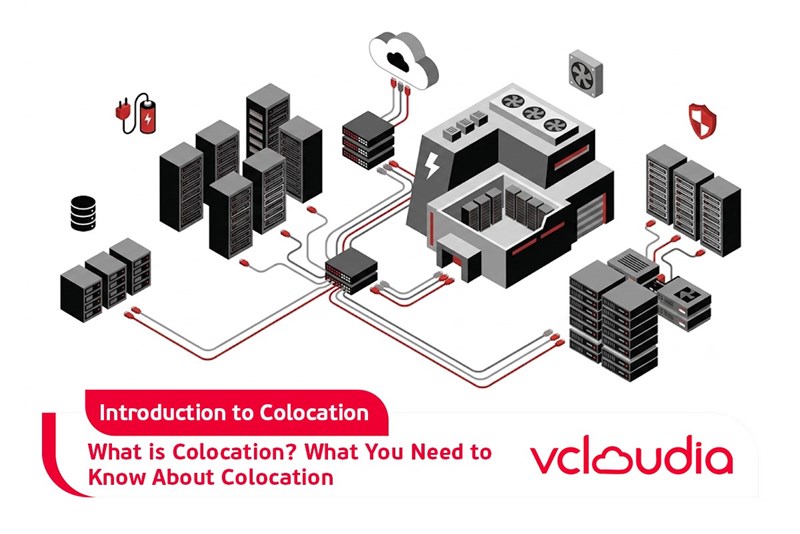
What is Colocation?
Colocation refers to a service where space for servers or other network equipment is leased within a data center. This service is frequently utilized by businesses that lack the adequate resources and capacity to construct and manage their own data centers. Colocation services are categorized into two primary types: colocation server (which involves leasing server space) and colocation rack (which entails leasing an entire rack to house a system).
Customers retain ownership of the servers and equipment housed at the data center and maintain full management authority. Meanwhile, the data center personnel are responsible for monitoring, maintaining, and guaranteeing the continuous operation of the system.
What do Colocation services provide?
- Modern facilities: Data centers that adhere to standards feature excellent facilities, including mounts, racks, and cable trays, which undergo regular inspection and maintenance.
- Power supply: Data centers typically feature backup generators with varying levels of redundancy or uninterruptible power supplies (depending on the specific facility) to guarantee uninterrupted operation of customer services.
- Physical security: The majority of colocation server centers maintain a robust level of physical security, encompassing on-site security personnel, 24/7/365 surveillance, and biometric authorization.
- Cooling systems: Colocation server services include cooling systems designed to safeguard your hardware. Examples of these systems are centrifugal chillers, cooling towers, and water loop pumps.
How to choose a good Colocation service?
After gaining a clearer understanding of colocation services and their widespread popularity, many clients frequently inquire, "How do you select the optimal colocation server service provider?"
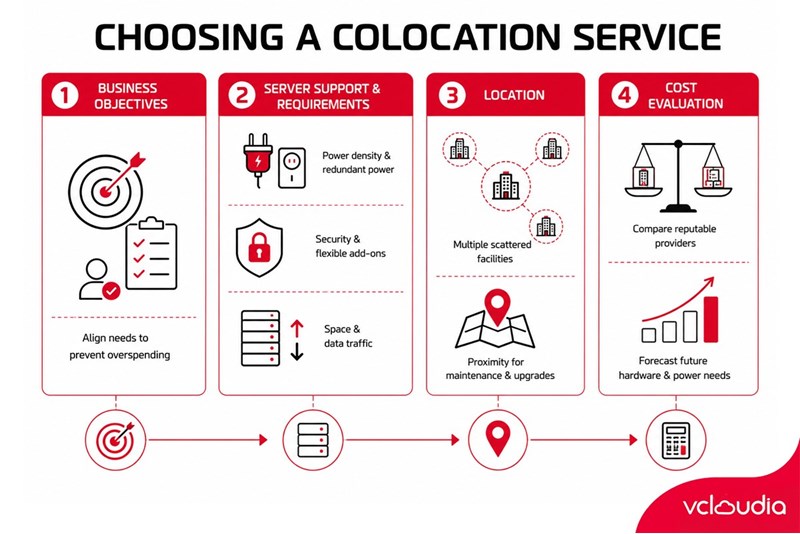
Below are some criteria that customers can consider:
Clearly outline business objectives
Each company possesses distinct requirements, and it is imperative to have a clear understanding of your company's objectives before contemplating the use of colocation server services.
Failure to do so can easily lead the company to overspend, including on services that may never be utilized.
Ensure your server is fully supported
Furthermore, customers must verify that the provider can meet the minimum requirements for their company's servers. For instance: support for power density, redundant power supply, security, and so on.
Additionally, if the data center provider can offer a variety of flexible add-ons concerning data traffic and space, this would be a significant advantage.
Choose the location
Opt for providers who operate multiple data centers spread across various geographical locations, as this will enable customers to select a facility that is most conveniently located for their business.
This is a highly crucial consideration, especially if you anticipate needing to upgrade or maintain your equipment.
Review costs carefully
Customers should compare the costs of colocation server services that align with their needs across several reputable providers.
Moreover, the most effective method to evaluate costs involves forecasting the projected growth of the business's hardware needs in the upcoming years. The specific hardware utilized will also dictate the necessary power, space, and connectivity. All these elements will influence the price you will ultimately pay.
Looking for a high-performance, secure solution?
Explore the services offered by Vcloudia – a leading provider of Cloud Computing and Data Center solutions. Contact us for expert consultation and find the right model for your needs:
- Hotline: +855 888 55 66 08 (free of charge)
- Fanpage: https://www.facebook.com/vcloudia/
- Website: https://vcloudia.com
Featured news
Where Are Databases Stored?
20/11/2026Is Free Cloud Storage Worth Considering?
20/11/2026Related news
Where Are Databases Stored?
A database is a collection of structured information that is systematically organized and stored, making data management, querying, and manipulation easier and more efficient. Data within a database may include information about products, customers, transactions, or any other type of information related to business operations.
The Safest Data Storage Methods for Businesses
Data is an invaluable asset for businesses and the foundation of all business operations. Alongside today's rapid technological advancements, data is increasingly exposed to risks of loss, theft, or damage due to various causes. So, what are the safest data storage methods for businesses?
10 Popular and Secure Cloud Storage Services Today
Cloud Storage is currently the most popular solution for storing and managing data online. As a result, this service is continuously evolving, offering users an increasingly diverse range of options.
Is Free Cloud Storage Worth Considering?
Free cloud storage is currently a trend among many businesses because it not only helps optimize time and space to improve work efficiency but also saves the costs of on-premises server storage. However, businesses still face many challenges when using free plans.
On-Premise, Off-Premise, and Cloud – Which Storage Solution Is Right for Businesses?
There are three main infrastructure models that organizations can choose to deploy and manage their systems and applications: On-Premise, Off-Premise, and Cloud. So, which is the most suitable choice for businesses?
Is Cloud Storage Capacity Limited?
Storage capacity is one of the important factors that businesses need to understand before deploying a data storage system on a cloud computing platform. So, is Cloud Storage capacity limited? Join Vcloudia as we explore the answer in the following article.
How Can Small Clinics Securely Store Electronic Medical Records Without Extensive IT Infrastructure?
Does managing electronic medical records necessarily require a massive IT system? How can small clinics securely store electronic medical records without extensive IT infrastructure?
When Should You Stop Using Hard Drives and Switch to Cloud Storage?
In the following article, Vcloudia will help you understand the differences between traditional hard drives and Cloud platforms, while identifying the signs that indicate when businesses should change their storage methods to optimize security and improve system performance.
Should accounting and financial data be stored on the Cloud?
Many businesses remain quite hesitant about the security capabilities of the Cloud, especially when it comes to sensitive data. So, should accounting and financial data be stored on the Cloud? Let's join Vcloudia in finding the answer through the article below.
Differences Between HDD Servers and SSD Servers: Which Should Businesses Choose?
When choosing a storage server, businesses often consider HDD (Hard Disk Drive) and SSD (Solid State Drive) to ensure performance, speed, and costs that meet their needs. So, how do HDD and SSD servers differ? And which is the optimal choice for businesses?