


















What is Cloud VPS? Things to keep in mind when choosing a Cloud VPS
Aug 24, 2026Cloud VPS may be a concept that is both new and familiar to individuals exploring virtual server options. If you have researched or been involved in the web hosting industry, you've likely encountered terms such as "cloud," "cloud server," "virtual private server" (VPS), or "Cloud VPS”. This article will delve into the Cloud VPS virtual server model and highlight essential considerations when opting for this service.
What is Cloud VPS?
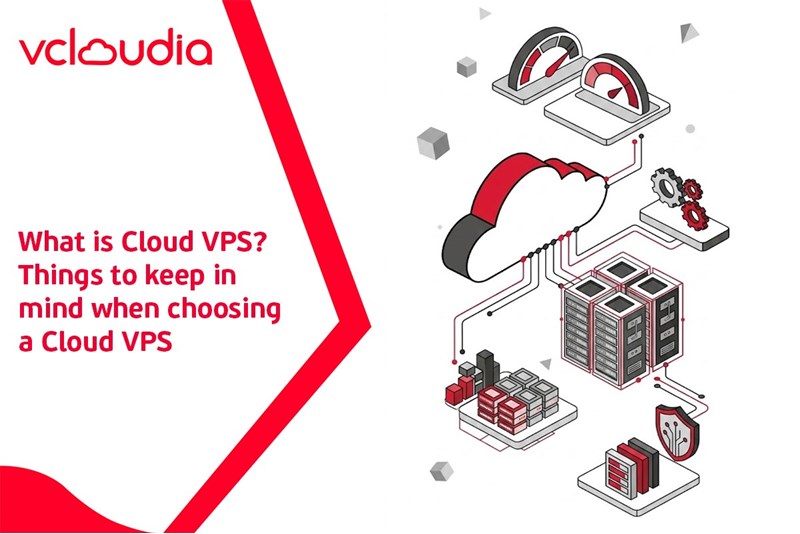
A Cloud VPS (Cloud Virtual Private Server) is a virtual machine that runs on a cluster of connected physical servers using cloud computing technology. It gives you dedicated resources like CPU, RAM, and storage with an independent operating system.
Cloud VPS refers to a virtual private server that utilizes cloud computing technology, operating on a physical server partitioned into several smaller, distinct servers.
Cloud VPS provides users with reliable access speeds and enhanced security because data is spread across multiple servers. This distribution makes it difficult for hackers to pinpoint server information for potential attacks.
Is Cloud VPS scalable?
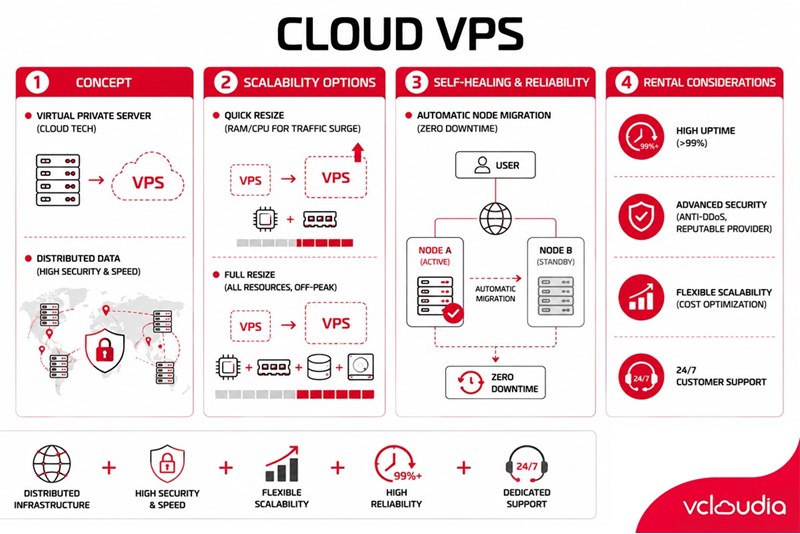
Cloud VPS offers the flexibility to increase or decrease your server's resource allocation, depending on your website or usage demands. There are two scaling options available: Quick Resize and Full Resize.
Quick Resize
This option is ideal for clients experiencing sudden traffic spikes who need additional RAM and CPU resources to handle the load, without requiring increased storage capacity.
Full Resize
As its name implies, this option allows you to adjust all server resources. However, it requires more time than Quick Resize, so it is advisable to perform this function during off-peak hours.
Can Cloud VPS hardware self-heal?
Cloud VPS enables you to manage damage errors proactively, minimizing system impact. The Cloud VPS hosting service ensures that if a node or component fails, the virtual server will automatically migrate to another node.
Consequently, you avoid downtime and are not forced to suspend services.
Things to keep in mind when renting a Cloud VPS
Uptime
Uptime is consistently one of the most critical factors when selecting any hosting service, including Cloud VPS.
Thanks to cloud computing technology, Cloud VPS uptime has significantly improved compared to traditional VPS, regularly exceeding 99%.
Security
While Cloud VPS offers robust security, it is crucial to select a reputable Cloud VPS rental provider, especially in today's environment. Always verify that your provider offers an anti-DDoS firewall and has effective troubleshooting methods in place for incidents.
Many customers have had to halt their services because their provider was unable to resolve website attack issues.
Scalability
When deciding on a Cloud VPS rental, always confirm that your service allows you to scale resources up or down as needed. This flexibility can help you save substantial unnecessary costs.
Customer Support
Finally, a 24/7 customer support system from your Cloud VPS provider is indispensable. Your website must maintain stable operation at all times to ensure customer access. Therefore, encountering an issue late at night without support staff can negatively impact your business's reputation.
Looking for a high-performance, secure solution?
Explore the services offered by Vcloudia – a leading provider of Cloud Computing and Data Center solutions. Contact us for expert consultation and find the right model for your needs:
- Hotline: +855 888 55 66 08 (free of charge)
- Fanpage: https://www.facebook.com/vcloudia/
- Website: https://vcloudia.com
Featured news
Where Are Databases Stored?
20/11/2026Is Free Cloud Storage Worth Considering?
20/11/2026Related news
Where Are Databases Stored?
A database is a collection of structured information that is systematically organized and stored, making data management, querying, and manipulation easier and more efficient. Data within a database may include information about products, customers, transactions, or any other type of information related to business operations.
The Safest Data Storage Methods for Businesses
Data is an invaluable asset for businesses and the foundation of all business operations. Alongside today's rapid technological advancements, data is increasingly exposed to risks of loss, theft, or damage due to various causes. So, what are the safest data storage methods for businesses?
10 Popular and Secure Cloud Storage Services Today
Cloud Storage is currently the most popular solution for storing and managing data online. As a result, this service is continuously evolving, offering users an increasingly diverse range of options.
Is Free Cloud Storage Worth Considering?
Free cloud storage is currently a trend among many businesses because it not only helps optimize time and space to improve work efficiency but also saves the costs of on-premises server storage. However, businesses still face many challenges when using free plans.
On-Premise, Off-Premise, and Cloud – Which Storage Solution Is Right for Businesses?
There are three main infrastructure models that organizations can choose to deploy and manage their systems and applications: On-Premise, Off-Premise, and Cloud. So, which is the most suitable choice for businesses?
Is Cloud Storage Capacity Limited?
Storage capacity is one of the important factors that businesses need to understand before deploying a data storage system on a cloud computing platform. So, is Cloud Storage capacity limited? Join Vcloudia as we explore the answer in the following article.
How Can Small Clinics Securely Store Electronic Medical Records Without Extensive IT Infrastructure?
Does managing electronic medical records necessarily require a massive IT system? How can small clinics securely store electronic medical records without extensive IT infrastructure?
When Should You Stop Using Hard Drives and Switch to Cloud Storage?
In the following article, Vcloudia will help you understand the differences between traditional hard drives and Cloud platforms, while identifying the signs that indicate when businesses should change their storage methods to optimize security and improve system performance.
Should accounting and financial data be stored on the Cloud?
Many businesses remain quite hesitant about the security capabilities of the Cloud, especially when it comes to sensitive data. So, should accounting and financial data be stored on the Cloud? Let's join Vcloudia in finding the answer through the article below.
Differences Between HDD Servers and SSD Servers: Which Should Businesses Choose?
When choosing a storage server, businesses often consider HDD (Hard Disk Drive) and SSD (Solid State Drive) to ensure performance, speed, and costs that meet their needs. So, how do HDD and SSD servers differ? And which is the optimal choice for businesses?