



















What is an SFTP Server? What are the advantages and disadvantages of an SFTP Server?
Aug 24, 2026The term SFTP Server is likely familiar to many businesses, particularly those in the technology sector. But what exactly does an SFTP Server entail? What are its benefits and drawbacks? To answer these questions, let's explore this article with Vcloudia.
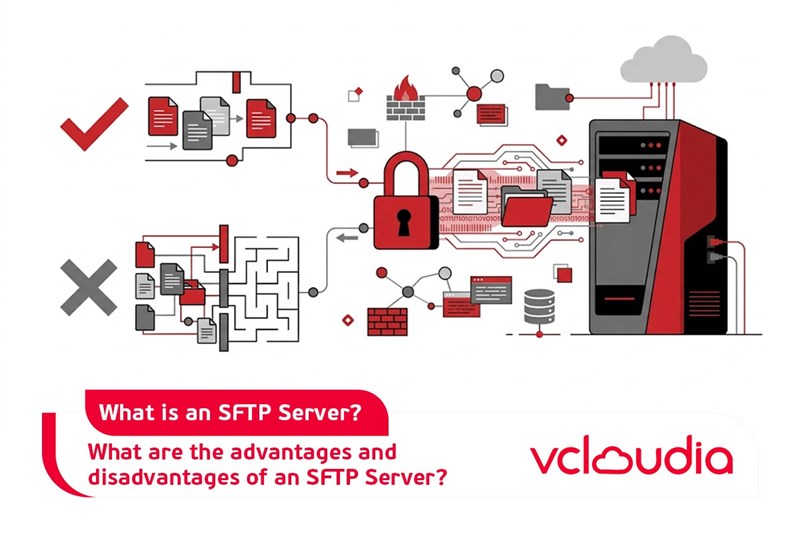
What is an SFTP Server?
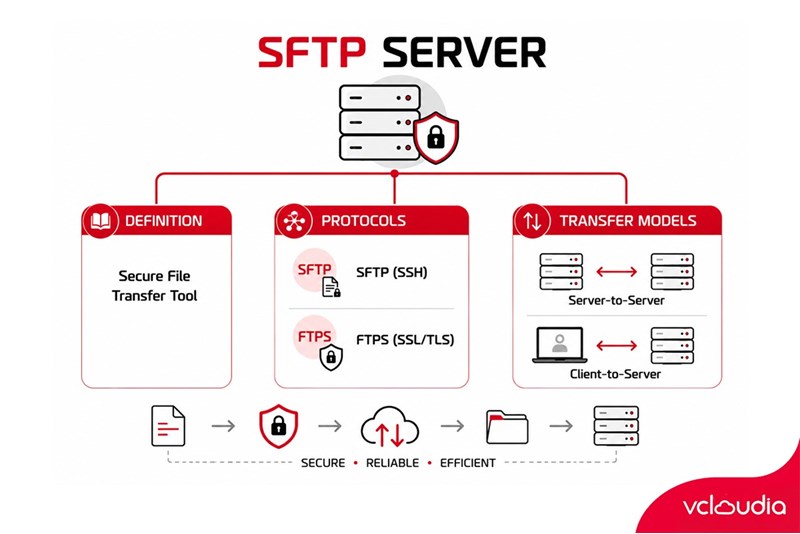
To understand an SFTP Server, it's helpful to first define FTP. FTP, or File Transfer Protocol, is a widely used protocol for transferring files. Simply put, users rely on protocols like FTP to move files from one location to another. Recently, more secure versions of FTP have emerged, namely SFTP and FTPS.
SFTP (Secure File Transfer Protocol), as previously mentioned, is a more secure version of FTP. SFTP prevents the unencrypted transmission of login credentials, unlike the standard FTP protocol. Additionally, it generates a unique identifier that the client must send back to complete the data transfer. These measures provide users with greater peace of mind, as SFTP ensures higher security for file transfers.
So what exactly is an SFTP Server? And what is the role of an SFTP Server?
In broad terms, an SFTP Server is a tool that facilitates secure file transfers using protocols like SSH File Transfer Protocol or FTP with SSL/TLS support. Transfers can occur in either a server-to-server or client-to-server model.
Having grasped the concept of an SFTP Server, what do you believe is its primary function? An SFTP Server grants users complete control over managing data in the form of files and directories on the host (excluding the database). Furthermore, utilizing an SFTP Server allows users to indirectly operate a remote computer through highly reliable and efficient data transfer. It would be challenging to envision this without understanding what an SFTP Server is. So, what specifically are the pros and cons of an SFTP Server?
What are the advantages of an SFTP Server?
- The foremost advantage of an SFTP Server is its robust security capabilities, a feature highly valued by many users when learning about what an SFTP Server is.
- Access information is encrypted, preventing hackers from intercepting data during transmission over the SFTP protocol.
- Security can be enhanced by combining key pair authentication with a username and password.
- When examining what an SFTP Server is, we observe that it uses only one server connection for data transfer, requiring no other server ports to be open for its operation. This contributes to increased security and firewall friendliness.
What are the disadvantages of an SFTP Server?
- Despite its notable advantages, an SFTP Server also has limitations, as SSH key management can be relatively complex.
- When users intend to transfer files, the private key must be installed with anti-theft measures to prevent its loss.
- Activating SSH keys requires thorough training for users due to the complexity of the operation.
What is the role of an SFTP Server for businesses?
What is the actual significance of an SFTP Server? Currently, SFTP Servers are employed in numerous scenarios where file security is paramount, serving as a successor to FTP. A crucial aspect of using an SFTP Server is its ability to comply with standards such as HIPAA. In reality, every business must maintain its security posture, even during transitions between networks in digital packet form. This is precisely why an SFTP Server can be valuable in securing such data.
Conclusion
In summary, after understanding what an SFTP Server is, we can see that its use provides users with greater confidence in transmitting data, with safety and security consistently ensured. An SFTP Server is an excellent option for protecting data during simultaneous transmission and can also meet other standards for user data protection. Moreover, an SFTP Server can be considered an enhancement over FTPS – which is merely an FTP protocol operating over Transport Layer Security (TLS) or Secure Sockets Layer (SSL).
Looking for a high-performance, secure solution?
Explore the services offered by Vcloudia – a leading provider of Cloud Computing and Data Center solutions. Contact us for expert consultation and find the right model for your needs:
- Hotline: +855 888 55 66 08 (free of charge)
- Fanpage: https://www.facebook.com/vcloudia/
- Website: https://vcloudia.com
Featured news
Where Are Databases Stored?
20/11/2026Is Free Cloud Storage Worth Considering?
20/11/2026Related news
Where Are Databases Stored?
A database is a collection of structured information that is systematically organized and stored, making data management, querying, and manipulation easier and more efficient. Data within a database may include information about products, customers, transactions, or any other type of information related to business operations.
The Safest Data Storage Methods for Businesses
Data is an invaluable asset for businesses and the foundation of all business operations. Alongside today's rapid technological advancements, data is increasingly exposed to risks of loss, theft, or damage due to various causes. So, what are the safest data storage methods for businesses?
10 Popular and Secure Cloud Storage Services Today
Cloud Storage is currently the most popular solution for storing and managing data online. As a result, this service is continuously evolving, offering users an increasingly diverse range of options.
Is Free Cloud Storage Worth Considering?
Free cloud storage is currently a trend among many businesses because it not only helps optimize time and space to improve work efficiency but also saves the costs of on-premises server storage. However, businesses still face many challenges when using free plans.
On-Premise, Off-Premise, and Cloud – Which Storage Solution Is Right for Businesses?
There are three main infrastructure models that organizations can choose to deploy and manage their systems and applications: On-Premise, Off-Premise, and Cloud. So, which is the most suitable choice for businesses?
Is Cloud Storage Capacity Limited?
Storage capacity is one of the important factors that businesses need to understand before deploying a data storage system on a cloud computing platform. So, is Cloud Storage capacity limited? Join Vcloudia as we explore the answer in the following article.
How Can Small Clinics Securely Store Electronic Medical Records Without Extensive IT Infrastructure?
Does managing electronic medical records necessarily require a massive IT system? How can small clinics securely store electronic medical records without extensive IT infrastructure?
When Should You Stop Using Hard Drives and Switch to Cloud Storage?
In the following article, Vcloudia will help you understand the differences between traditional hard drives and Cloud platforms, while identifying the signs that indicate when businesses should change their storage methods to optimize security and improve system performance.
Should accounting and financial data be stored on the Cloud?
Many businesses remain quite hesitant about the security capabilities of the Cloud, especially when it comes to sensitive data. So, should accounting and financial data be stored on the Cloud? Let's join Vcloudia in finding the answer through the article below.
Differences Between HDD Servers and SSD Servers: Which Should Businesses Choose?
When choosing a storage server, businesses often consider HDD (Hard Disk Drive) and SSD (Solid State Drive) to ensure performance, speed, and costs that meet their needs. So, how do HDD and SSD servers differ? And which is the optimal choice for businesses?