



.png)















.png)





🇰🇭 Cloud Server vs. Traditional Server: Which Choice Fits Cambodian Businesses?
09/10/2025In recent years, Cambodia has been witnessing a strong wave of digital transformation, particularly within the SME sector. Cloud computing has emerged as a strategic solution that helps businesses overcome long-standing barriers in investment costs, technological capacity, and operational efficiency. However, amid the variety of infrastructure choices, one crucial question arises:
🔎 Should businesses choose Cloud Servers or continue maintaining the traditional server model?
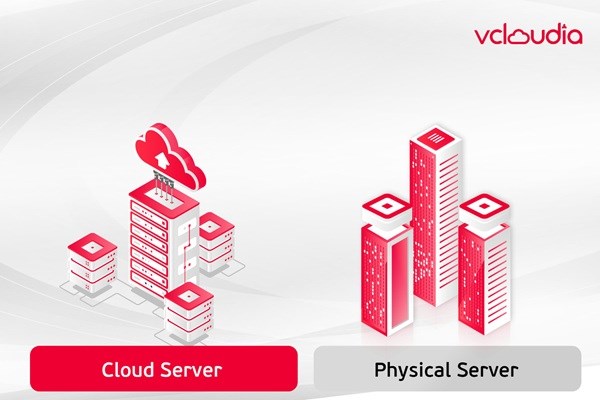
🔁 What is a Traditional Server?
A Physical Server is a dedicated hardware device designed to process and store data at high performance. This is the traditional server model, consisting of all components such as CPU, RAM, hard drives, and peripherals, operating independently to handle computing tasks, deploy applications, and provide IT services.
Physical servers are usually deployed in professional data centers – where stable operation is guaranteed through cooling systems, backup power, and 24/7 technical support. Businesses can also set them up in their own private data centers or on-premise, depending on their infrastructure model.
During use, organizations can directly access the system, customize configurations, and install software as needed. However, the level of control depends on ownership: if the server is self-purchased, the business has full control; but when renting from a third-party provider (Dedicated Server), there may be certain restrictions on configuration, security, or access – depending on the service policy.
☁️ What is a Cloud Server?
A Cloud Server is a virtualized server built on cloud computing infrastructure. Instead of relying on a fixed physical server, a Cloud Server uses resources distributed from multiple physical servers within a data center, optimizing performance and reliability.
All resources such as CPU, RAM, and storage are managed via the cloud platform and accessible remotely through the internet. This brings operational flexibility and makes system deployment and management possible anytime, anywhere.
One outstanding advantage of Cloud Servers is scalability. Businesses can easily increase or decrease resources without interrupting operations, optimizing costs and ensuring efficient resource usage.
Cloud Servers are ideal for organizations that require flexible IT infrastructure, quick deployment, rapid scalability, and freedom from physical hardware management.
📊 Comparison: Physical Servers vs. Cloud Servers
|
Criteria |
Physical Server |
Cloud Server |
|
Structure |
A physical computer with fixed hardware. |
Virtual server running on cloud infrastructure, sharing resources from multiple physical servers. |
|
Resources |
Fixed, inflexible (CPU, RAM, storage). |
Flexible, scalable resources (CPU, RAM, storage, bandwidth). |
|
Performance |
Dependent entirely on installed hardware. |
Adjustable performance based on usage needs. |
|
Scalability |
Limited; requires hardware upgrades or new servers. |
Easily scalable with just a few clicks, no hardware changes needed. |
|
Cost |
High upfront investment (hardware, operation, maintenance). |
Pay-as-you-go (at Vcloudia, pay by actual usage time), no large upfront investment. |
|
Management & Ops |
Requires on-site IT team for maintenance and repair. |
Remote management, automation with cloud tools. |
|
Reliability |
Dependent on local hardware/infrastructure. Downtime recovery may be lengthy. |
Higher reliability with failover and fast data recovery across multiple servers. |
|
Security |
Stronger physical control and ownership. However, vulnerable without proper on-site security measures. |
Lower security by design (multi-tenant, virtualized). Choosing a trusted provider ensures multi-layer protection and compliance with international standards. |
|
Deployment |
Time-consuming to set up and install. |
Quick deployment, ready immediately after service registration. |
|
Usage |
Suitable for organizations requiring high performance, reliability, and full system control. |
Suitable for businesses seeking flexibility, scalability, and minimal hardware management. |
✅ Which Businesses Should Choose Cloud Servers Instead of Physical Servers?
In today’s fast-paced digital transformation era, more businesses are shifting to Cloud Servers as a modern, flexible, and efficient infrastructure solution compared to traditional physical servers.
Cloud Servers not only help reduce upfront investment but also provide scalability, quick deployment, and optimized resource management – critical factors in today’s ever-changing business environment.
Cloud Servers are ideal for businesses that:
● Need to deploy systems quickly without lengthy hardware procurement or installation.
● Require flexible scaling of resources (CPU, RAM, storage) based on actual usage.
● Run short-term projects where infrastructure investment costs must be minimized.
● Want built-in features such as backup, security, and system monitoring without relying on an in-house IT team.
● Need high availability and disaster recovery, with data stored securely across multiple zones.
● Serve customers across regions/countries, requiring stable global access performance.
🚀 Switch to Cloud Servers Today with Vcloudia
Unlike fixed physical servers, Cloud Servers eliminate barriers of upfront investment, deployment delays, and maintenance overhead, helping businesses focus resources on product development, services, and market expansion.
👉 No hardware investment.
👉 No deployment or maintenance hassles.
👉 Vcloudia’s Cloud Server is your optimal step forward for flexible, secure, and cost-effective operations in the digital era.
Let Vcloudia accompany your business on its journey of sustainable growth!
📞 Contact us today for free consultation and trial.
🌐 Vcloudia –The leading Cloud service provider in Cambodia.
📞 Hotline: +855 888 55 66 08
📩 Email: support@vcloudia.com
🌐 Website: https://vcloudia.com/vi/home
#Vcloudia #VcloudiaCloudServer #FlexibleDigitalInfrastructure #DigitalTransformation #InfrastructureAsAService #CambodianBusinesses #CloudForBusiness #FastDeployment #CostEfficiency
ព័ត៌មានពិសេស
ព័ត៌មានដែលទាក់ទង
What is a Snapshot? The Difference Between Snapshot and Backup
Snapshot is a familiar concept in data management and protection. In the context of the information technology boom, where data is a major asset for businesses, understanding Snapshots as well as their application is a key factor for enterprises to maximize technological efficiency.
What is a Firewall? The Role and Importance of Firewalls for Users
In the context of ever-increasing cyberattacks, system security has become a top priority for many enterprises. Alongside deploying antivirus software and controlling connection ports, firewalls are also considered a key solution to effectively enhance cybersecurity.
What is DDoS? Signs, Mitigation Strategies, and Effective Prevention
DDoS is a highly dangerous cyberattack that leaves severe consequences for enterprises. Therefore, gaining a clear understanding of DDoS attacks, as well as how to detect and prevent them, is a topic of significant interest to many.
What is a Trojan? How to Detect, Avoid, and Prevent It
A Trojan is a type of malicious code or software that can cause severe consequences to computer operations. So, what is a Trojan? How can you prevent a Trojan from infiltrating your computer? In the following article, Vcloudia will provide detailed information on these issues.
What is Cloud Backup? Classification, benefits, and limitations
Cloud Backup is a solution that plays an important role in backing up and recovering data when an incident occurs. So what exactly is Cloud Backup? Let's find out the details with Vcloudia in the following article.
What is Cloud Storage? Features and Benefits of Using It
Cloud Storage is the perfect storage solution alternative to bulky, space-consuming physical hard drives. So, what is Cloud Storage? Let's explore the details with Vcloudia through the following article.
What is an API? Characteristics and applications in website design
API, short for Application Programming Interface, is a concept no longer unfamiliar in the information technology field. So what exactly is an API and why is it so important? Let's find out with Vcloudia.
What is Node.js? Instructions on how to install Node.js on cPanel
Currently, it is easy to see that Node.js is being used by quite a lot of people. This is because Node.js can support users in running on multiple platforms and multiple devices.
What is Vultr VPS? Should you use Vultr VPS?
Vultr VPS is one of the best cloud storage solutions in the world. In this article, you will learn the concept: "What is Vultr VPS?", as well as understand its advantages and disadvantages.
Zoom Cloud Meeting: What is it? Basic Things You Should Know About Zoom Cloud Meeting
In 2020, Zoom Cloud Meeting became one of the leading video conferencing software applications. It allows you to virtually interact with colleagues when in-person meetings aren't possible, and it has also been very successful for social events.